


Induction of acid resistance of Salmonella typhimurium by exposure to short-chain fatty acids
- PMID: 9726897
- PMCID: PMC106747
- DOI: 10.1128/AEM.64.9.3458-3463.1998
Induction of acid resistance of Salmonella typhimurium by exposure to short-chain fatty acids
Abstract
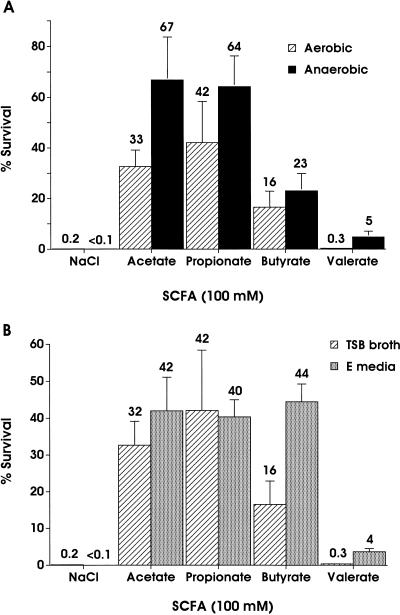
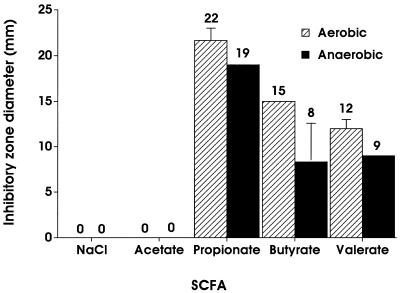
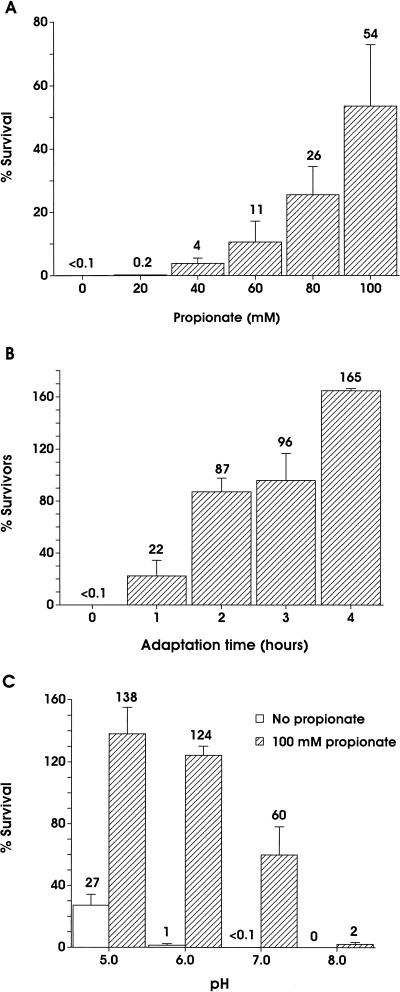
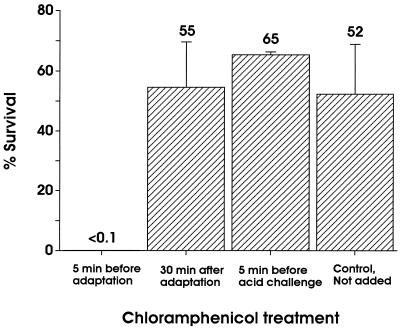
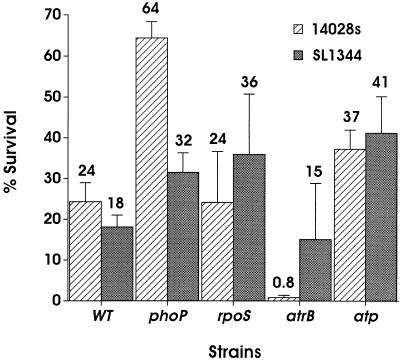
Exposure to short-chain fatty acids (SCFA) is one of the stress conditions Salmonella typhimurium encounters during its life cycle, because SCFA have been widely used as food preservatives and SCFA are also present at high concentrations in the gastrointestinal tracts of host animals. The effects of SCFA on the acid resistance of the organism were examined in an attempt to understand the potential role of SCFA in the pathogenesis of S. typhimurium. The percent survival of S. typhimurium at pH 3.0 was determined after exposure to SCFA for 1 h at pH 7.0. The percent acid survival, which varied depending on the SCFA species and the concentration used, was 42 after exposure to 100 mM propionate at pH 7.0 under aerobic incubation conditions, while less than 1% could survive without exposure. The SCFA-induced acid resistance was markedly enhanced by anaerobiosis (64%), lowering pH conditions (138% at pH 5.0), or increasing incubation time (165% with 4 h) during exposure to propionic acid. When protein synthesis during exposure to propionate was blocked by chloramphenicol, the percent acid survival was less than 1, indicating that the protein synthesis induced by exposure to propionate is required for the induction of the acid resistance. The percent acid survival determined with the isogenic mutant strains defective in acid tolerance response revealed that AtrB protein is necessary for the full induction of acid resistance by exposure to propionate, while unexpectedly, inactivation of PhoP significantly increased acid resistance over that of the wild type (P < 0.05). The results suggest that the virulence of S. typhimurium may be enhanced by increasing acid resistance upon exposure to SCFA during its life cycle and further enhanced by anaerobiosis, low pH, and prolonged exposure time.
Figures
References
-
- Archer D L. Preservation microbiology and safety: evidence that stress enhances virulence and triggers adaptive mutations. Trends Food Sci Technol. 1996;7:91–95.
-
- Broberg G. Measurement of the redox potential in rumen contents. I. In vitro measurements on healthy animals. Nord Vetmed. 1957;9:918–930.
-
- Cherrington C A, Hinton M, Mead G C, Chopra I. Organic acids: chemistry, antibacterial activity, and practical applications. Adv Microb Physiol. 1991;32:87–108. - PubMed
-
- Dorsa W J. New and established carcass decontamination procedures commonly used in the beef-processing industry. J Food Prot. 1997;60:1146–1151. - PubMed
Publication types
MeSH terms
Substances
LinkOut - more resources
Full Text Sources
