


Expression of human herpesvirus-6 antigens in benign and malignant lymphoproliferative diseases
- PMID: 9736030
- PMCID: PMC1853007
- DOI: 10.1016/S0002-9440(10)65623-4
Expression of human herpesvirus-6 antigens in benign and malignant lymphoproliferative diseases
Abstract
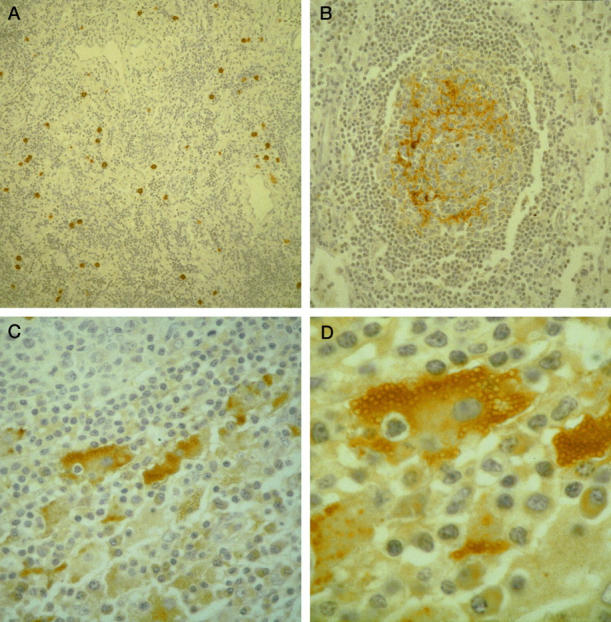
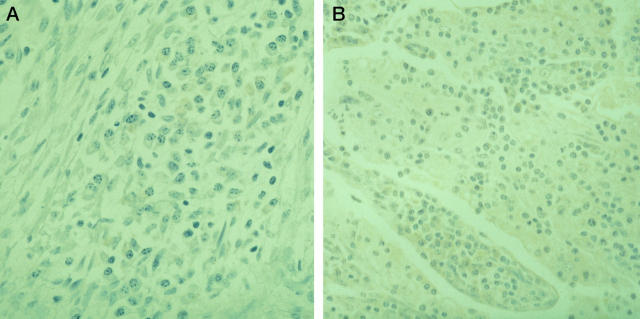
Immunohistochemistry was used to look for the expression of human herpesvirus-6 (HHV-6) antigens in a well characterized series of benign, atypical, and malignant lymphoid lesions, which tested positive for the presence of HHV-6 DNA. A panel of specific antibodies against HHV-6 antigens, characteristic either of the early (p41) or late (p101K, gp106, and gp116) phases of the viral cycle, was applied to the lymphoid tissues from 15 non-Hodgkin's lymphomas, 14 Hodgkin's disease cases, 5 angioimmunoblastic lymphadenopathies with dysproteinemia, 14 reactive lymphadenopathies, and 2 cases of sinus histiocytosis with massive lymphadenopathy (Rosai-Dorfman disease). In lymphomatous tissues, the expression of late antigens was documented only in reactive cells, and mainly in plasma cells. Of interest, the expression of the early p41 antigen was detected in the so-called "mummified" Reed-Sternberg cells, in two Hodgkin's disease cases. In reactive lymphadenopathies, the HHV-6 late antigen-expressing cells were plasma cells, histiocytes, and rare granulocytes distributed in interfollicular areas. In both cases of Rosai-Dorfman disease, the p101K showed an intense staining in follicular dendritic cells of germinal centers, whereas the gp106 exhibited an intense cytoplasmic reaction in the abnormal histiocytes, which represent the histological hallmark of the disease. The expression of HHV-6 antigens is tightly controlled in lymphoid tissues. The lack of HHV-6 antigen expression in neoplastic cells and the limited expression in degenerating Reed-Sternberg cells argue against a major pathogenetic role of the virus in human lymphomagenesis. The detection of a rather unique pattern of viral late antigen expression in Rosai-Dorfman disease suggests a possible pathogenetic involvement of HHV-6 in some cases of this rare lymphoproliferative disorder.
Figures

References
-
- Yamanishi K, Okuno T, Shiraki T, Takahashi M, Kondo T, Asano Y, Kurata T: Identification of human herpesvirus-6 as a causal agent for exanthem subitum. Lancet 1988, i:1065-1067 - PubMed
-
- Pruksananonda P, Breese-Hall C, Insel RA, McIntyre K, Pellett PE, Long CE, Schnabel KC, Pincus PH, Stamey FR, Dambaugh TR, Stewart JA: Primary human herpesvirus 6 infection in young children. N Engl J Med 1992, 326:1445-1450 - PubMed
-
- Merelli E, Sola P, Barozzi P, Torelli G: An encephalitic episode in a multiple sclerosis patient with human herpesvirus 6 latent infection. J Neurol Sci 1996, 137:42-46 - PubMed
Publication types
MeSH terms
Substances
LinkOut - more resources
Full Text Sources
