


Case Reports
doi: 10.1128/JCM.36.10.3060-3065.1998.
Subcutaneous hyalohyphomycosis caused by Colletotrichum gloeosporioides
Affiliations
- PMID: 9738070
- PMCID: PMC105114
- DOI: 10.1128/JCM.36.10.3060-3065.1998
Item in Clipboard
Case Reports
Subcutaneous hyalohyphomycosis caused by Colletotrichum gloeosporioides
J Clin Microbiol.
1998 Oct.
Abstract
The coelomycete Colletotrichum gloeosporioides was isolated in pure culture from subcutaneous nodules of the left forearm and elbow of a farmer after traumatic injury. To our knowledge, we report the first case involving this fungus as an etiological agent of subcutaneous infection. The in vitro inhibitory activities of amphotericin B, itraconazole, ketoconazole, miconazole, flucytosine, and fluconazole were studied.
Figures
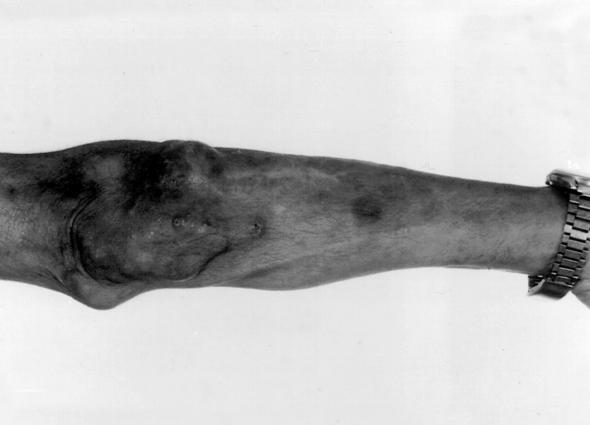
Nodular lesions over the dorsum of the patient’s left forearm and elbow.
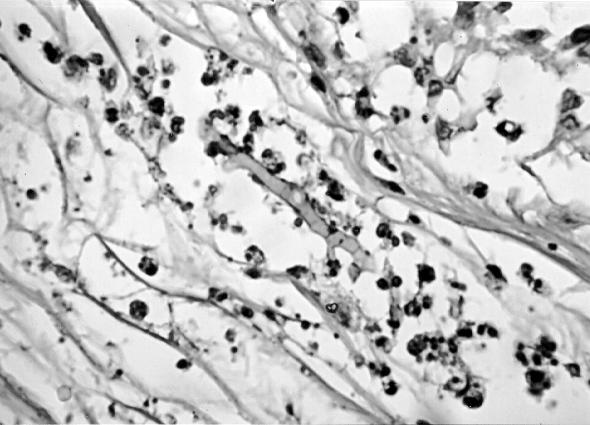
Periodic acid-Schiff stain of biopsy specimen from the left elbow showing a segmented branched, hyaline hypha. Magnification, ×440.
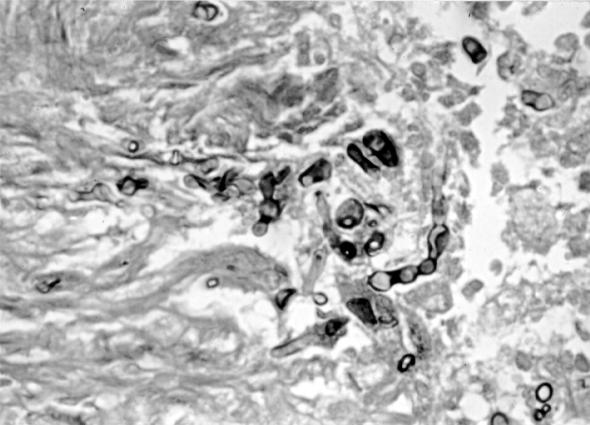
Methenamine silver stain of the skin biopsy specimen showing toruloid, septate hyphal elements with irregular forms. Magnification, ×440.
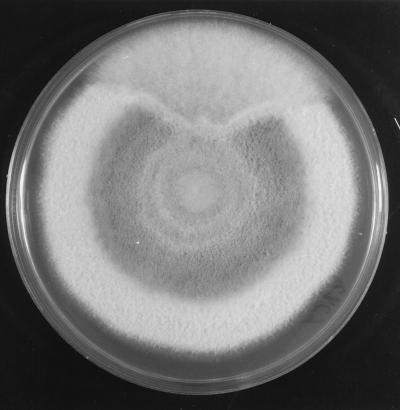
C. gloeosporioides colony growing on PDA after 10 days of incubation.
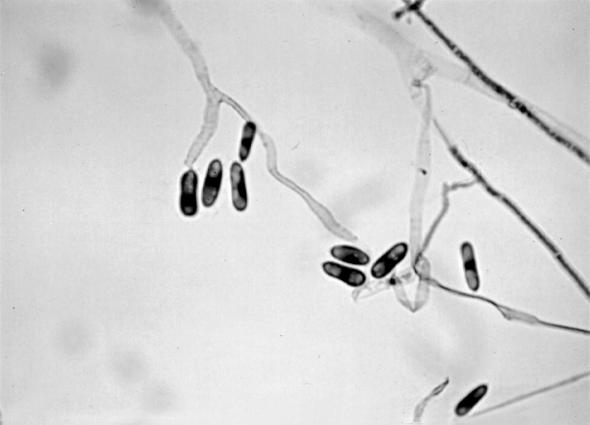
Conidia of C. gloeosporioides. Stain, lactophenol cotton blue. Magnification, ×440.
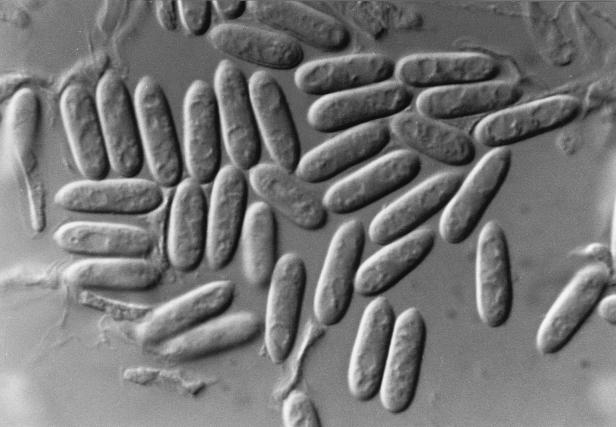
Conidia of C. gloeosporioides. Magnification by Nomarski optics, ×1,440.

Appressoria of C. gloeosporioides. Stain, lactophenol cotton blue. Magnification, ×440.
References
-
- Braithwaite K S, Irwin J A G, Manners J M. Ribosomal DNA as a molecular taxonomic marker for the group species Colletotrichum gloeosporioides. Aust Syst Bot. 1990;3:733–738.
-
- de Hoog G S, Guarro J, editors. Atlas of clinical fungi. Baarn, The Netherlands: Centraalbureau voor Schimmelcultures; 1995.
-
- Guarro J, Gené J. Opportunistic fusarial infections in humans. Eur J Clin Microbiol Infect Dis. 1995;14:741–754. - PubMed
-
- Guarro J, Gams W, Pujol I, Gené J. Acremonium species, new emerging opportunists: in vitro antifungal susceptibilities and review. Clin Infect Dis. 1997;25:1222–1229. - PubMed
-
- He C Z, Masel A M, Irwin J A G, Kelemu S, Manners J A. Distribution and relationship of chromosome-specific dispensable DNA sequences in diverse isolates of Colletotrichum gloeosporioides. Mycol Res. 1995;99:1325–1333.
Publication types
MeSH terms
Substances
LinkOut - more resources
Full Text Sources
