CDK inhibitors p18(INK4c) and p27(Kip1) mediate two separate pathways to collaboratively suppress pituitary tumorigenesis
- PMID: 9744866
- PMCID: PMC317173
- DOI: 10.1101/gad.12.18.2899
CDK inhibitors p18(INK4c) and p27(Kip1) mediate two separate pathways to collaboratively suppress pituitary tumorigenesis
Abstract
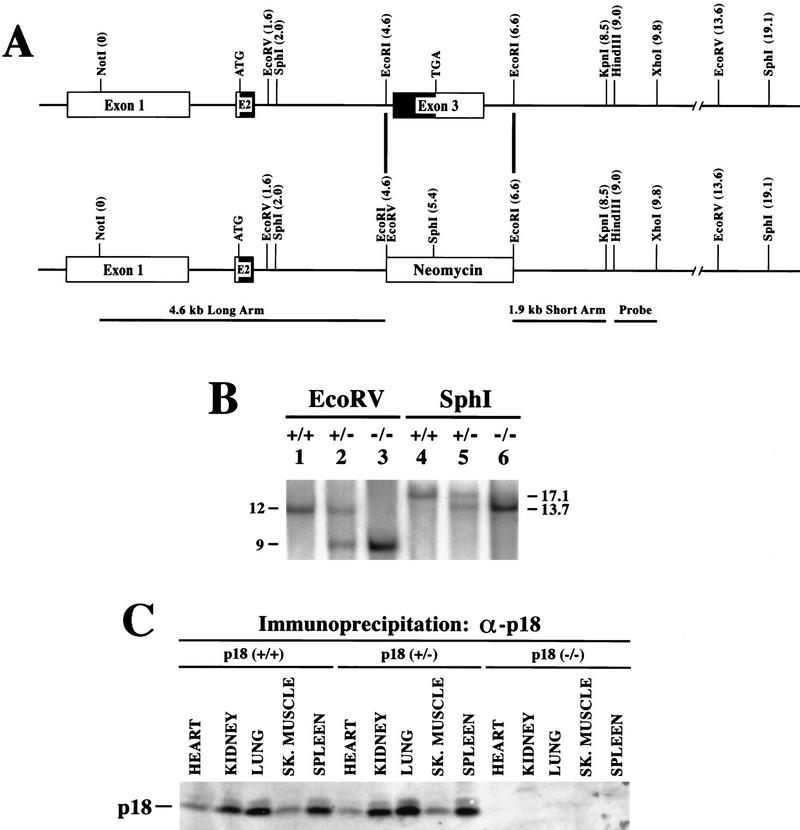
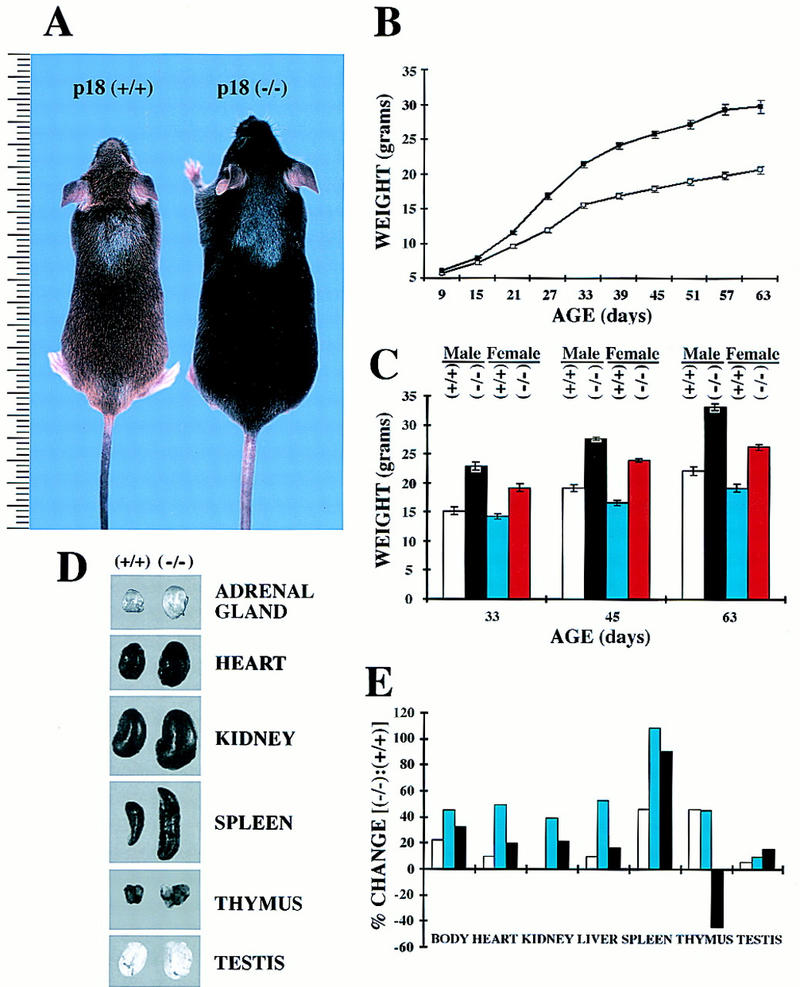
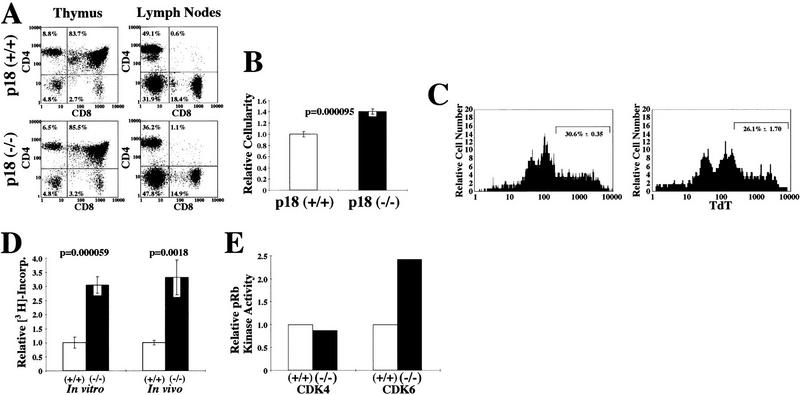
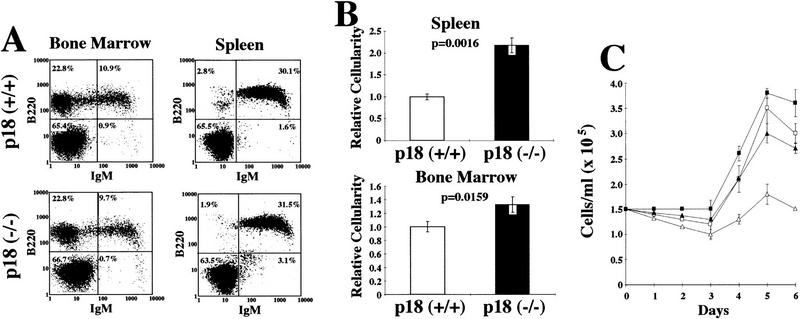
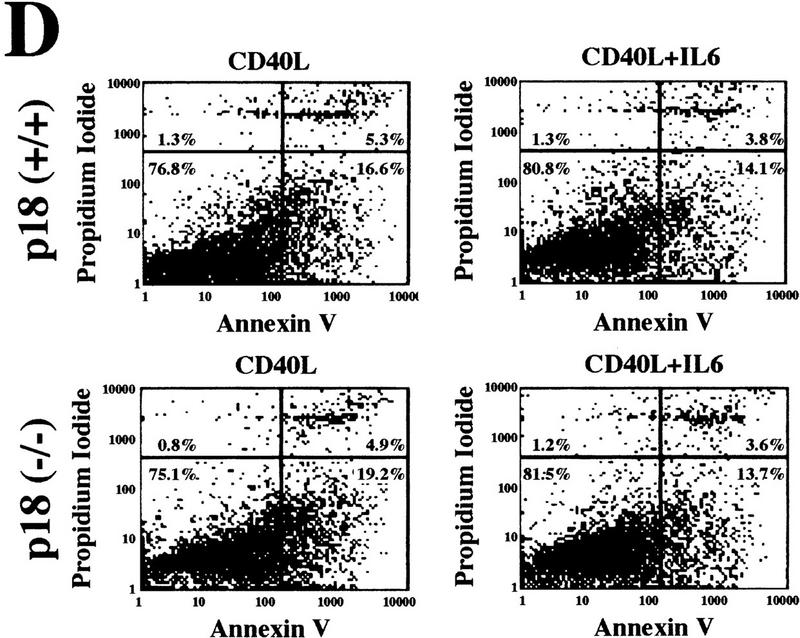
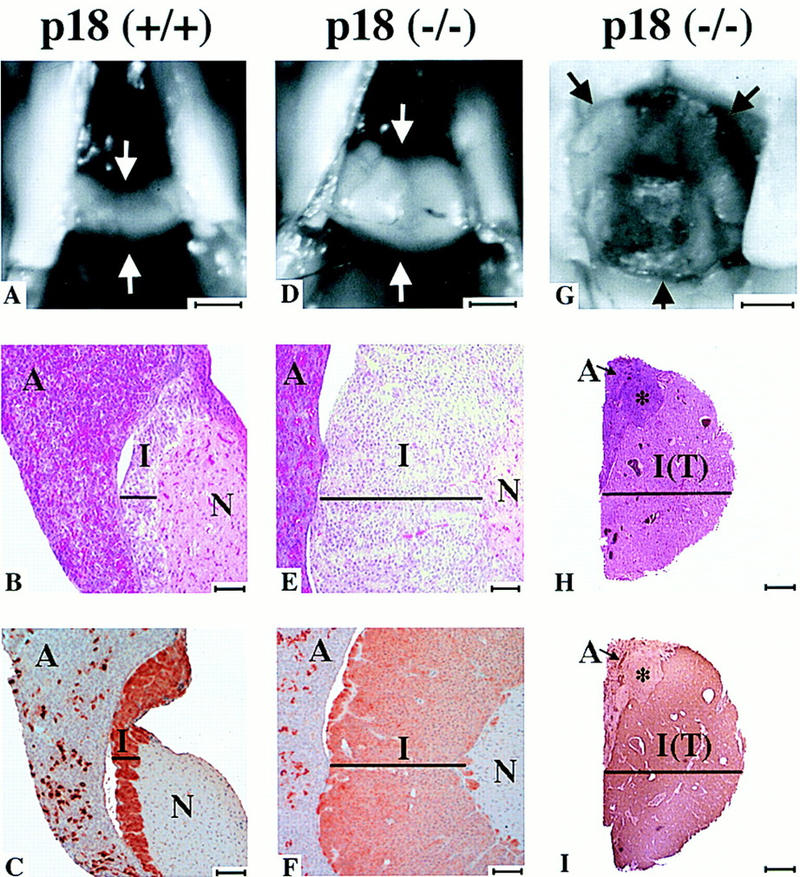
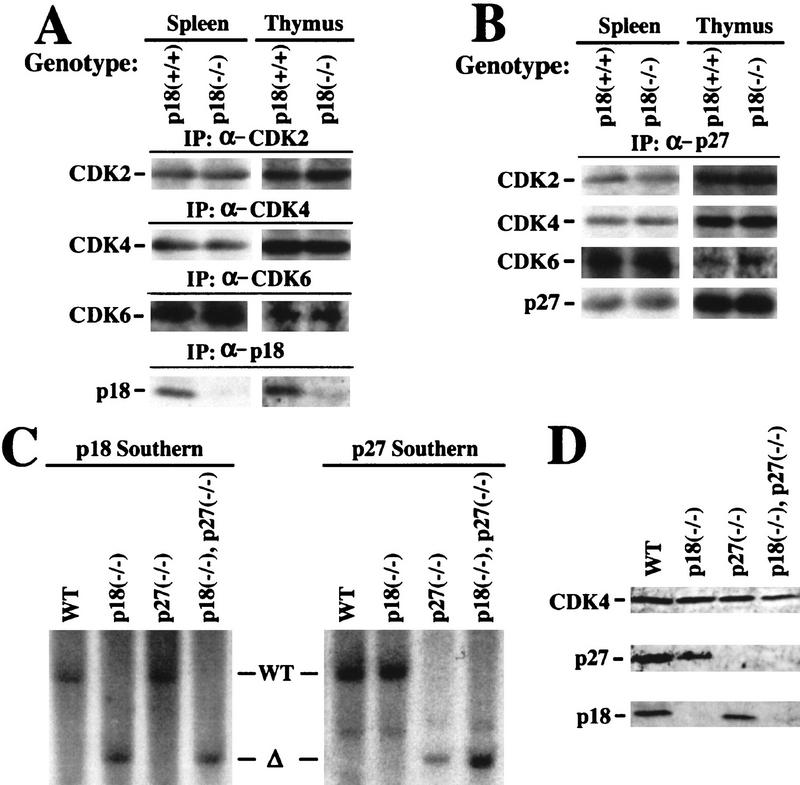
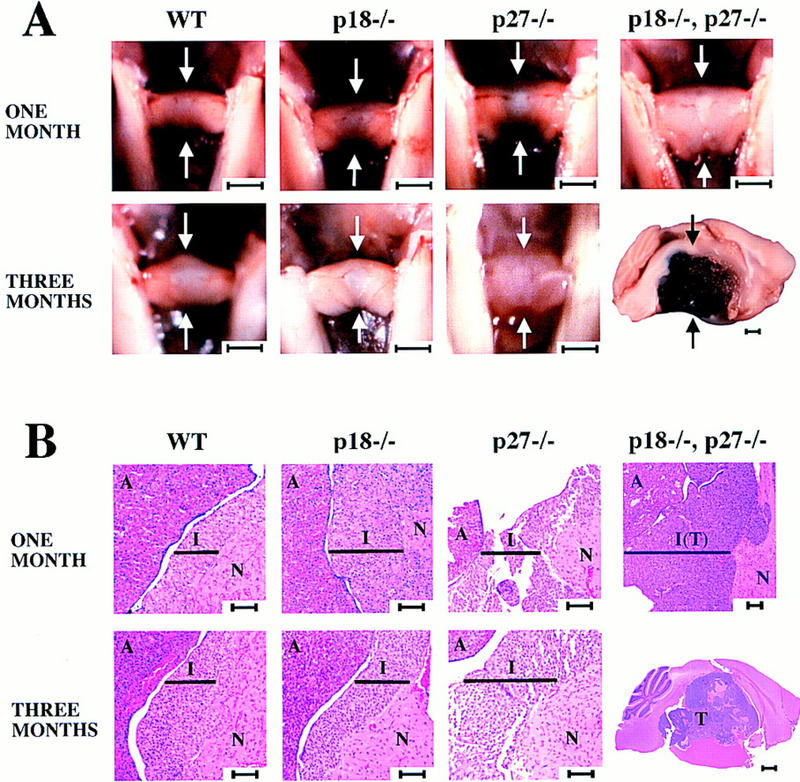
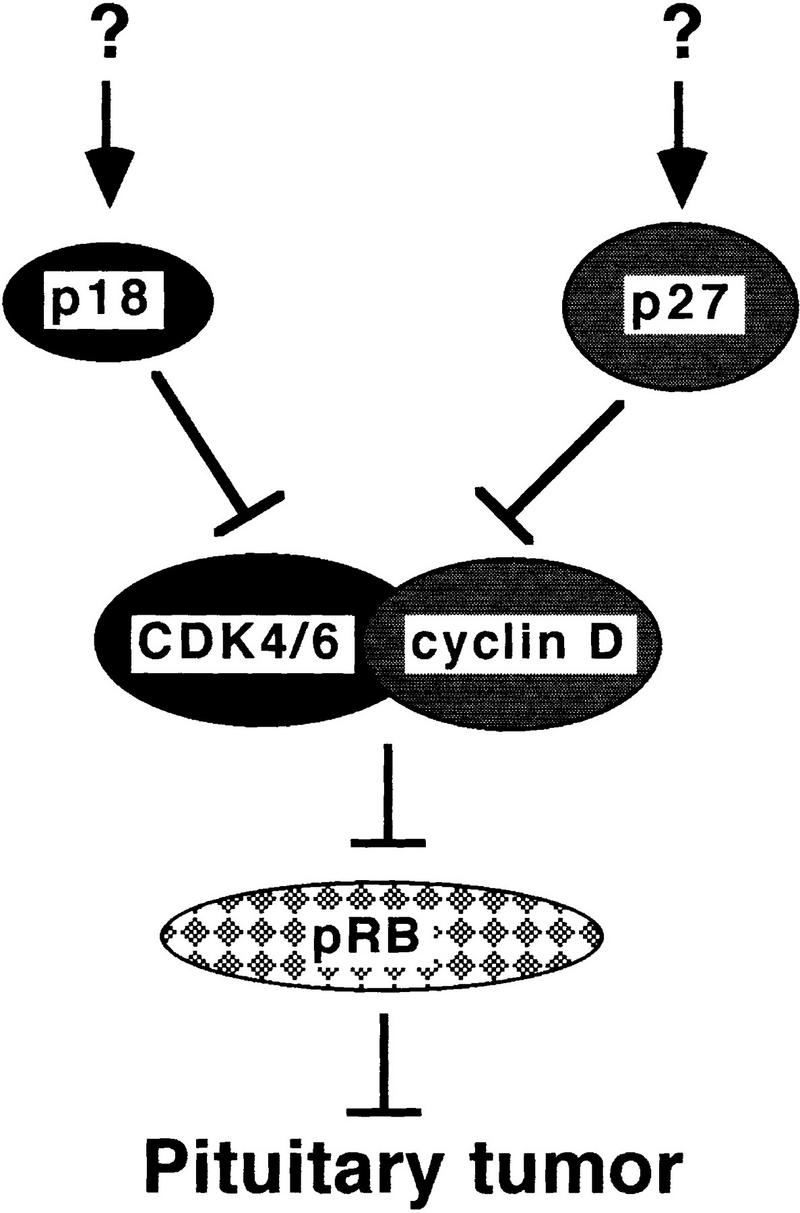
INK4 and CIP/KIP are two distinct families of cyclin-dependent kinase (CDK) inhibitors implicated in mediating a wide range of cell growth control signals. We have created p18(INK4c)-deficient mice. These mice develop gigantism and widespread organomegaly. The pituitary gland, spleen, and thymus are disproportionately enlarged and hyperplastic. T and B lymphocytes develop normally in p18-deficient mice, but both exhibit increased cellularity and a higher proliferative rate upon mitogenic stimulation. Loss of p18, like that of p27, but not other CDK inhibitor genes, leads to a gradual progression from intermediate lobe pituitary hyperplasia in young mice to an adenoma by 10 months of age with a nearly complete penetrance. Mice lacking both p18 and p27, like mice chimeric for Rb deficiency, invariably died from pituitary adenomas by 3 months. Hence, p18 and p27 mediate two separate pathways to collaboratively suppress pituitary tumorigenesis, likely by controlling the function of Rb.
Figures
References
-
- Deng C, Zhang P, Harper JW, Elledge SJ, Leder P. Mice lacking p21CIP1/WAF1 undergo normal development, but are defective in G1 checkpoint control. Cell. 1995;82:675–684. - PubMed
-
- Fero ML, Rivkin M, Tasch M, Porter P, Carow CE, Firpo E, Polyak K, Tsai L-H, Broudy V, Perlmutter RM, Kaushansky K, Roberts JM. A syndrome of multiorgan hyperplasia with features of gigantism, tumorigenesis, and female sterility in p27Kip1-deficient mice. Cell. 1996;85:733–744. - PubMed
-
- Guan K-L, Jenkins CW, Li Y, Nichols MA, Wu X, O’Keefe CL, Matera AG, Xiong Y. Growth suppression by p18, a p16INK4/MTS1- and p14INK4B/MTS2-related CDK6 inhibitor, correlates with wild-type pRb function. Genes & Dev. 1994;8:2939–2952. - PubMed
-
- Hu N, Gutsmann A, Herbert DC, Bradley A, Lee W-H, Lee EY-HP. Heterzygous Rb-1D20/+ mice are predisposed to tumors of the pituitary gland with a nearly complete penetrance. Oncogene. 1994;9:1021–1027. - PubMed
Publication types
MeSH terms
Substances
Grants and funding
LinkOut - more resources
Full Text Sources
Other Literature Sources
Medical
Molecular Biology Databases
Research Materials
Miscellaneous