


The Xenopus Chk1 protein kinase mediates a caffeine-sensitive pathway of checkpoint control in cell-free extracts
- PMID: 9744884
- PMCID: PMC2141764
- DOI: 10.1083/jcb.142.6.1559
The Xenopus Chk1 protein kinase mediates a caffeine-sensitive pathway of checkpoint control in cell-free extracts
Abstract
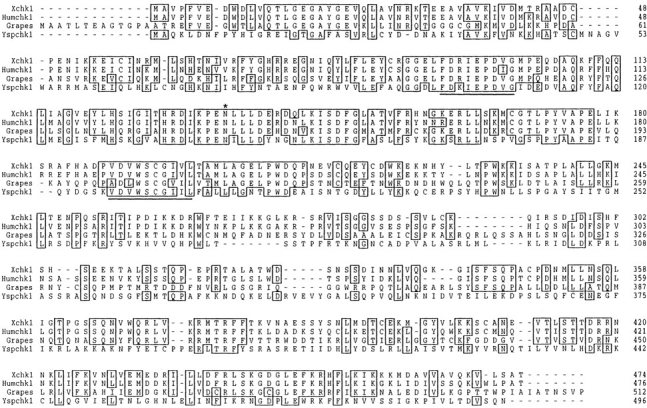
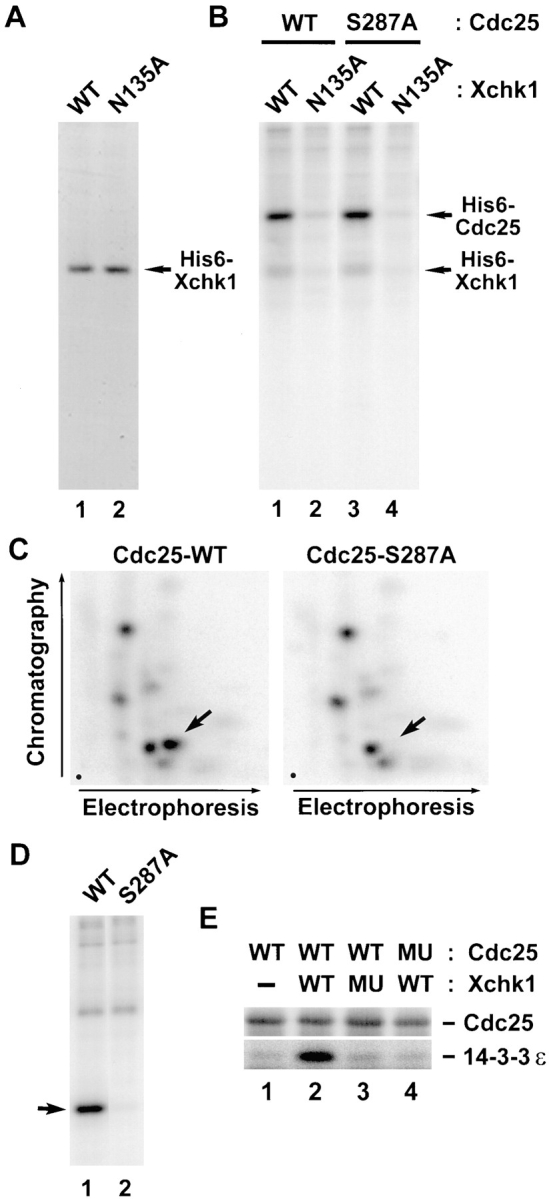
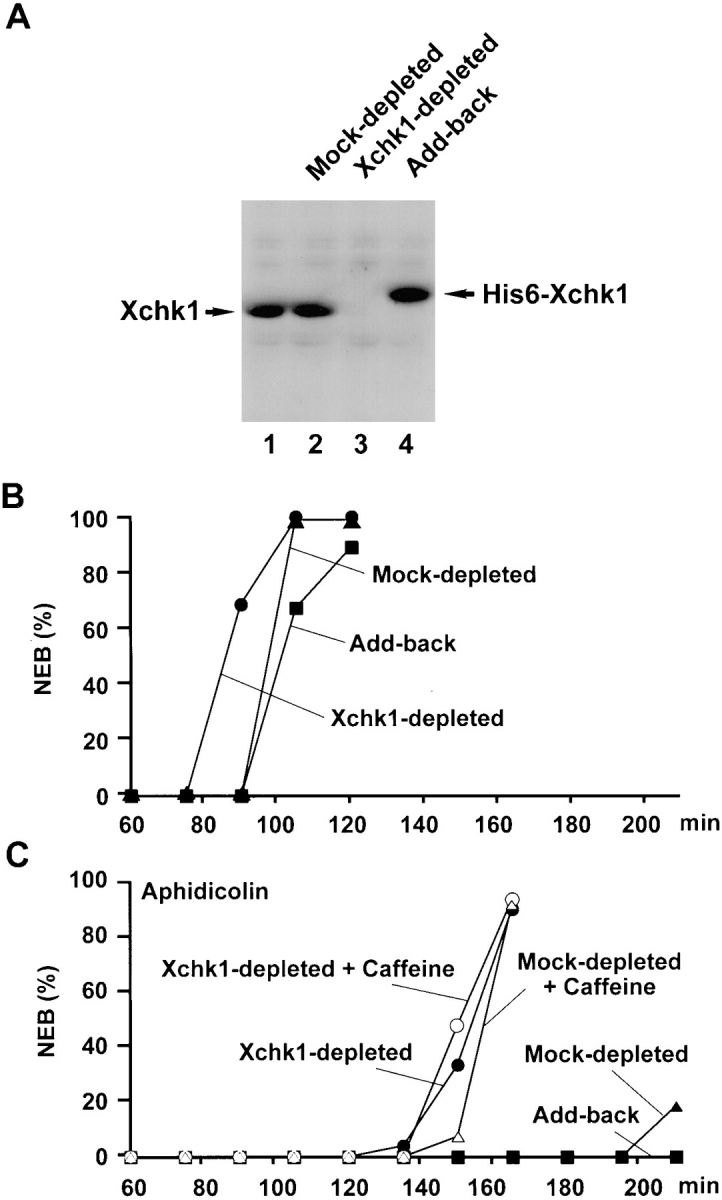
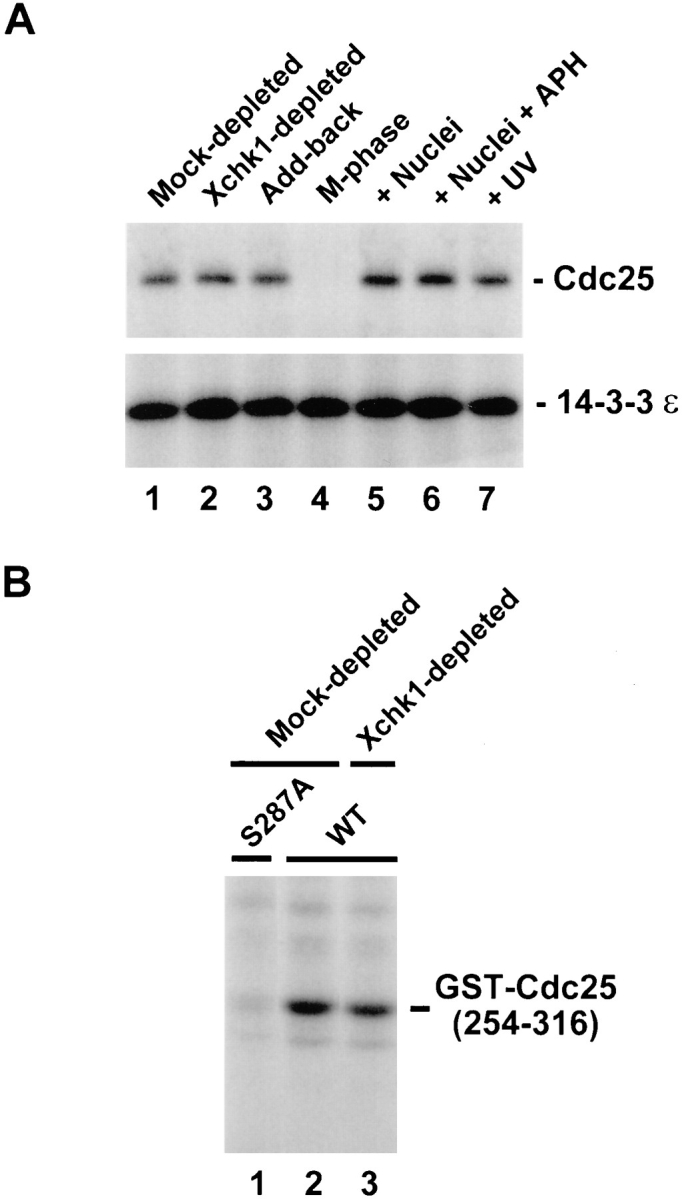
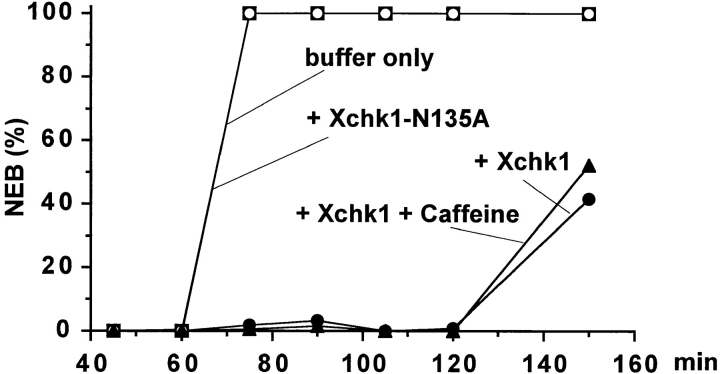
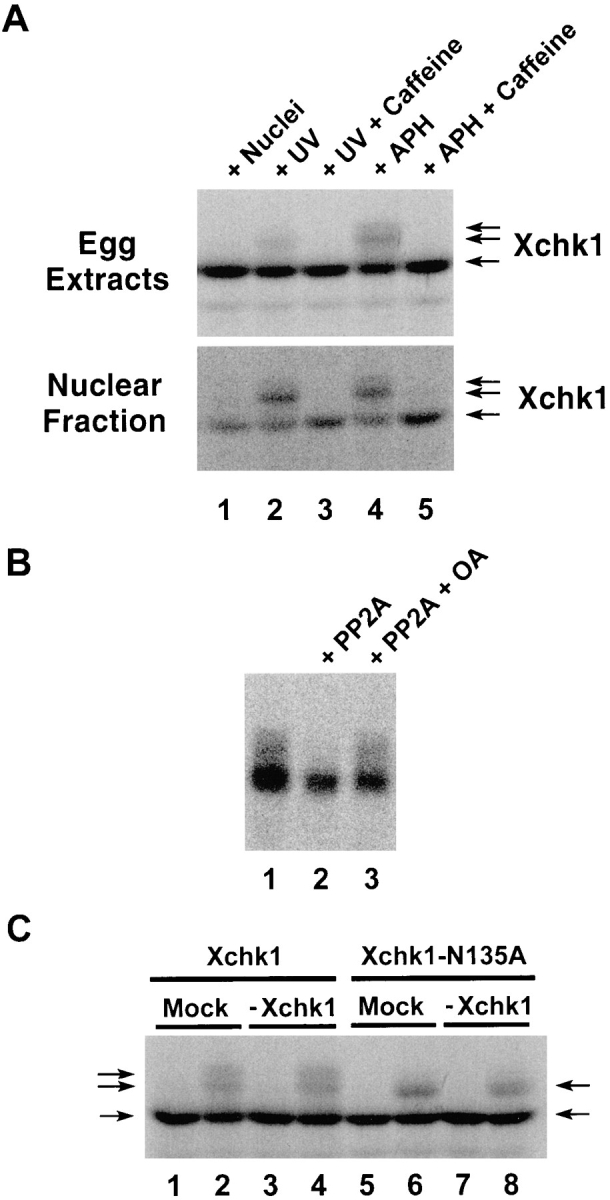
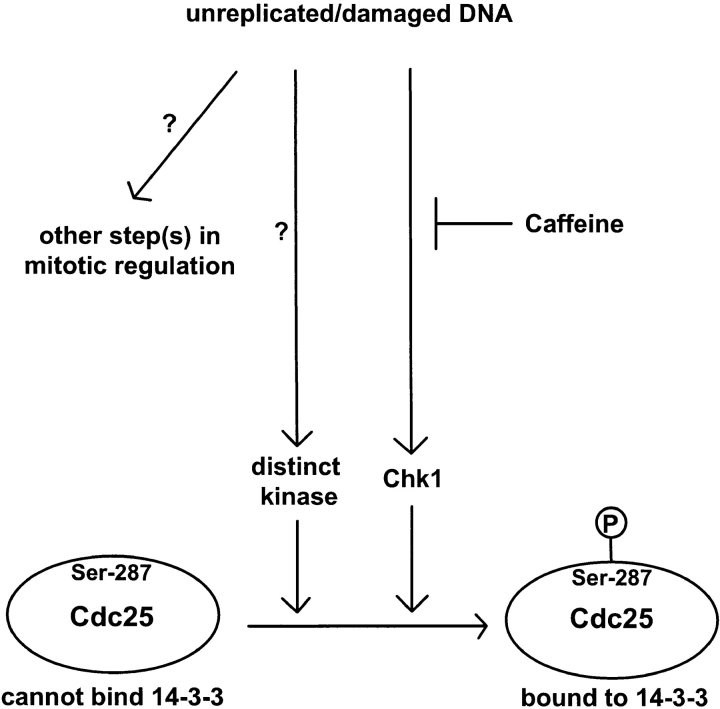
We have analyzed the role of the protein kinase Chk1 in checkpoint control by using cell-free extracts from Xenopus eggs. Recombinant Xenopus Chk1 (Xchk1) phosphorylates the mitotic inducer Cdc25 in vitro on multiple sites including Ser-287. The Xchk1-catalyzed phosphorylation of Cdc25 on Ser-287 is sufficient to confer the binding of 14-3-3 proteins. Egg extracts from which Xchk1 has been removed by immunodepletion are strongly but not totally compromised in their ability to undergo a cell cycle delay in response to the presence of unreplicated DNA. Cdc25 in Xchk1-depleted extracts remains bound to 14-3-3 due to the action of a distinct Ser-287-specific kinase in addition to Xchk1. Xchk1 is highly phosphorylated in the presence of unreplicated or damaged DNA, and this phosphorylation is abolished by caffeine, an agent which attenuates checkpoint control. The checkpoint response to unreplicated DNA in this system involves both caffeine-sensitive and caffeine-insensitive steps. Our results indicate that caffeine disrupts the checkpoint pathway containing Xchk1.
Figures
References
-
- Boddy MN, Furnari B, Mondesert O, Russell P. Replication checkpoint enforced by kinases Cds1 and Chk1. Science. 1998;280:909–912. - PubMed
-
- Carr AM. Checkpoints take the next step. Science. 1996;271:314–315. - PubMed
-
- Carr AM. Control of cell cycle arrest by the Mec1sc/Rad3sp DNA structure checkpoint pathway. Curr Opin Genet Dev. 1997;7:93–98. - PubMed
Publication types
MeSH terms
Substances
Associated data
- Actions
Grants and funding
LinkOut - more resources
Full Text Sources
Other Literature Sources
Medical
Research Materials
Miscellaneous
