


Induction of adrenomedullin mRNA and protein by lipopolysaccharide and paclitaxel (Taxol) in murine macrophages
- PMID: 9746563
- PMCID: PMC108574
- DOI: 10.1128/IAI.66.10.4669-4675.1998
Induction of adrenomedullin mRNA and protein by lipopolysaccharide and paclitaxel (Taxol) in murine macrophages
Abstract
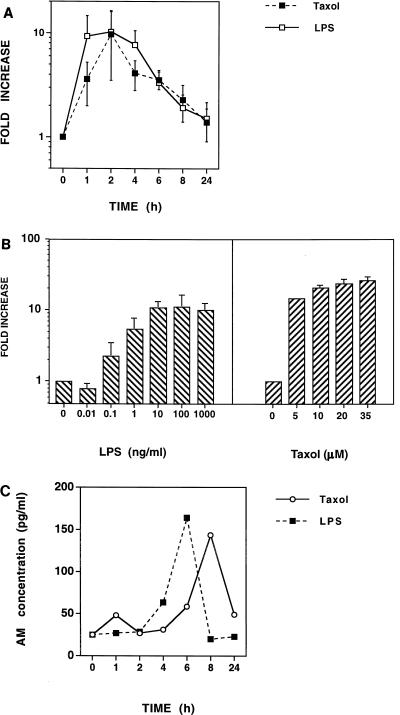
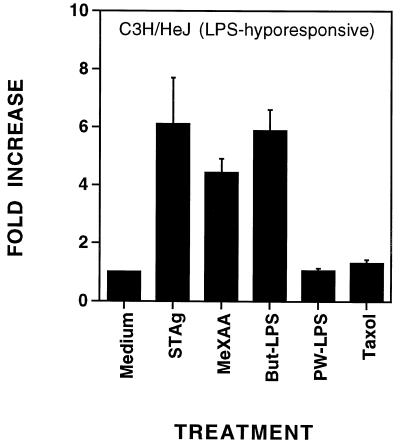
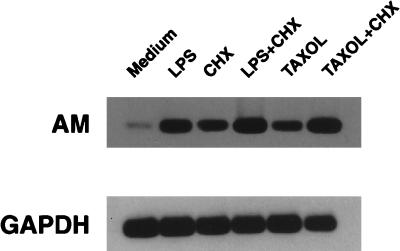
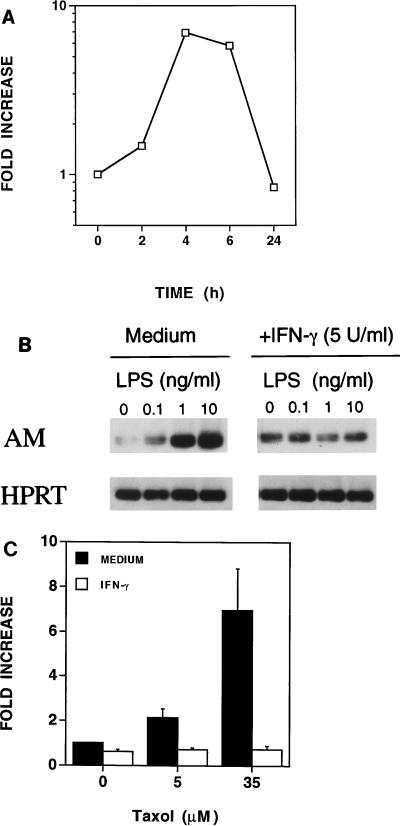
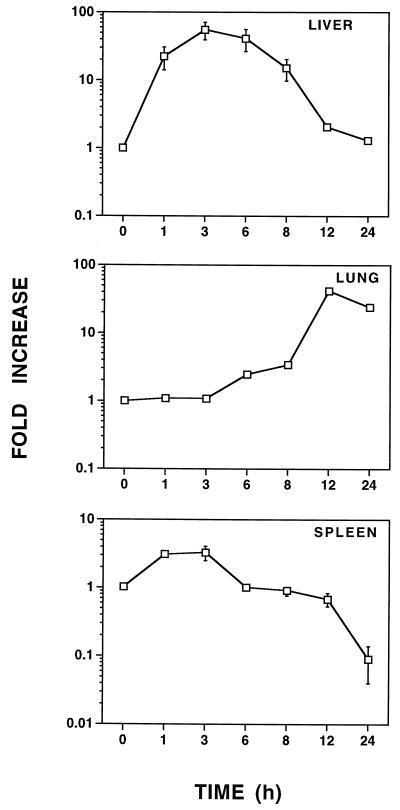
Lipopolysaccharide (LPS), a potent inflammatory stimulus derived from the outer membrane of gram-negative bacteria, has been implicated in septic shock. Plasma levels of adrenomedullin (AM), a potent vasorelaxant, are increased in septic shock and possibly contribute to the characteristic hypotension. As macrophages play a central role in the host response to LPS, we studied AM production by LPS-stimulated macrophages. When peritoneal exudate macrophages from C3H/OuJ mice were treated with protein-free LPS (100 ng/ml) or the LPS mimetic paclitaxel (Taxol; 35 microM), an approximately 10-fold increase in steady-state AM mRNA levels was observed, which peaked between 2 and 4 h. A three- to fourfold maximum increase in the levels of immunoreactive AM protein was detected after 6 to 8 h of stimulation. While LPS-hyporesponsive C3H/HeJ macrophages failed to respond to protein-free LPS with an increase in steady-state AM mRNA levels, increased levels were observed after stimulation of these cells with a protein-rich (butanol-extracted) LPS preparation. In addition, increased AM mRNA was observed following treatment of either C3H/OuJ or C3H/HeJ macrophages with soluble Toxoplasma gondii tachyzoite antigen or the synthetic flavone analog 5, 6-dimethylxanthenone-4-acetic acid. Gamma interferon also stimulated C3H/OuJ macrophages to express increased AM mRNA levels yet was inhibitory in the presence of LPS or paclitaxel. In vivo, mice challenged intraperitoneally with 25 microg of LPS exhibited increased AM mRNA levels in the lungs, liver, and spleen; the greatest increase (>50-fold) was observed in the liver and lungs. Thus, AM is produced, by murine macrophages, and furthermore, LPS induces AM mRNA in vivo in a number of tissues. These data support a possible role for AM in the pathophysiology of sepsis and septic shock.
Figures
References
-
- Abraham E, Wunderink R, Silverman H, Perl T M, Nasraway S, Levy H, Bone R, Wenzel R P, Balk R, Allred R. Efficacy and safety of monoclonal antibody to human tumor necrosis factor alpha in patients with sepsis syndrome. A randomized, controlled, double-blind, multicenter clinical trial. TNF-alpha MAb Sepsis Study Group. JAMA. 1995;273:934–941. - PubMed
-
- Atwell G J, Rewcastle G W, Baguley B C, Denny W A. Potential antitumor agents. 60. Relationships between structure and in vivo colon 38 activity for 5-substituted 9-oxoxanthene-4-acetic acids. J Med Chem. 1990;33:1375–1379. - PubMed
-
- Bogdan C, Ding A. Taxol, a microtubule-stabilizing antineoplastic agent, induces expression of tumor necrosis factor alpha and interleukin-1 in macrophages. J Leukocyte Biol. 1992;52:119–121. - PubMed
-
- Bone R C. A critical evaluation of new agents for the treatment of sepsis. JAMA. 1991;266:1686–1691. - PubMed
Publication types
MeSH terms
Substances
Grants and funding
LinkOut - more resources
Full Text Sources
Other Literature Sources
Research Materials
