


BCL-6 mutations in normal germinal center B cells: evidence of somatic hypermutation acting outside Ig loci
- PMID: 9751748
- PMCID: PMC21723
- DOI: 10.1073/pnas.95.20.11816
BCL-6 mutations in normal germinal center B cells: evidence of somatic hypermutation acting outside Ig loci
Abstract
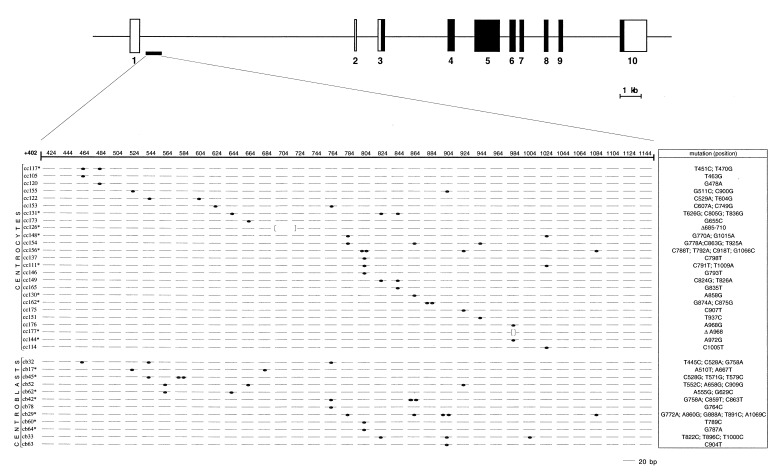
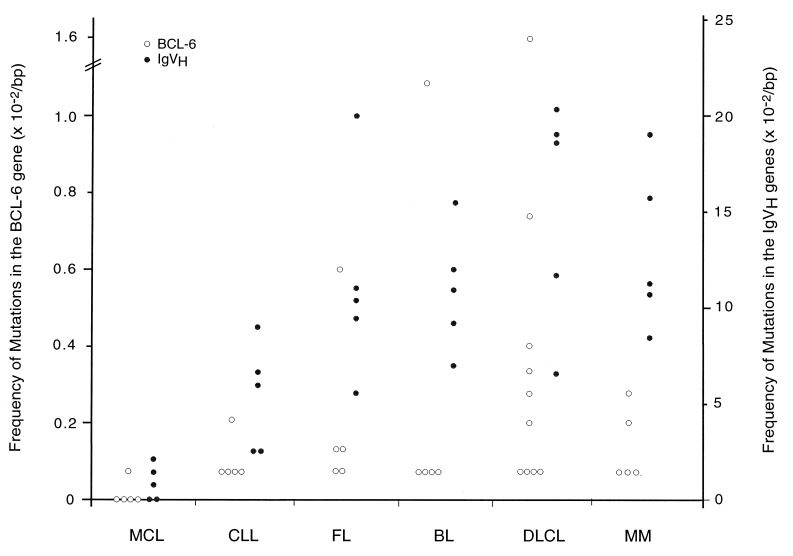
The molecular mechanism involved in the process of antigen-driven somatic hypermutation of Ig genes is unknown, but it is commonly believed that this mechanism is restricted to the Ig loci. B cell lymphomas commonly display multiple somatic mutations clustering in the 5'-regulatory region of BCL-6, a proto-oncogene encoding for a POZ/Zinc finger transcriptional repressor expressed in germinal center (GC) B cells and required for GC formation. To determine whether BCL-6 mutations represent a tumor-associated phenomenon or reflect a physiologic mechanism, we screened single human tonsillar GC B cells for mutations occurring in the BCL-6 5'-noncoding region and in the Ig variable heavy chain sequences. Thirty percent of GC B cells, but not naive B cells, displayed mutations in the 742 bp region analyzed within the first intron of BCL-6 (overall frequency: 5 x 10(-4)/bp). Accordingly, an expanded survey in lymphoid malignancies showed that BCL-6 mutations are restricted to B cell tumors displaying GC or post-GC phenotype and carrying mutated Ig variable heavy chain sequences. These results indicate that the somatic hypermutation mechanism active in GC B cells physiologically targets non-Ig sequences.
Figures
References
-
- Rajewsky K. Nature (London) 1996;381:751–758. - PubMed
-
- Jacob J, Kelsoe G, Rajewsky K, Weiss U. Nature (London) 1991;354:389–392. - PubMed
-
- Berek C, Berger A, Apel M. Cell. 1991;67:1121–1129. - PubMed
-
- Klein U, Goossens T, Fischer M, Kanzler H, Braeuninger A, Rajewsky K, Küppers R. Immunol Rev. 1998;162:261–280. - PubMed
Publication types
MeSH terms
Substances
Grants and funding
LinkOut - more resources
Full Text Sources
Other Literature Sources
Miscellaneous
