


Mouse embryonic stem cells carrying one or two defective Msh2 alleles respond abnormally to oxidative stress inflicted by low-level radiation
- PMID: 9751765
- PMCID: PMC21740
- DOI: 10.1073/pnas.95.20.11915
Mouse embryonic stem cells carrying one or two defective Msh2 alleles respond abnormally to oxidative stress inflicted by low-level radiation
Abstract
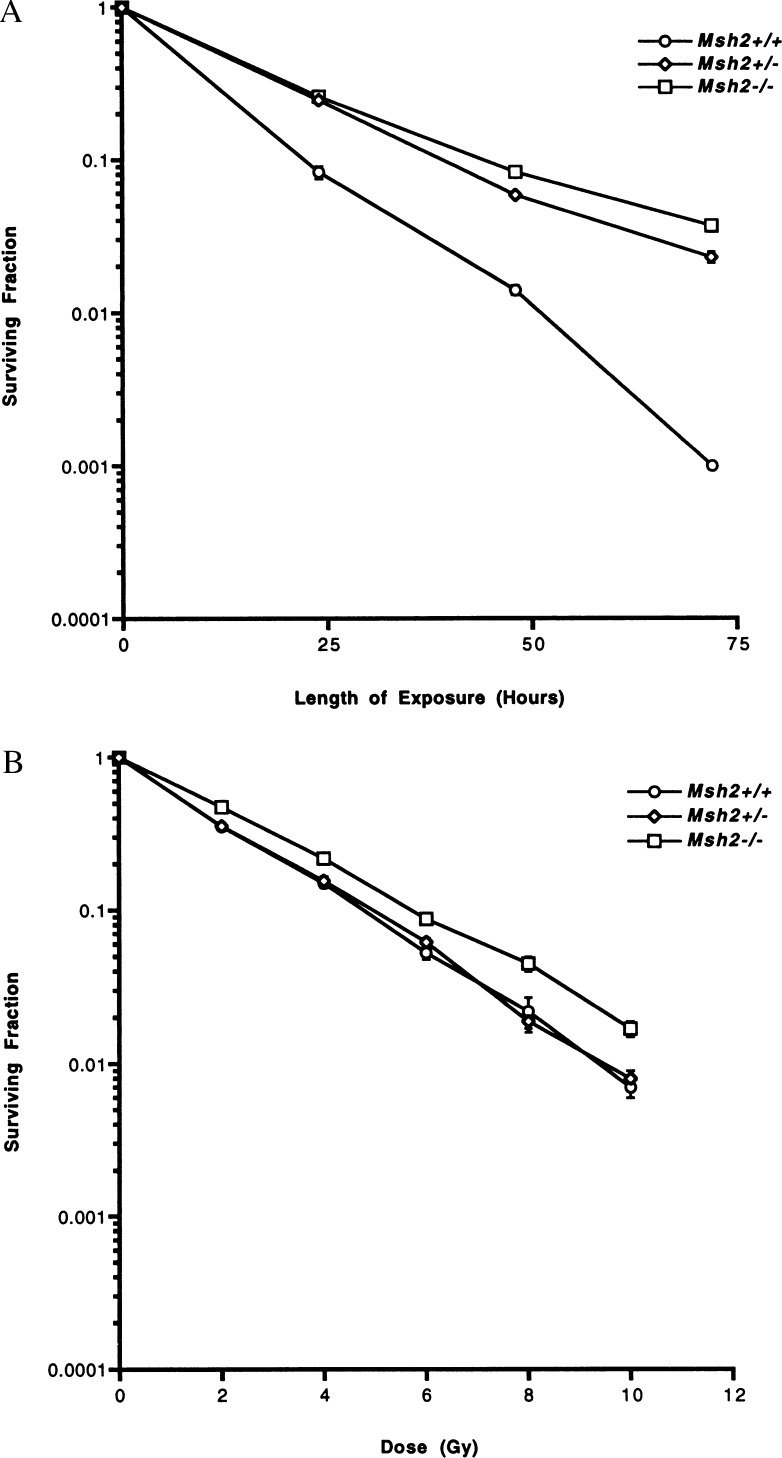
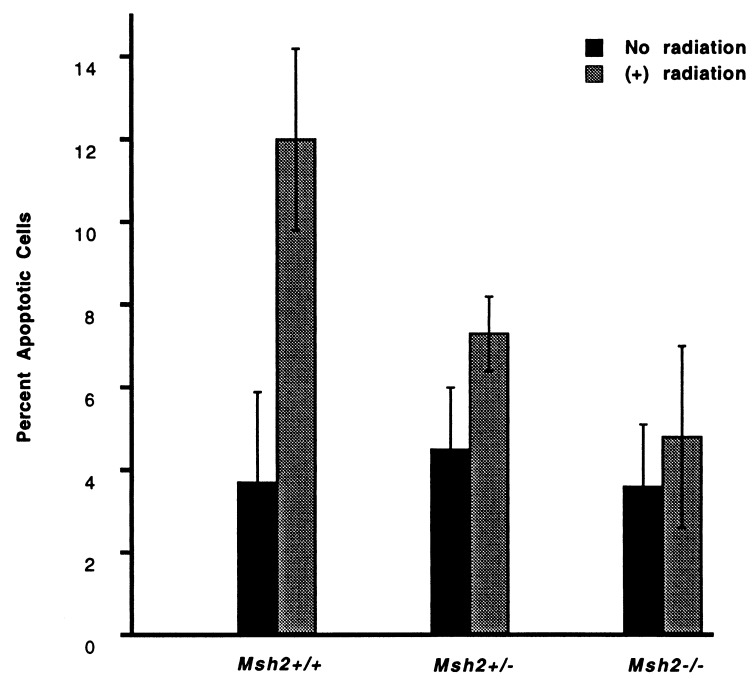
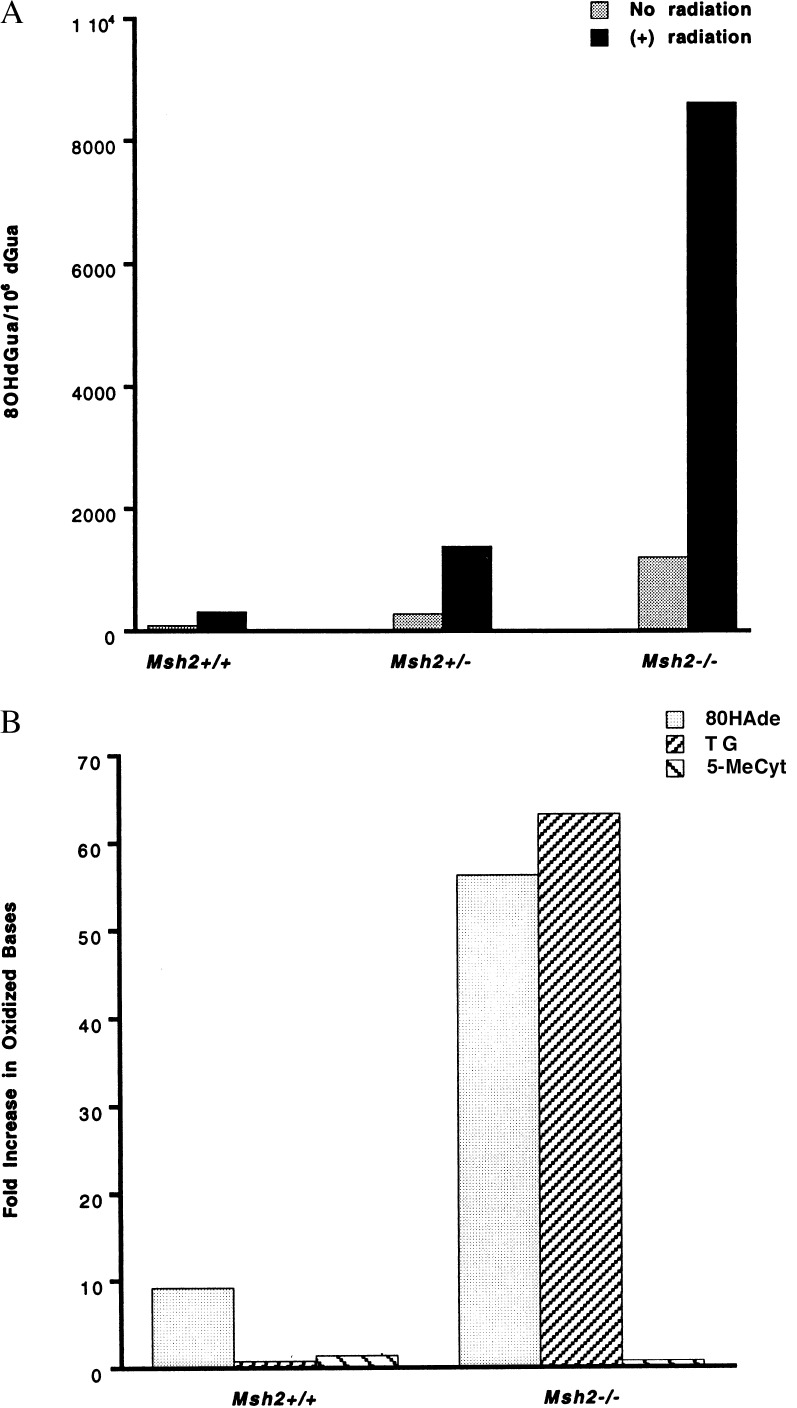
Chronic oxidative stress may play a critical role in the pathogenesis of many human cancers. Here, we report that mouse embryonic stem (ES) cells deficient in DNA mismatch repair responded abnormally when exposed to low levels of ionizing radiation, a stress known to generate oxidative DNA damage. ES cells derived from mice carrying either one or two disrupted Msh2 alleles displayed an increased survival following protracted exposures to low-level ionizing radiation as compared with wild-type ES cells. The increases in survival exhibited by ES cells deficient in DNA mismatch repair appeared to have resulted from a failure to efficiently execute cell death (apoptosis) in response to radiation exposure. For each of the ES cell types, prolonged low-level radiation treatment generated oxidative genome damage that manifested as an accumulation of oxidized bases in genomic DNA. However, ES cells from Msh2(+/-) and Msh2(-/-) mice accumulated more oxidized bases as a consequence of low-level radiation exposure than ES cells from Msh2(+/+) mice. The propensity for normal cells with mismatch repair enzyme deficiencies, including cells heterozygous for inactivating mismatch repair enzyme gene mutations, to survive promutagenic genome insults accompanying oxidative stresses may contribute to the increased cancer risk characteristic of the hereditary nonpolyposis colorectal cancer syndrome.
Figures
References
-
- Kinzler K W, Vogelstein B. Cell. 1996;87:159–170. - PubMed
-
- Lynch H T, Smyrk T, Lynch J F. Int J Cancer. 1996;69:38–43. - PubMed
-
- Leach F S, Nicolaides N C, Papadopoulos N, Liu B, Jen J, Parsons R, Peltomaki P, Sistonen P, Aaltonen L A, Nystrom-Lahti M, et al. Cell. 1993;75:1215–1225. - PubMed
-
- Bronner C E, Baker S M, Morrison P T, Warren G, Smith L G, Lescoe M K, Kane M, Earabino C, Lipford J, Lindblom A, et al. Nature (London) 1994;368:258–261. - PubMed
-
- Nicolaides N C, Papadopoulos N, Liu B, Wei Y-F, Carter K-C, Ruben S M, Rosen C A, Haseltine W A, Fleischmann R D, Fraser C M, et al. Nature (London) 1994;371:75–80. - PubMed
Publication types
MeSH terms
Substances
Grants and funding
LinkOut - more resources
Full Text Sources
Other Literature Sources
