


In vivo efficacy of ABT-255 against drug-sensitive and -resistant Mycobacterium tuberculosis strains
- PMID: 9756775
- PMCID: PMC105917
- DOI: 10.1128/AAC.42.10.2674
In vivo efficacy of ABT-255 against drug-sensitive and -resistant Mycobacterium tuberculosis strains
Abstract
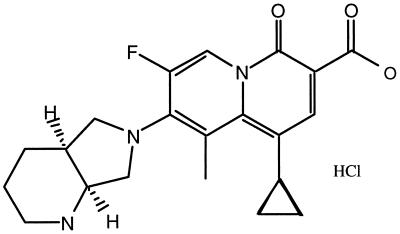
Current therapy for pulmonary tuberculosis involves 6 months of treatment with isoniazid, pyrazinamide, rifampin, and ethambutol or streptomycin for reliable treatment efficacy. The long treatment period increases the probability of noncompliance, leading to the generation of multidrug-resistant isolates of Mycobacterium tuberculosis. A treatment option that significantly shortened the course of therapy, or a new class of antibacterial effective against drug-resistant M. tuberculosis would be of value. ABT-255 is a novel 2-pyridone antibacterial agent which demonstrates in vitro potency and in vivo efficacy against drug-susceptible and drug-resistant M. tuberculosis strains. By the Alamar blue reduction technique, the MIC of ABT-255 against susceptible strains of M. tuberculosis ranged from 0.016 to 0.031 microg/ml. The MIC of ABT-255 against rifampin- or ethambutol-resistant M. tuberculosis isolates was 0.031 microg/ml. In a murine model of pulmonary tuberculosis, 4 weeks of oral ABT-255 therapy produced a 2- to 5-log10 reduction in viable drug-susceptible M. tuberculosis counts from lung tissue. Against drug-resistant strains of M. tuberculosis, ABT-255 produced a 2- to 3-log10 reduction in viable bacterial counts from lung tissue. ABT-255 is a promising new antibacterial agent with activity against M. tuberculosis.
References
-
- Alder J, Clement J, Meulbroek J, Shipkowitz N, Mitten M, Jarvis K, Oleksijew A, Hutch T, Paige L, Flamm R, Chu D, Tanaka K. Efficacies of ABT-719 and related 2-pyridones, members of a new class of antibacterial agents, against experimental bacterial infections. Antimicrob Agents Chemother. 1995;39:971–975. - PMC - PubMed
-
- Brudney K, Dobkin J. Resurgent TB in New York City. Human immunodeficiency virus, homelessness and the decline of TB programs. Am Rev Respir Dis. 1991;144:745. - PubMed
-
- Centers for Disease Control and Prevention. Improving adherence to antituberculosis therapy—South Carolina and New York. Morbid Mortal Weekly Rep. 1993;42(4):74. - PubMed
-
- Centers for Disease Control and Prevention. Initial therapy for tuberculosis in the era of multidrug resistance. Recommendations of the Advisory Council for the Elimination of Tuberculosis. Morbid Mortal Weekly Rep. 1993;42(RR-7):4. - PubMed
MeSH terms
Substances
LinkOut - more resources
Full Text Sources
Other Literature Sources
Molecular Biology Databases
