


Colonization of wheat roots by an exopolysaccharide-producing pantoea agglomerans strain and its effect on rhizosphere soil aggregation
- PMID: 9758793
- PMCID: PMC106535
- DOI: 10.1128/AEM.64.10.3740-3747.1998
Colonization of wheat roots by an exopolysaccharide-producing pantoea agglomerans strain and its effect on rhizosphere soil aggregation
Abstract
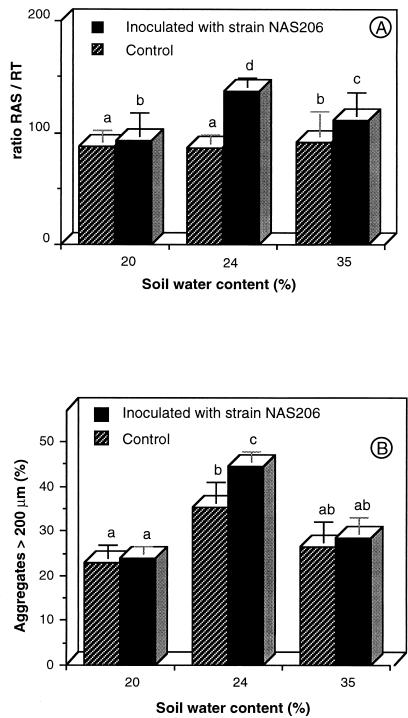
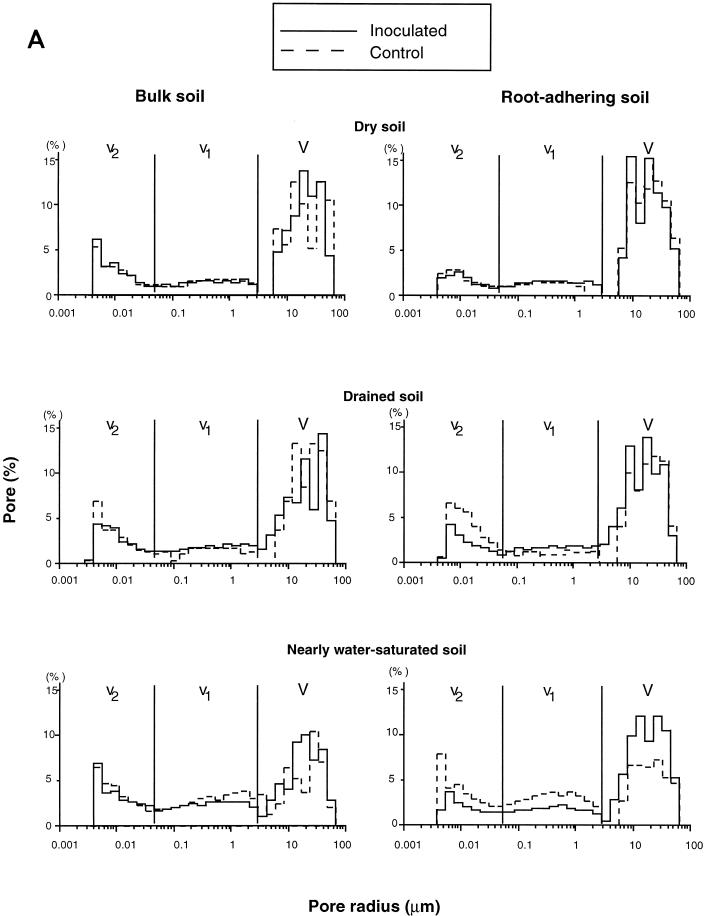
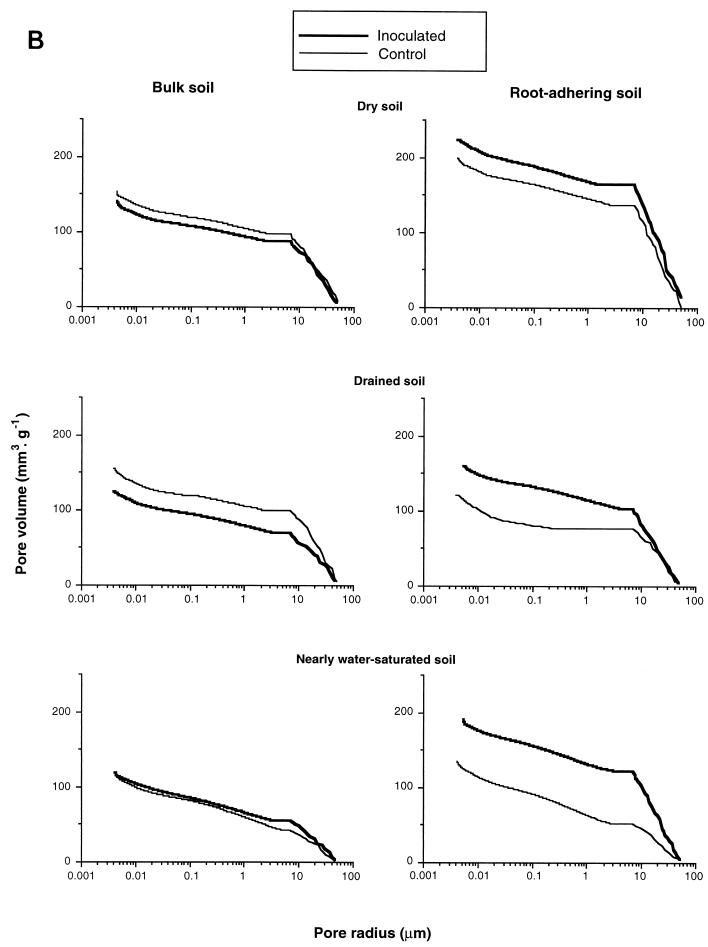
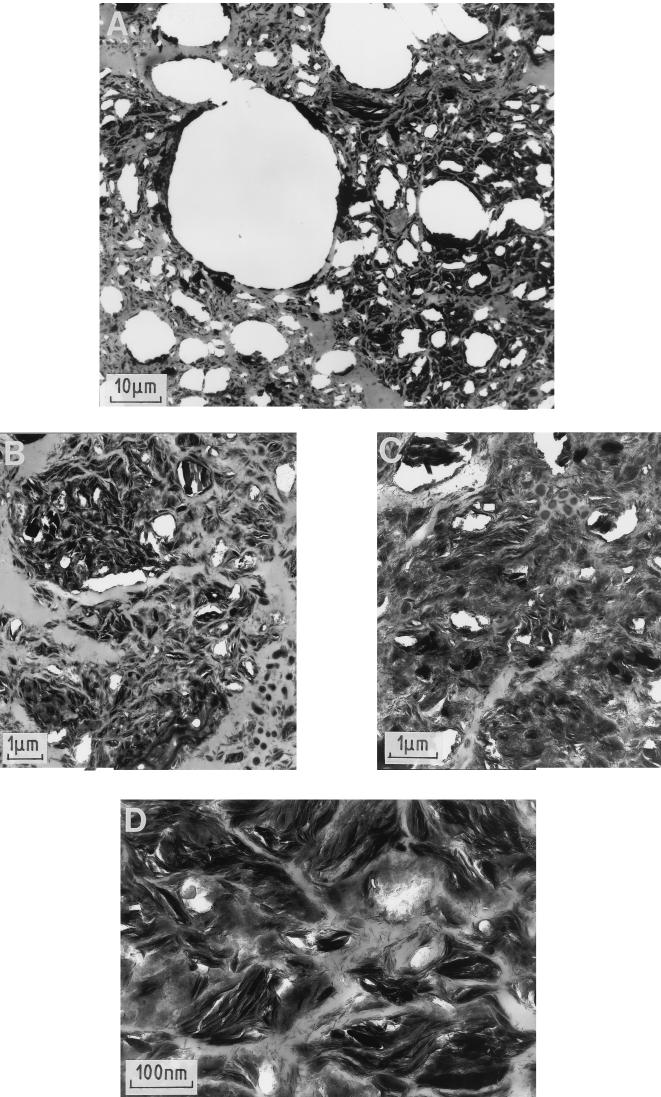
The effect of bacterial secretion of an exopolysaccharide (EPS) on rhizosphere soil physical properties was investigated by inoculating strain NAS206, which was isolated from the rhizosphere of wheat (Triticum durum L.) growing in a Moroccan vertisol and was identified as Pantoea aglomerans. Phenotypic identification of this strain with the Biotype-100 system was confirmed by amplified ribosomal DNA restriction analysis. After inoculation of wheat seedlings with strain NAS206, colonization increased at the rhizoplane and in root-adhering soil (RAS) but not in bulk soil. Colonization further increased under relatively dry conditions (20% soil water content; matric potential, -0.55 MPa). By means of genetic fingerprinting using enterobacterial repetitive intergenic consensus PCR, we were able to verify that colonies counted as strain NAS206 on agar plates descended from inoculated strain NAS206. The intense colonization of the wheat rhizosphere by these EPS-producing bacteria was associated with significant soil aggregation, as shown by increased ratios of RAS dry mass to root tissue (RT) dry mass (RAS/RT) and the improved water stability of adhering soil aggregates. The maximum effect of strain NAS206 on both the RAS/RT ratio and aggregate stability was measured at 24% average soil water content (matric potential, -0.20 MPa). Inoculated strain NAS206 improved RAS macroporosity (pore diameter, 10 to 30 &mgr;m) compared to the noninoculated control, particularly when the soil was nearly water saturated (matric potential, -0.05 MPa). Our results suggest that P. agglomerans NAS206 can play an important role in the regulation of the water content (excess or deficit) of the rhizosphere of wheat by improving soil aggregation.
Figures
References
-
- Achouak W, Heulin T, Villemin G, Balandreau J. Root colonization by symplasmata-forming Enterobacter agglomerans. FEMS Microbiol Ecol. 1994;13:287–294.
-
- Bartoli F, Burtin G, Herbillon A J. Disaggregation and clay dispersion of oxisols: Na resin, a recommended methodology. Geoderma. 1991;49:301–317.
-
- Blum A, Johnson J W. Transfer of water from roots into dry soil and the effect on wheat water relations and growth. Plant Soil. 1992;145:141–149.
-
- Chenu C, Guérif J. Mechanical strength of clay minerals as influenced by an adsorbed polysaccharide. Soil Sci Soc Am J. 1991;55:1076–1080.
-
- Chenu C. Clay or sand polysaccharide associations as models for the interface between micro-organisms and soil: water related properties and microstructure. Geoderma. 1993;56:143–156.
LinkOut - more resources
Full Text Sources
