


1-Methyl-4-phenyl-1,2,3,6-tetrahydropyride neurotoxicity is attenuated in mice overexpressing Bcl-2
- PMID: 9763461
- PMCID: PMC6792836
- DOI: 10.1523/JNEUROSCI.18-20-08145.1998
1-Methyl-4-phenyl-1,2,3,6-tetrahydropyride neurotoxicity is attenuated in mice overexpressing Bcl-2
Abstract
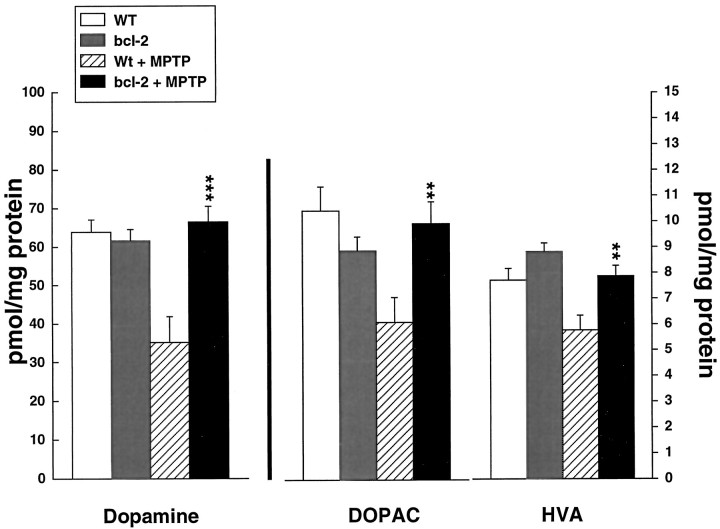
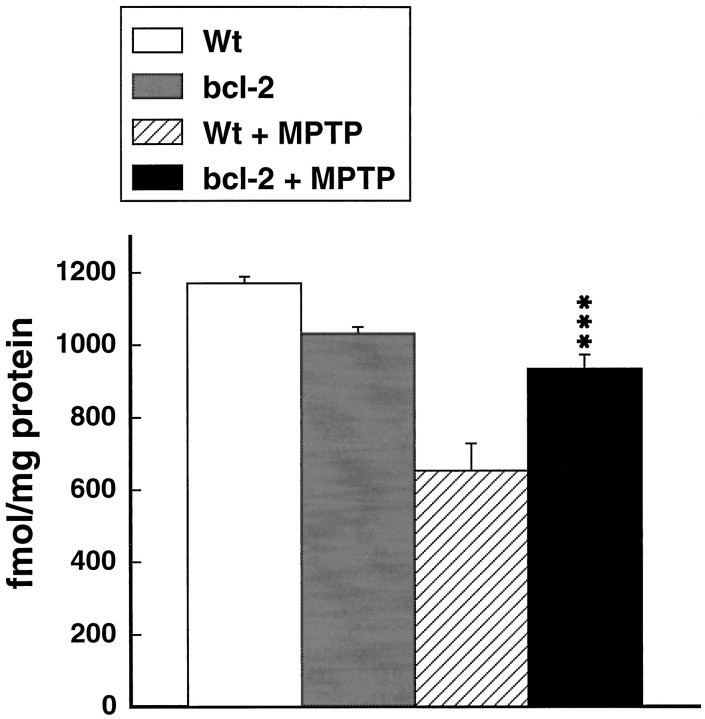
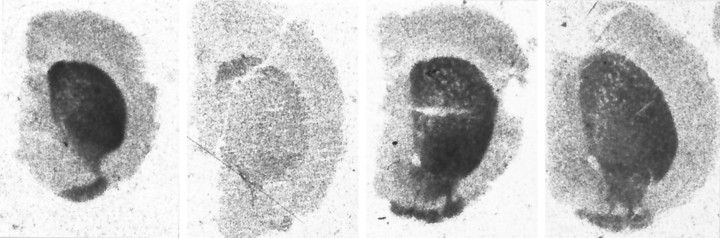
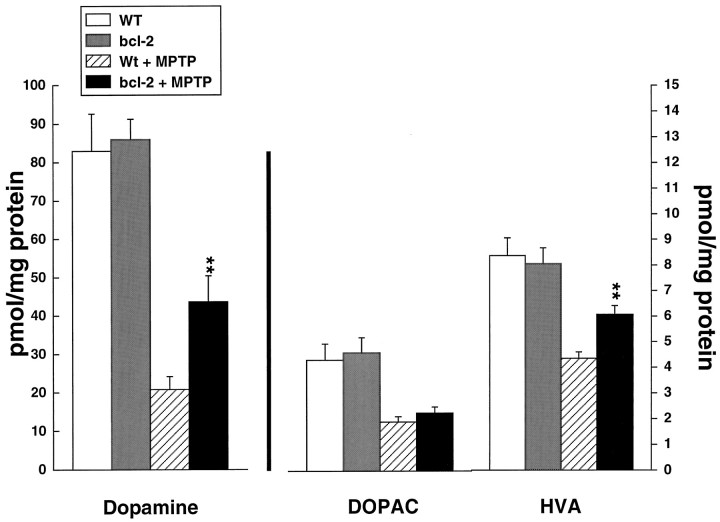
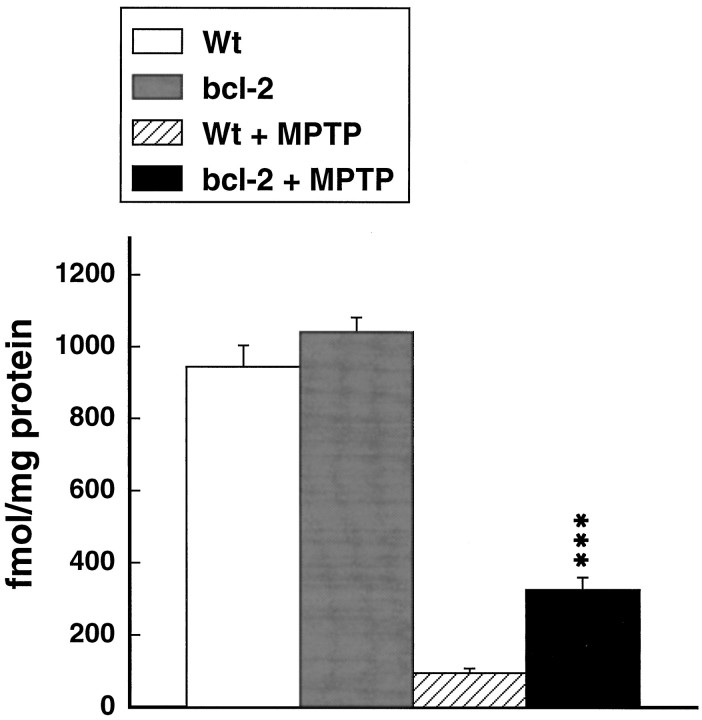
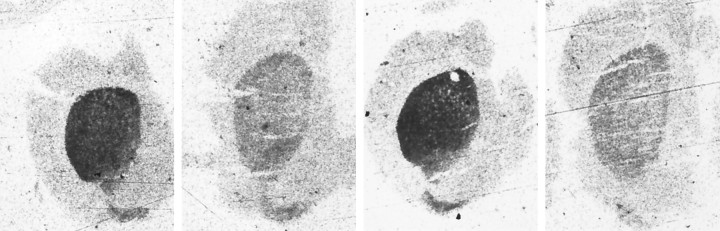
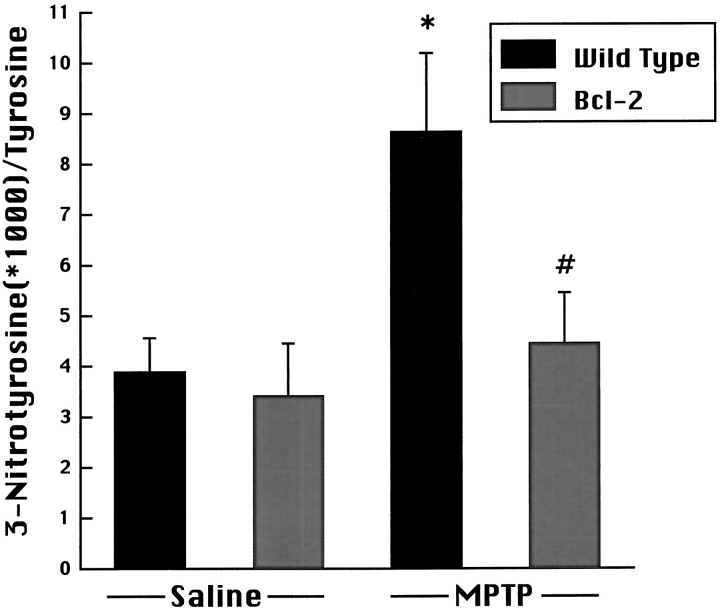
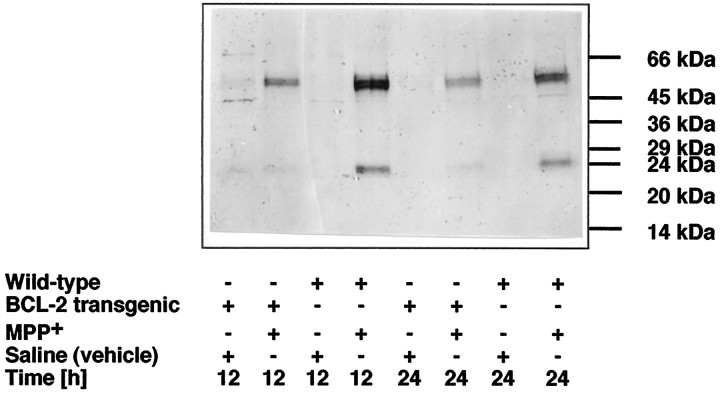
The proto-oncogene Bcl-2 rescues cells from a wide variety of insults. Recent evidence suggests that Bcl-2 protects against free radicals and that it increases mitochondrial calcium-buffering capacity. The neurotoxicity of 1-methyl-4-phenyl-1,2,3, 6-tetrahydropyride (MPTP) is thought to involve both mitochondrial dysfunction and free radical generation. We therefore investigated MPTP neurotoxicity in both Bcl-2 overexpressing mice and littermate controls. MPTP-induced depletion of dopamine and loss of [3H]mazindol binding were significantly attenuated in Bcl-2 overexpressing mice. Protection was more profound with an acute dosing regimen than with daily MPTP administration over 5 d. 1-Methyl-4-phenylpyridinium (MPP+) levels after MPTP administration were similar in Bcl-2 overexpressing mice and littermates. Bcl-2 blocked MPP+-induced activation of caspases. MPTP-induced increases in free 3-nitrotyrosine levels were blocked in Bcl-2 overexpressing mice. These results indicate that Bcl-2 overexpression protects against MPTP neurotoxicity by mechanisms that may involve both antioxidant activity and inhibition of apoptotic pathways.
Figures
References
-
- Anglade P, Vyas S, Javoy-Agid F, Herrero MT, Michel PP, Marquez J, Mouatt-Prigent A, Ruberg M, Hirsch EC, Agid Y. Apoptosis and autophagy in nigral neurons of patients with Parkinson’s disease. Histol Histopathol. 1997;12:25–31. - PubMed
-
- Antonsson B, Conti F, Ciavatta AM, Montessuit S, Lewis S, Martinou I, Bernasconi L, Bernard A, Mermod J-J, Mazzei G, Maundrell K, Gambale F, Sadoul R, Martinou J-C. Inhibition of Bax channel-forming activity by Bcl-2. Science. 1997;277:370–372. - PubMed
-
- Baffy G, Miyashita T, Williamson JR, Reed JC. Apoptosis induced by withdrawal of interleukin-3 (IL-3) and an IL-3-dependent hematopoietic cell line is associated with repartitioning of intracellular calcium and is blocked by enforced Bcl-2 oncoprotein production. J Biol Chem. 1993;268:6511–6519. - PubMed
-
- Beal MF, Kowall NW, Swartz KJ, Ferrante R. Homocysteic acid striatal lesions in rats spare somatostatin-neuropeptide Y neurons. Neurosci Lett. 1990;108:36–42. - PubMed
-
- Bloem BR, Irwin I, Buruma OJS, Haan J, Roos RAC, Tetrud JW, Langston JW. The MPTP model: versatile contributions to the treatment of idiopathic Parkinson’s disease. J Neurol Sci. 1990;97:273–293. - PubMed
Publication types
MeSH terms
Substances
Grants and funding
LinkOut - more resources
Full Text Sources
Molecular Biology Databases
