


Extraintestinal salmonellosis in a general hospital (1991 to 1996): relationships between Salmonella genomic groups and clinical presentations
- PMID: 9774581
- PMCID: PMC105317
- DOI: 10.1128/JCM.36.11.3291-3296.1998
Extraintestinal salmonellosis in a general hospital (1991 to 1996): relationships between Salmonella genomic groups and clinical presentations
Abstract
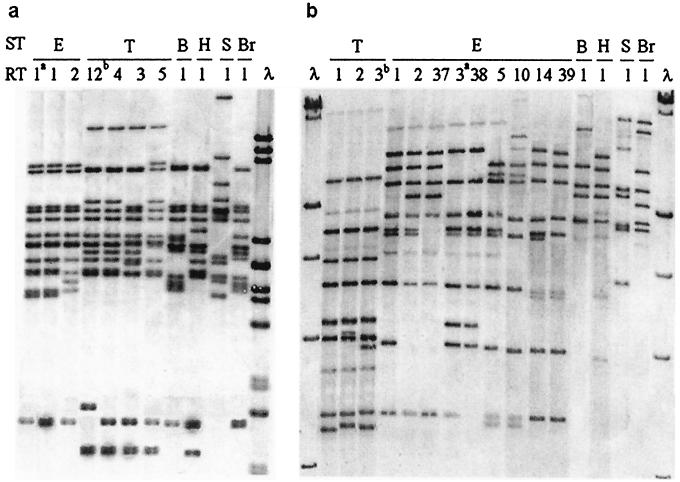
Episodes of extraintestinal salmonellosis treated at a general hospital (1,522 beds) over a 6-year period (1991 to 1996) were characterized by the analysis of phenotypic and genotypic traits of Salmonella organisms and clinical data from medical reports. Extraintestinal salmonellosis accounted for 8% of all salmonellosis episodes. Fifty-two medical reports, dealing with 6 cases of typhoid fever, 32 cases of bacteremia, and 14 focal infections, were reviewed. All cases of typhoid fever except 1, 7 cases of bacteremia, and 5 focal infections were not related to any underlying disease or predisposing factors, while 25 cases of bacteremia and 9 focal infections were associated with some of these risk factors. All typhoid isolates and 65.4% of the nontyphoid isolates were susceptible to antimicrobials. Fifty-one nontyphoid strains were analyzed and assigned to 21 genomic groups, which were defined by serotype, combined ribotype, and combined randomly amplified polymorphic DNA type (each genomic group could include organisms differing in some phenotypic traits). The relationships between genomic groups and clinical presentations were traced. Organisms causing 22 episodes (17 episodes of bacteremia, 2 of pneumonia, 1 of peritonitis, 1 of pyelonephritis, and 1 of cystitis) belonged to a prevalent Salmonella enterica serotype Enteritidis genomic group, which included organisms assigned to four phage types, five biotypes, and four resistance patterns, causing infections in patients with and without risk factors. Seven other genomic groups, 4 Enteritidis groups (associated with both bacteremia and focal infections), 2 Typhimurium groups (one associated with bacteremia and the other with focal infections) and 1 Brandenburg group (associated with bacteremia) included two or more strains, and the remaining 13 genomic groups consisted of only one strain each.
Figures

References
-
- Balows A, Hausler W J Jr, Herrmann K L, Isenberg H D, Shadomy H J, editors. Manual of clinical microbiology. 5th ed. Washington, D.C: American Society for Microbiology; 1991.
-
- Bassa A, Parras F, Reina J, Villar E, Gil J, Alomar P. Non-Typhi Salmonella bacteraemia. Infection. 1989;17:290–293. - PubMed
-
- Cohen J I, Bartlett J A, Ralph Corey G. Extra-intestinal manifestations of Salmonella infections. Medicine. 1987;66:349–387. - PubMed
-
- Cohen M, Tauxe R. Drug-resistant Salmonella in the United States: an epidemiologic perspective. Science. 1986;234:964–969. - PubMed
Publication types
MeSH terms
LinkOut - more resources
Full Text Sources
Medical
Molecular Biology Databases
