


Morphological transition of Paracoccidioides brasiliensis conidia to yeast cells: in vivo inhibition in females
- PMID: 9784579
- PMCID: PMC108705
- DOI: 10.1128/IAI.66.11.5587-5591.1998
Morphological transition of Paracoccidioides brasiliensis conidia to yeast cells: in vivo inhibition in females
Abstract
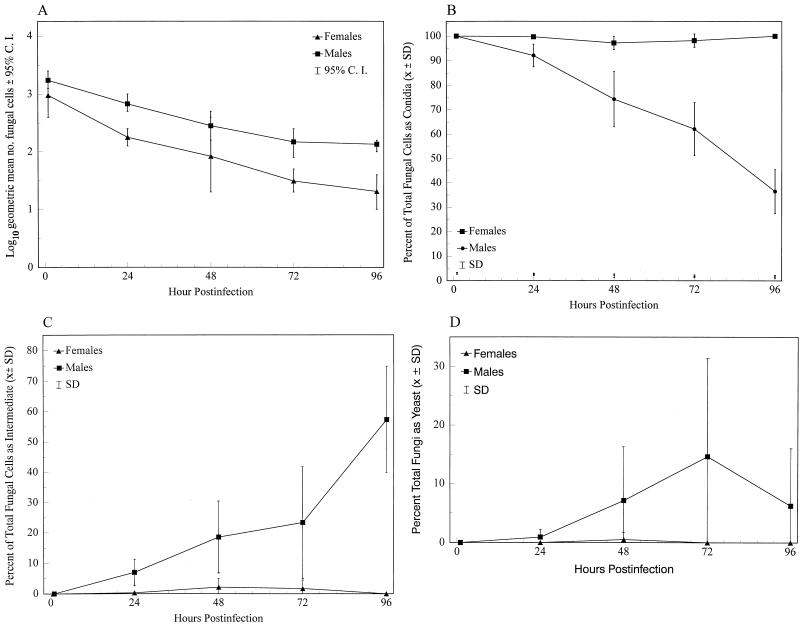
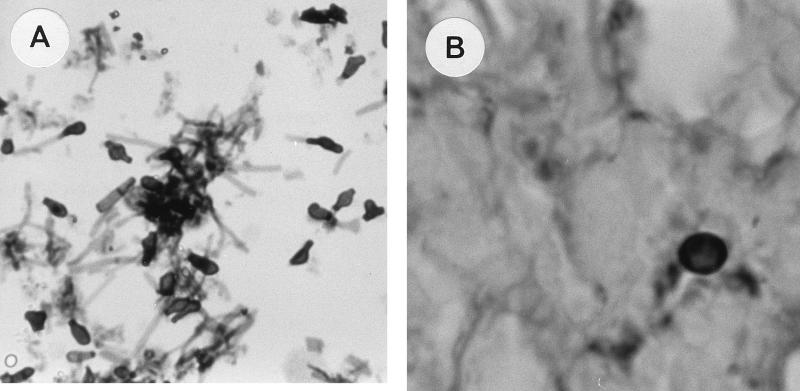
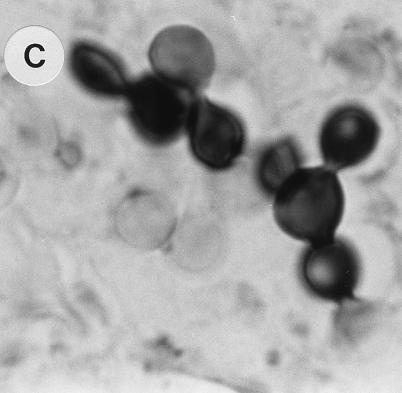
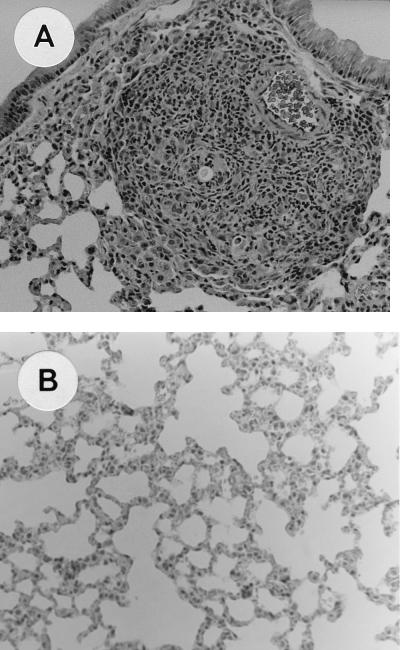
Clinical paracoccidioidomycosis is 13 times more common in men than in women. Estrogen inhibits the transition of mycelia or conidia (the saprophytic form of Paracoccidioides brasiliensis) to yeasts (the parasitic form) in vitro. Here, we show that, in male mice that were infected intranasally (mimicking natural infection) the transition of conidia in bronchoalveolar lavage fluids to intermediate forms and yeasts occurred over 24 to 96 h; CFU and yeasts (shown by histopathology) increased subsequently. In females, transition did not occur and infection cleared. These events in vivo are consistent with epidemiological and in vitro observations, suggesting that female hormones block transition and are responsible for resistance.
Figures
References
-
- Borelli D, Marcano C. Mus musculus como modelo para la paracoccidioidomicosis experimental. Dermatol Venez. 1971;10:1271–1273.
-
- Calich V L G, Purchio A, Paula C R. A new fluorescent viability test for fungi cells. Mycopathologia. 1985;66:175–177. - PubMed
Publication types
MeSH terms
LinkOut - more resources
Full Text Sources
