


Selective activation of Galphao by D2L dopamine receptors in NS20Y neuroblastoma cells
- PMID: 9786976
- PMCID: PMC6793548
- DOI: 10.1523/JNEUROSCI.18-21-08692.1998
Selective activation of Galphao by D2L dopamine receptors in NS20Y neuroblastoma cells
Abstract
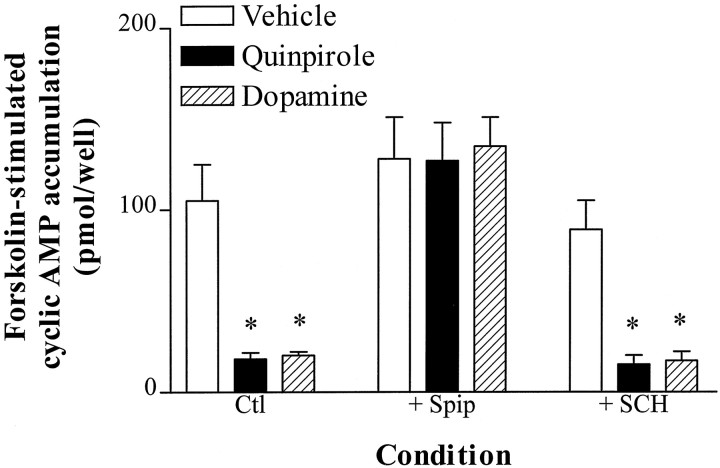
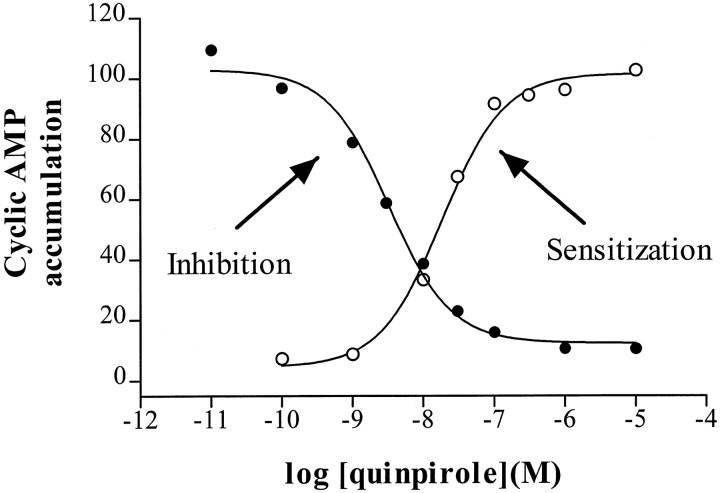
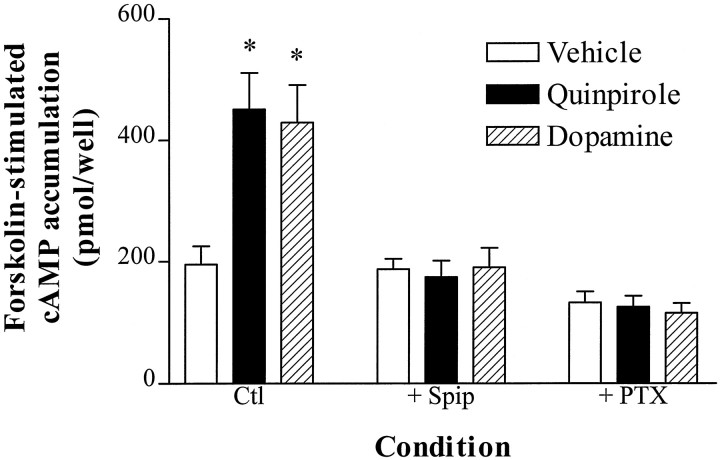
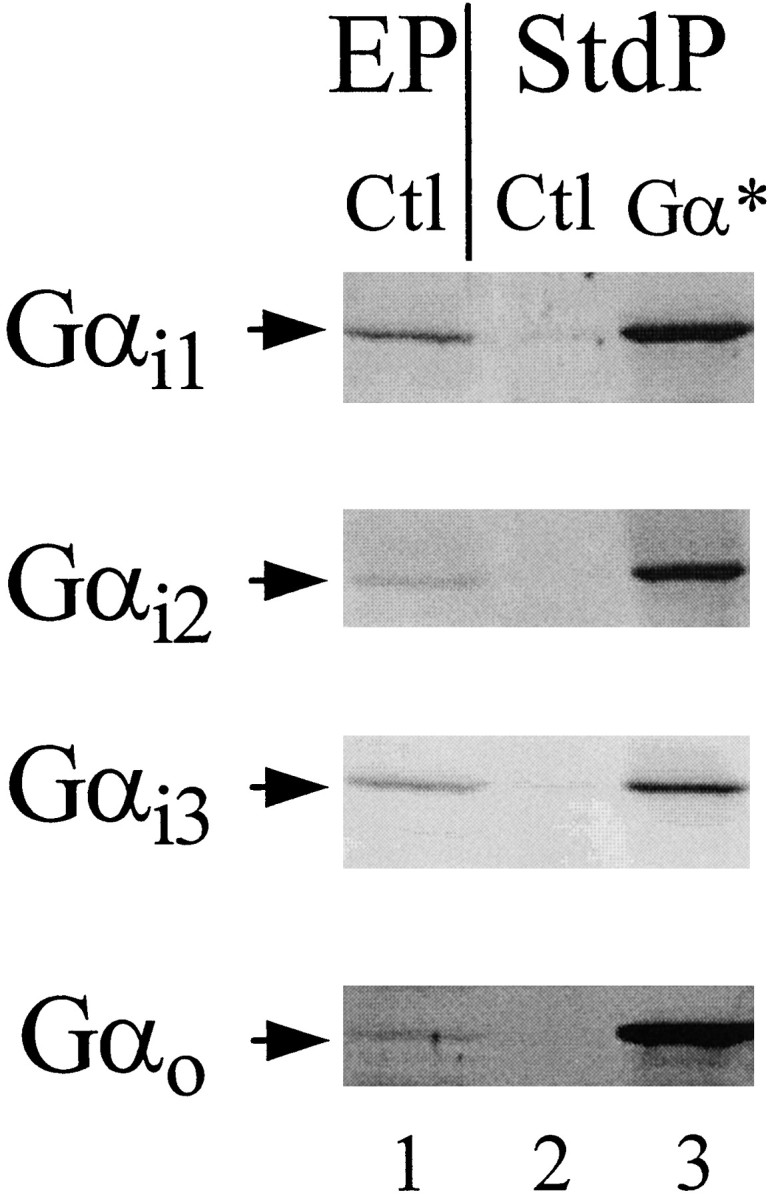
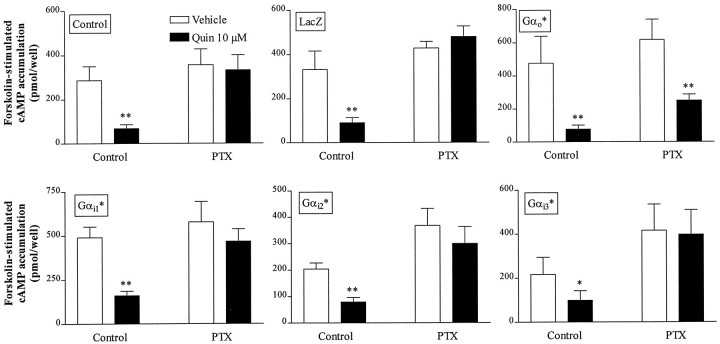
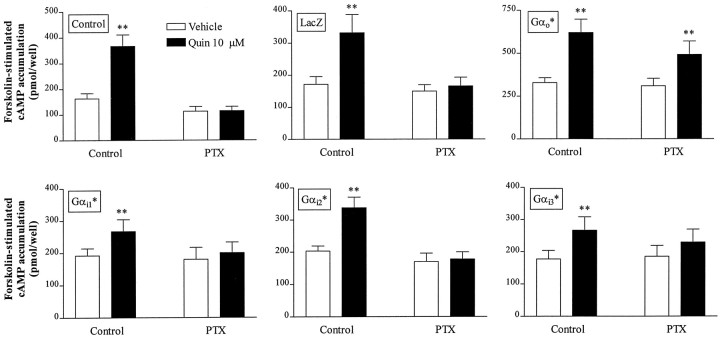
D2L dopamine receptor activation results in rapid inhibition and delayed heterologous sensitization of adenylate cyclase in several host cell types. The D2L dopamine receptor was stably transfected into NS20Y neuroblastoma cells to examine inhibition and sensitization in a neuronal cell environment and to identify the particular G-proteins involved. Acute activation of D2L receptors with the selective D2 agonist quinpirole inhibited forskolin-stimulated cAMP accumulation, whereas prolonged incubation (2 hr) with quinpirole resulted in heterologous sensitization (more than twofold) of forskolin-stimulated cAMP accumulation in NS20Y-D2L cells. To unambiguously identify the pertussis toxin (PTX)-sensitive G-proteins responsible for inhibition and sensitization, we used viral-mediated gene delivery to assess the ability of genetically engineered PTX-resistant G-proteins (Galphai1*, Galphai2*, Galphai3*, and Galphao*) to rescue both responses after PTX treatment. The expression and function of individual recombinant G-proteins was confirmed with Western blotting and inhibition of GTPgammaS-stimulated adenylate cyclase, respectively. To assess the specificity of D2L-Galpha coupling, cells were infected with herpes simplex virus (HSV) recombinants expressing individual PTX-resistant G-protein alpha subunits and treated with PTX, and quinpirole-induced responses were measured. Infection of NS20Y-D2L cells with HSV-Galphao* rescued both inhibition and sensitization in PTX-treated cells, whereas infection with HSV-Galphai1*, HSV-Galphai2*, or HSV-Galphai3* failed to rescue either response. In summary, the current study provides strong evidence that the D2L dopamine receptor couples to Galphao in neuronal cells, and that this coupling is responsible for both the acute and subacute effects of D2 receptor activation on adenylate cyclase activity.
Figures
References
-
- Ammer H, Schulz R. Morphine dependence in human neuroblastoma SH-SY5Y cells is associated with adaptive changes in both the quantity and functional interaction of PGE1 receptors and stimulatory G proteins. Brain Res. 1996;707:235–244. - PubMed
-
- Ammer H, Schulz R. Enhanced stimulatory adenylyl cyclase signaling during opioid dependence is associated with a reduction in palmitoylated Gsα. Mol Pharmacol. 1997;52:993–999. - PubMed
-
- Avidor-Reiss T, Nevo I, Levy R, Pfeuffer T, Vogel Z. Chronic opioid treatment induces adenylyl cyclase V superactivation: involvement of Gβγ. J Biol Chem. 1996;271:21309–21315. - PubMed
-
- Bates MD, Senogles SE, Bunzow JR, Liggett SB, Civelli O, Caron MG. Regulation of responsiveness at D2 dopamine receptors by receptor desensitization and adenylyl cyclase sensitization. Mol Pharmacol. 1991;39:55–63. - PubMed
Publication types
MeSH terms
Substances
Grants and funding
LinkOut - more resources
Full Text Sources
