


Control of myelination by specific patterns of neural impulses
- PMID: 9801369
- PMCID: PMC6792896
- DOI: 10.1523/JNEUROSCI.18-22-09303.1998
Control of myelination by specific patterns of neural impulses
Abstract
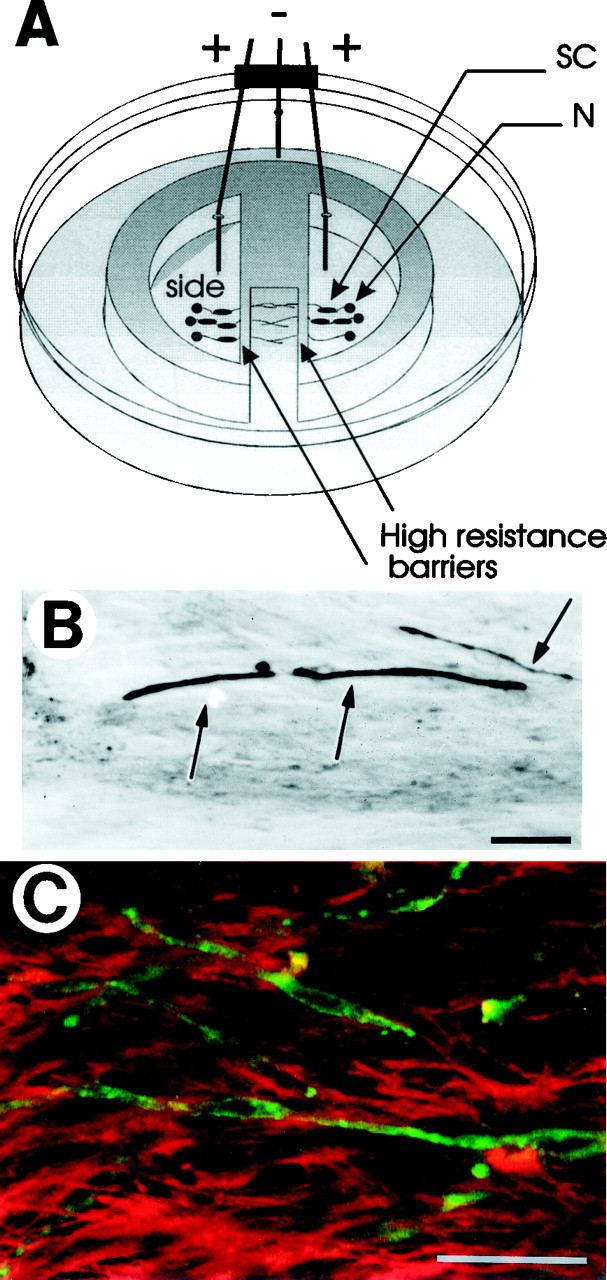
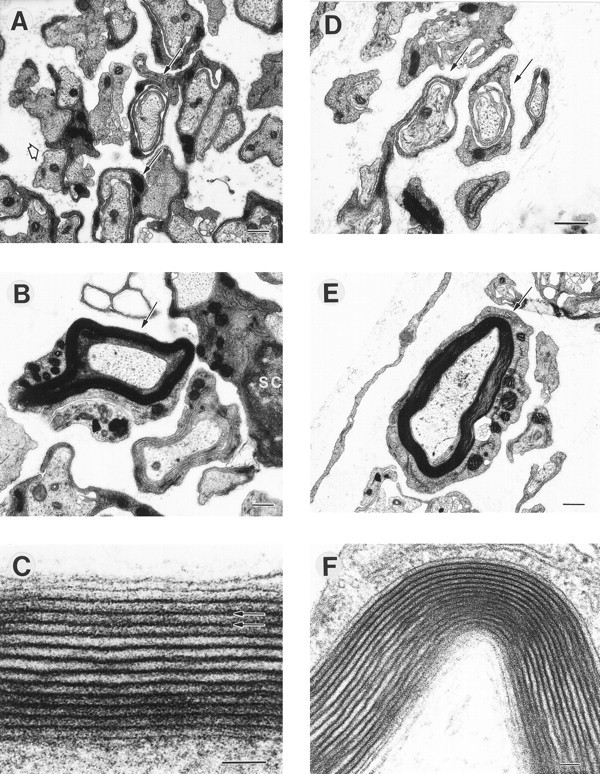
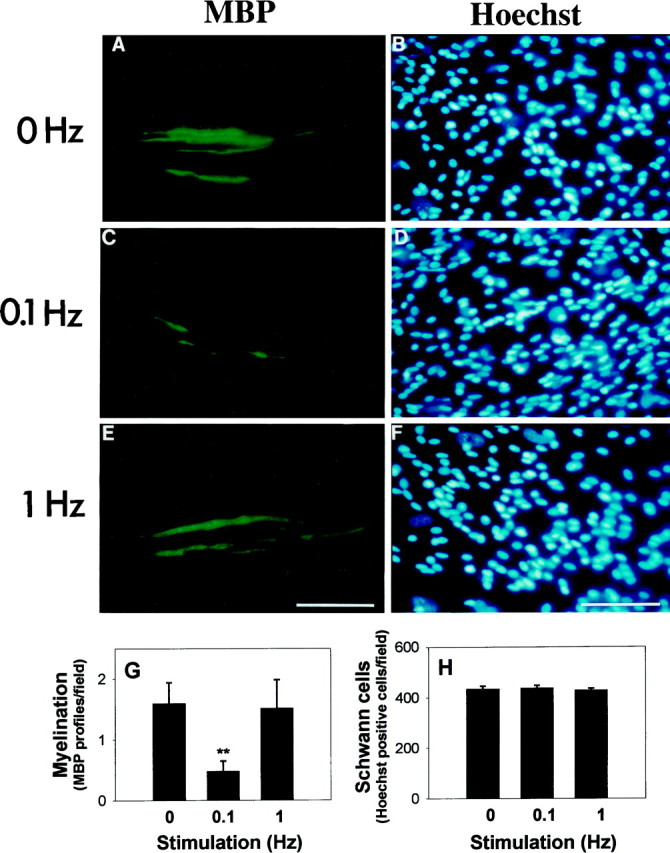
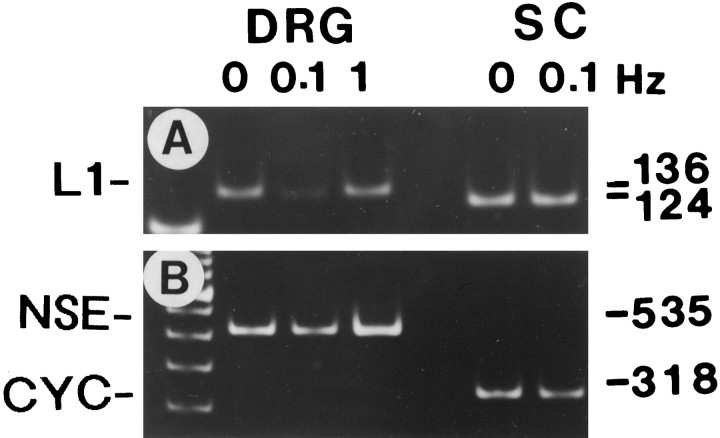
A cell culture preparation equipped with stimulating electrodes was used to investigate whether action potential activity can influence myelination of mouse dorsal root ganglia axons by Schwann cells. Myelination was reduced to one-third of normal by low-frequency impulse activity (0.1 Hz), but higher-frequency stimulation (1 Hz) had no effect. The number of Schwann cells and the ultrastructure of compact myelin were not affected. The frequency of stimulation that inhibited myelination decreased expression of the cell adhesion molecule L1, and stimulation under conditions that prevented the reduction in L1 blocked the effects on myelination. This link between myelination and functional activity in the axon at specific frequencies that change axonal expression of L1 could have important consequences for the structural and functional relationship of myelinating axons.
Figures

References
-
- Aguayo AJ, Epps J, Charron L, Bray GM. Multipotentiality of Schwann cells in cross-anastomosed and grafted myelinated and unmyelinated nerves: quantitative microscopy and radioautography. Brain Res. 1976;104:1–20. - PubMed
-
- Barres BA, Raff MC. Proliferation of oligodendrocyte precursor cells depends on electrical activity in axons. Nature. 1993;361:258–260. - PubMed
-
- Carenini S, Montag D, Crener H, Schachner M, Martini R. Absence of the myelin-associated glycoprotein (MAG) and the neural cell adhesion molecule (N-CAM) interferes with the maintenance, but not with the formation of peripheral myelin. Cell Tissue Res. 1997;287:3–9. - PubMed
-
- Carenini S, Montag D, Schachner M, Martini R. MAG-deficient Schwann cells myelinate dorsal root ganglion neurons in culture. Glia. 1998;22:213–220. - PubMed
MeSH terms
Substances
LinkOut - more resources
Full Text Sources
