. 1998 Nov 2;188(9):1553-61.
doi: 10.1084/jem.188.9.1553.

Heteroclitic immunization induces tumor immunity

Affiliations

Heteroclitic immunization induces tumor immunity

R Dyall et al. J Exp Med. .

Abstract

In tumor transplantation models in mice, cytotoxic T lymphocytes (CTLs) are typically the primary effector cells. CTLs recognize major histocompatibility complex (MHC) class I-associated peptides expressed by tumors, leading to tumor rejection. Peptides presented by cancer cells can originate from viral proteins, normal self-proteins regulated during differentiation, or altered proteins derived from genetic alterations. However, many tumor peptides recognized by CTLs are poor immunogens, unable to induce activation and differentiation of effector CTLs. We used MHC binding motifs and the knowledge of class I:peptide:TCR structure to design heteroclitic CTL vaccines that exploit the expression of poorly immunogenic tumor peptides. The in vivo potency of this approach was demonstrated using viral and self-(differentiation) antigens as models. First, a synthetic variant of a viral antigen was expressed as a tumor antigen, and heteroclitic immunization with peptides and DNA was used to protect against tumor challenge and elicit regression of 3-d tumors. Second, a peptide from a relevant self-antigen of the tyrosinase family expressed by melanoma cells was used to design a heteroclitic peptide vaccine that successfully induced tumor protection. These results establish the in vivo applicability of heteroclitic immunization against tumors, including immunity to poorly immunogenic self-proteins.


Figures
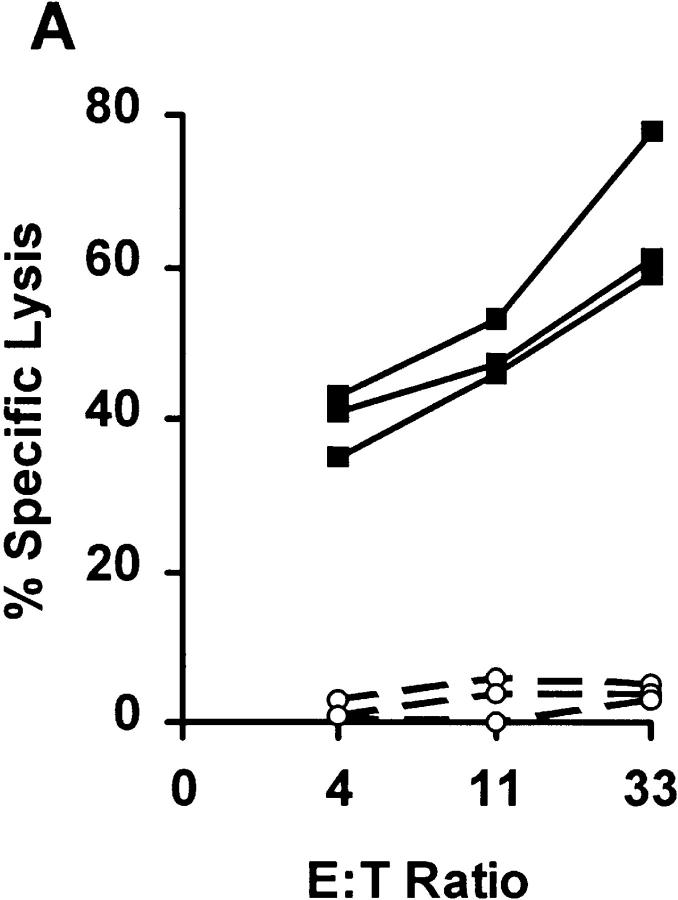
Figure 1
Figure 1
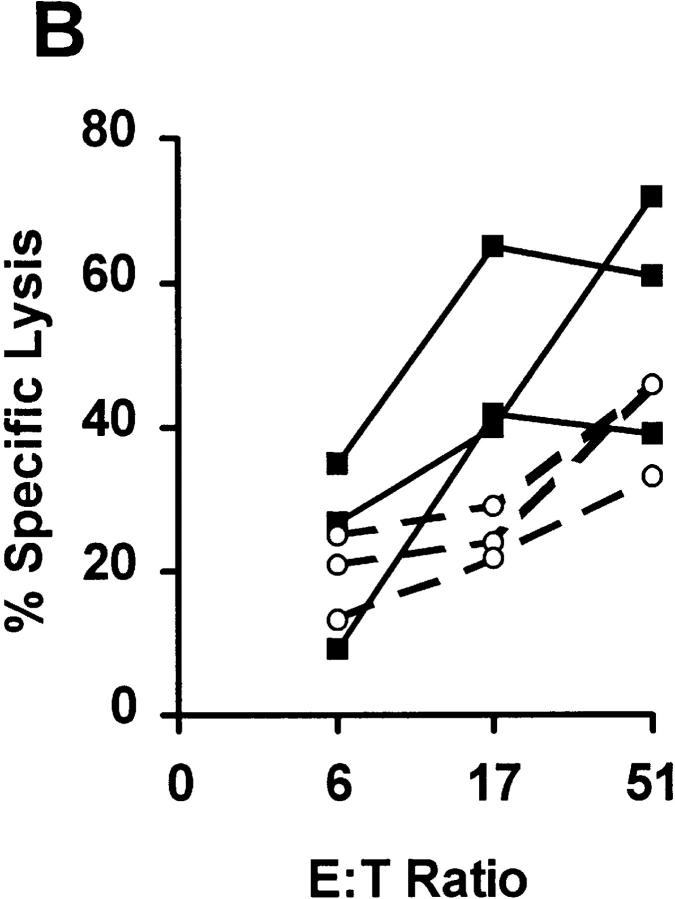
Efficacy of CTL priming by SSI and SEI peptides. (A) CTL responses to peptide priming of B6 mice by SEI (circles) and SSI (squares). Three mice per group were vaccinated with indicated peptides in adjuvant (pep/TM). 7 d later, spleen cells were restimulated in vitro and CTL responses of individual mice tested in a 51Cr-release assay using Kb- expressing EL-4 target cells pulsed with 10 μM of the immunizing peptide, as previously described (19). The lysis of unpulsed EL-4 cells (always <10%) was subtracted, and results are shown for individual mice at indicated effector/target ratios. Results are representative of >45 mice tested in at least 10 independent experiments. Indistinguishable results were obtained using DNA immunization by particle bombardment (Table 1). (B) Peptide immunogenicity correlates to peptide binding. bm8 mice respond to peptide priming by SSI (squares) and SEI (circles), both of which bind well to Kbm8 (16). Results are representative of at least 25 mice/strain tested in at least six independent experiments. Methods and data representation were as described in A.
Figure 1
Figure 1
Efficacy of CTL priming by SSI and SEI peptides. (A) CTL responses to peptide priming of B6 mice by SEI (circles) and SSI (squares). Three mice per group were vaccinated with indicated peptides in adjuvant (pep/TM). 7 d later, spleen cells were restimulated in vitro and CTL responses of individual mice tested in a 51Cr-release assay using Kb- expressing EL-4 target cells pulsed with 10 μM of the immunizing peptide, as previously described (19). The lysis of unpulsed EL-4 cells (always <10%) was subtracted, and results are shown for individual mice at indicated effector/target ratios. Results are representative of >45 mice tested in at least 10 independent experiments. Indistinguishable results were obtained using DNA immunization by particle bombardment (Table 1). (B) Peptide immunogenicity correlates to peptide binding. bm8 mice respond to peptide priming by SSI (squares) and SEI (circles), both of which bind well to Kbm8 (16). Results are representative of at least 25 mice/strain tested in at least six independent experiments. Methods and data representation were as described in A.
Figure 2
Figure 2
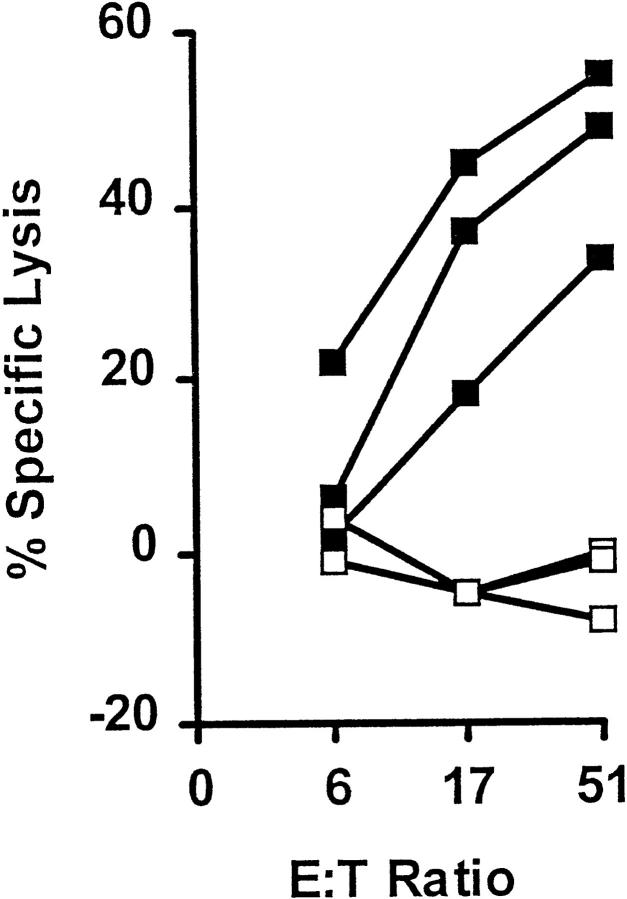
SSI is a heteroclitic immunogen for the antigenic, but not immunogenic, SEI peptide. Three anti-SSI CTL lines, derived from individual B6 mice by peptide immunization, were tested for the ability to lyse the Kb-expressing target cell lines RS-SEI (closed squares) and RS-Null (open squares), transfected with SEI-encoding and control plasmids, respectively, in a standard 51Cr-release assay. Six more lines were tested and gave identical results.
Figure 3
Figure 3
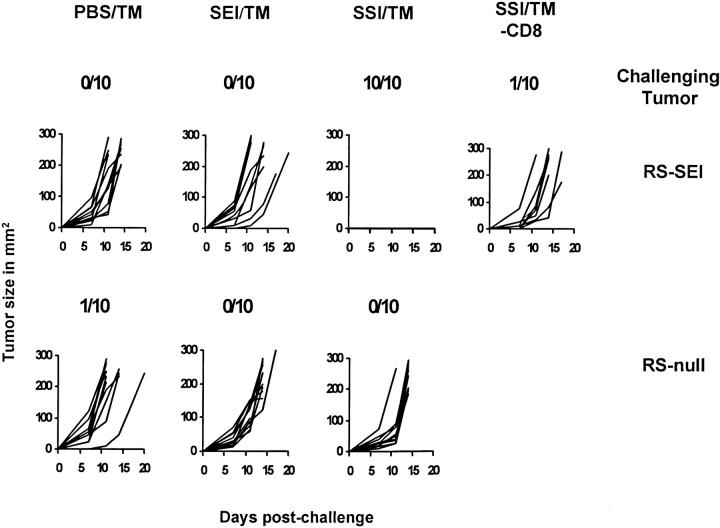
In vivo ability of the heteroclitic vaccine SSI to protect mice against a transplantable tumor expressing SEI. 10 B6 mice per group were vaccinated with peptides SSI, SEI, or control PBS (19) emulsified in TM. 7 d later, animals were challenged with 5 × 10⁵ RS-SEI or RS-Null cells subcutaneously. Nodules were palpable 3 d after challenge. Numbers on figures show numbers of tumor-free mice at 90 d. A seventh group also received SSI and was challenged with RS-SEI, but the animals were depleted of CD8+ cells by administration of an anti-CD8 mAb before the challenge. Tumors were measured as described in Materials and Methods, and results are shown as tumor growth curves. All tumor-free mice remained free of tumors for >90 d. DNA vaccination yielded identical results (Table 2).
Figure 4
Figure 4
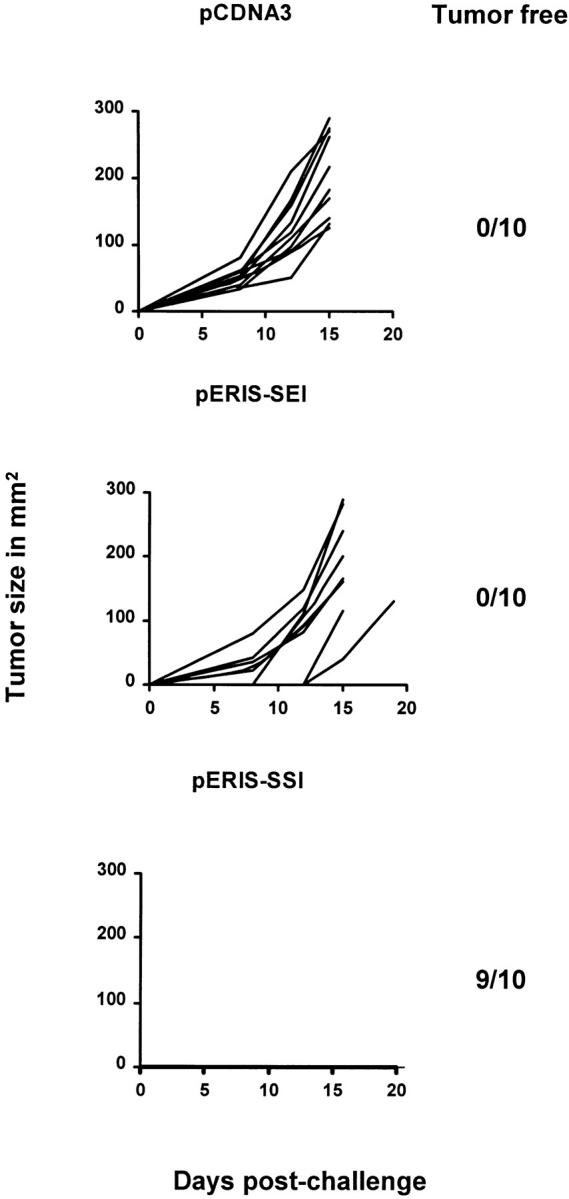
DNA vaccination with a heteroclitic immunogen eradicates 3-d tumors in mice. B6 mice were injected with the RS-SEI tumor, as described in the legend of Fig. 2 A. 3 d later, when palpable tumors appeared (2–3 mm in diameter), the mice were injected with DNA constructs (indicated in the figure) and tumor growth was scored. Tumors were followed and data shown exactly as in Fig. 3, with the figure showing one experiment and the numbers depicting tumor-free animals after 90 d of observation. Together with another similar experiment, this data is also shown in Table 2.
Figure 5
Figure 5
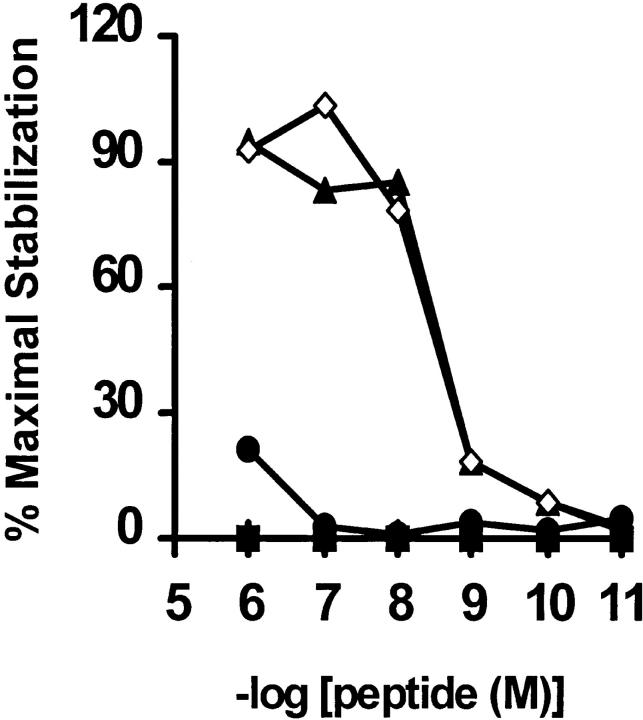
The TAY peptide is an excellent binder to Kb. An RMA-S stabilization assay was performed and results are shown as previously described (16), using peptides SSI (open diamonds, positive control), HIV-10, a Dd-binding peptide, (RGPGRAFVTI, filled squares, negative control), TWH (filled circles), and its heteroclitic variant, TAY (filled triangles) at indicated concentrations. In this type of assay, the percentage of maximal stabilization provides a direct correlate of peptide binding (16). Experiment is representative of three such assays.
Figure 6
Figure 6
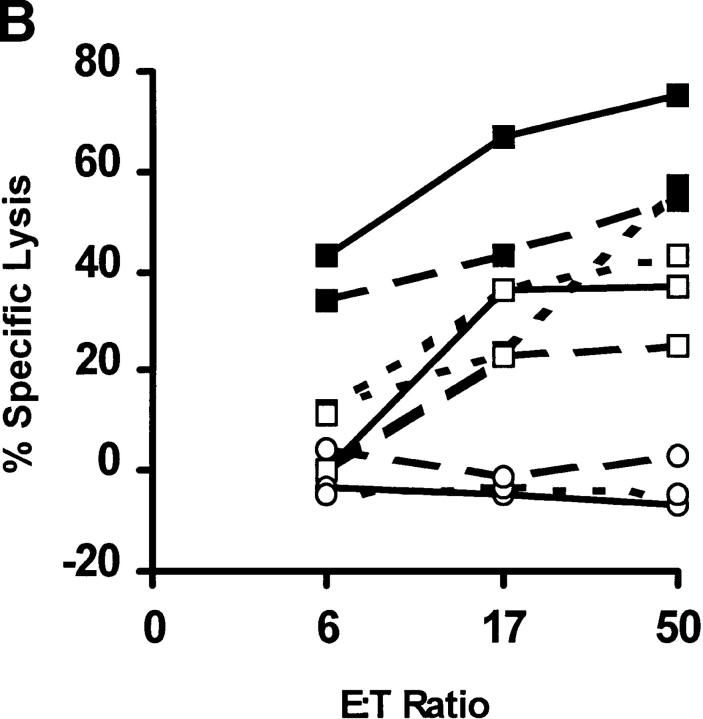
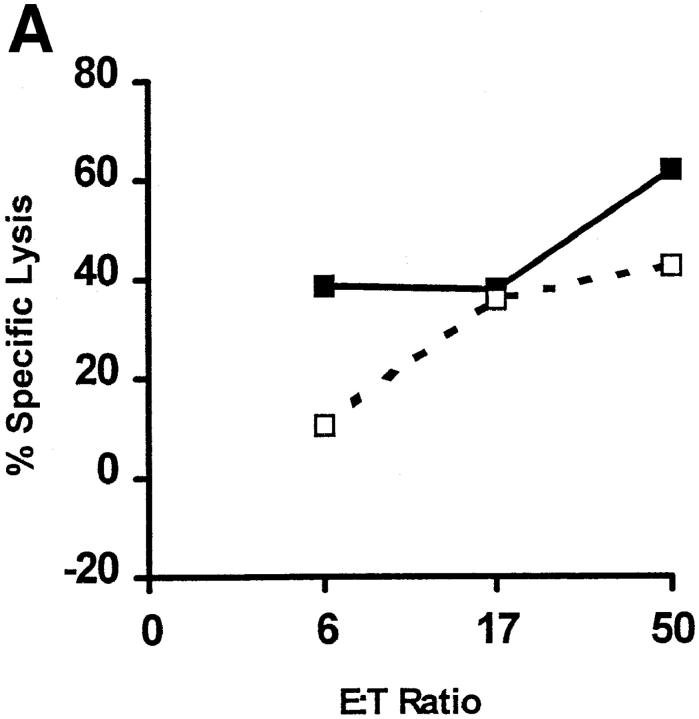
The TAY peptide is a heteroclitic immunogen for the native gp75 melanoma peptide, TWH. (A) TAY-induced CTLs lyse Kb- expressing target cells pulsed with TWH. CTL activity of anti-TAY CTLs against Kb-expressing target cells pulsed with 1 μM TAY (closed squares) or TWH (open squares). Lysis of control target cells (<10% at any point) was subtracted from the shown values. Target cells were pulsed with peptides and a Cr-release assay was performed as described (19). Cumulative results from several experiments of this type are shown in Table 1. (B) TWH is naturally processed in vivo, and can serve as a target for anti-TAY CTLs. The gp75-positive B16 melanoma line, but not its gp75 negative variant (B78.H1), is efficiently lysed by anti-TAY CTLs. B16 (filled squares), B78.H1 (open circles), or B78H.1 pulsed with 10 μM of the TWH peptide (open squares) were used as targets in a standard Cr-release assay after a 24-h incubation with 10 U/ml of IFN-γ to induce MHC class I expression. The extent of class I induction was confirmed by flow cytometry, and was similar for both tumor lines (data not shown). Similar results were obtained with the ex vivo explanted B16 melanoma (these cells express high levels of MHC class I molecules owing to class I upregulation in vivo). Results are shown for three independent CTL lines, each one depicted by a different type of line, and are representative of six lines tested thus far.
Figure 6
Figure 6
The TAY peptide is a heteroclitic immunogen for the native gp75 melanoma peptide, TWH. (A) TAY-induced CTLs lyse Kb- expressing target cells pulsed with TWH. CTL activity of anti-TAY CTLs against Kb-expressing target cells pulsed with 1 μM TAY (closed squares) or TWH (open squares). Lysis of control target cells (<10% at any point) was subtracted from the shown values. Target cells were pulsed with peptides and a Cr-release assay was performed as described (19). Cumulative results from several experiments of this type are shown in Table 1. (B) TWH is naturally processed in vivo, and can serve as a target for anti-TAY CTLs. The gp75-positive B16 melanoma line, but not its gp75 negative variant (B78.H1), is efficiently lysed by anti-TAY CTLs. B16 (filled squares), B78.H1 (open circles), or B78H.1 pulsed with 10 μM of the TWH peptide (open squares) were used as targets in a standard Cr-release assay after a 24-h incubation with 10 U/ml of IFN-γ to induce MHC class I expression. The extent of class I induction was confirmed by flow cytometry, and was similar for both tumor lines (data not shown). Similar results were obtained with the ex vivo explanted B16 melanoma (these cells express high levels of MHC class I molecules owing to class I upregulation in vivo). Results are shown for three independent CTL lines, each one depicted by a different type of line, and are representative of six lines tested thus far.
Figure 7
Figure 7
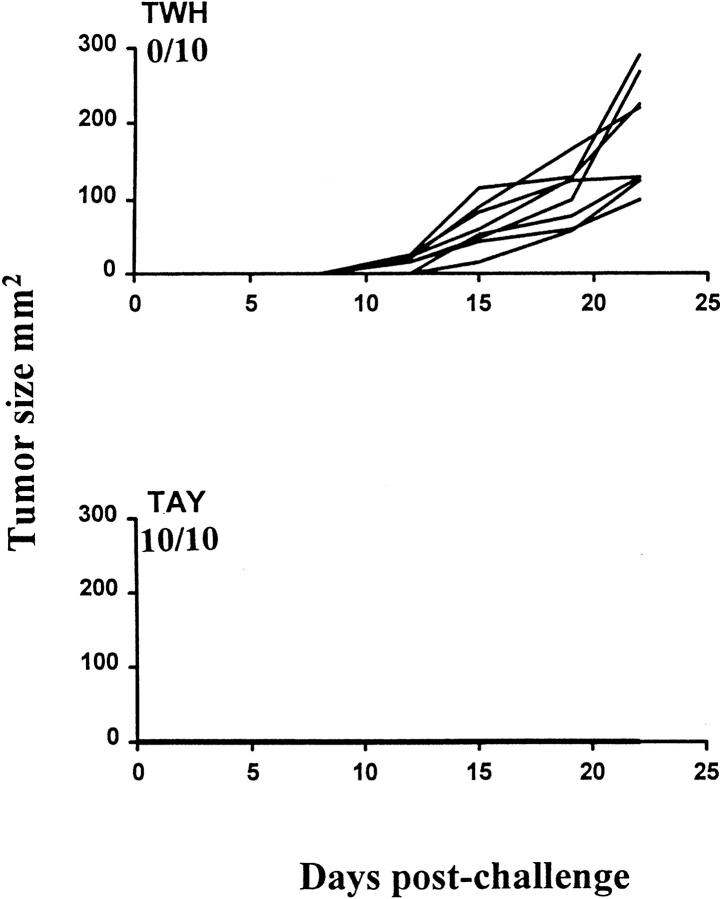
In vivo efficacy of a heteroclitic antimelanoma vaccine. 10 mice per group were vaccinated with TAY/TM or TWH/TM, as previously described (19). 7 d later, they were challenged with 105 B16 melanoma cells per mouse, subcutaneously in the flank. Tumor measurements, number of experiments and result presentation was as in Figs. 3 and 4. The tumors typically became palpable after 9–15 d. Numbers represent the ratio of tumor-free mice to total mice challenged in each group over a period of >90 d. Another experiment yielded comparable results (Table 2).

References

    1. Houghton AN. Cancer antigens: immune recognition of self and altered self. J Exp Med. 1994;180:1–4. - PMC - PubMed
    1. Bretscher P, Cohn M. A theory of self-nonself discrimination. Science. 1970;169:1042–1049. - PubMed
    1. Jenkins MK, Ashwell JD, Schwartz RH. Allogeneic non-T spleen cells restore the responsiveness of normal T cell clones stimulated with antigen and chemically modified antigen-presenting cells. J Immunol. 1988;140:3324–3330. - PubMed
    1. Schwartz RH. A cell culture model for T lymphocyte clonal anergy. Science. 1990;248:1349–1356. - PubMed
    1. Nossal GVJ. Negative selection of lymphocytes. Cell. 1994;76:229–240. - PubMed

Publication types

MeSH terms