Effectiveness of corticosteroid injections versus physiotherapy for treatment of painful stiff shoulder in primary care: randomised trial
- PMID: 9804720
- PMCID: PMC28713
- DOI: 10.1136/bmj.317.7168.1292
Effectiveness of corticosteroid injections versus physiotherapy for treatment of painful stiff shoulder in primary care: randomised trial
Abstract
Objective: To compare the effectiveness of corticosteroid injections with physiotherapy for the treatment of painful stiff shoulder.
Design: Randomised trial.
Setting: 40 general practices.
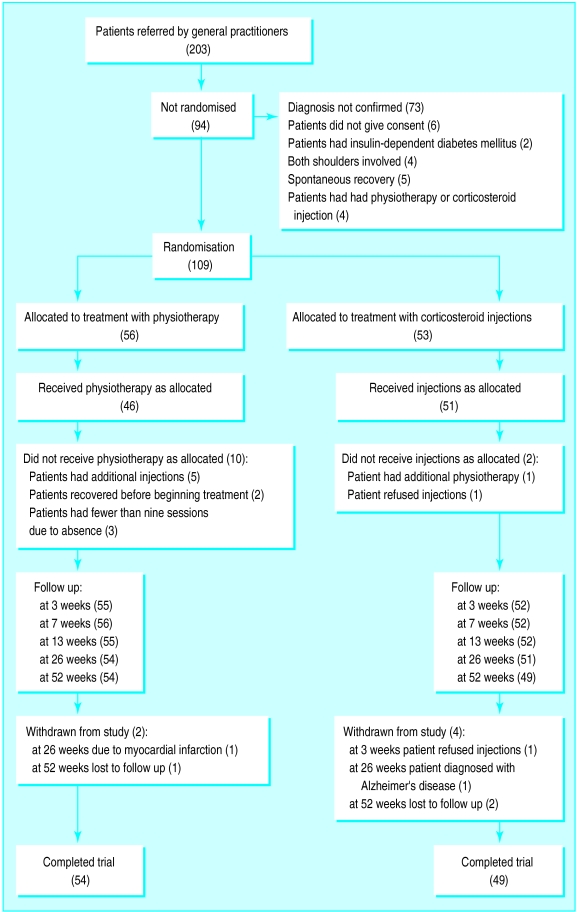
Subjects: 109 patients consulting general practitioners for shoulder pain were enrolled in the trial.
Interventions: Patients were randomly allocated to 6 weeks of treatment either with corticosteroid injections (53) or physiotherapy (56).
Main outcome measures: Outcome assessments were carried out 3, 7, 13, 26, and 52 weeks after randomisation; some of the assessments were done by an observer blind to treatment allocation. Primary outcome measures were the success of treatment as measured by scores on scales measuring improvement in the main complaint and pain, and improvement in scores on a scale measuring shoulder disability.
Results: At 7 weeks 40 (77%) out of 52 patients treated with injections were considered to be treatment successes compared with 26 (46%) out of 56 treated with physiotherapy (difference between groups 31%, 95% confidence interval 14% to 48%). The difference in improvement favoured those treated with corticosteroids in nearly all outcome measures; these differences were statistically significant. At 26 and 52 weeks differences between the groups were comparatively small. Adverse reactions were generally mild. However, among women receiving treatment with corticosteroids adverse reactions were more troublesome: facial flushing was reported by 9 women and irregular menstrual bleeding by 6, 2 of whom were postmenopausal.
Conclusions: The beneficial effects of corticosteroid injections administered by general practitioners for treatment of painful stiff shoulder are superior to those of physiotherapy. The differences between the intervention groups were mainly the result of the comparatively faster relief of symptoms that occurred in patients treated with injections. Adverse reactions were generally mild but doctors should be aware of the potential side effects of injections of triamcinolone, particularly in women.
Figures
References
-
- Croft P. Soft tissue rheumatism. In: Silman AJ, Hochberg MC, editors. . Epidemiology of the rheumatic diseases. Oxford: Oxford Medical Publications; 1993. pp. 375–421.
-
- Lamberts H, Brouwer HJ, Mohrs J. Reason for encounter-, episode- and process-oriented standard output from transition project: part I. Amsterdam: Department of General Practice/Family Medicine, University of Amsterdam; 1991.
-
- Bakker JF, de Jongh L, Jonquière M, Mens J, Oosterhuis WW, Poppelaars A, et al. Standaard Schouderklachten. [Practice guidelines for shoulder complaints.] Huisarts en Wetenschap. 1990;33:196–202.
Publication types
MeSH terms
Substances
LinkOut - more resources
Full Text Sources
Medical