


Molecular cloning and characterization of Tap, a putative multidrug efflux pump present in Mycobacterium fortuitum and Mycobacterium tuberculosis
- PMID: 9811639
- PMCID: PMC107655
- DOI: 10.1128/JB.180.22.5836-5843.1998
Molecular cloning and characterization of Tap, a putative multidrug efflux pump present in Mycobacterium fortuitum and Mycobacterium tuberculosis
Abstract
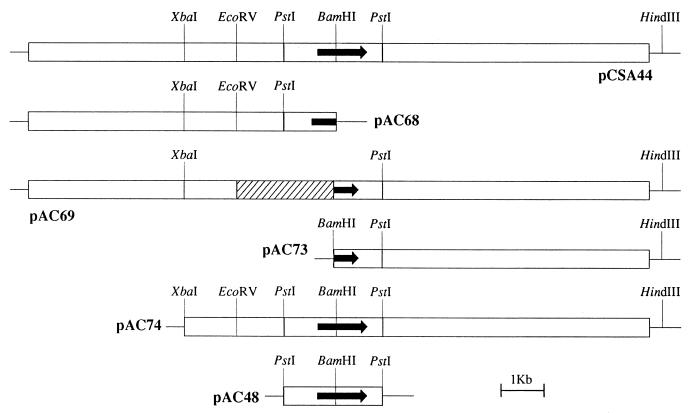
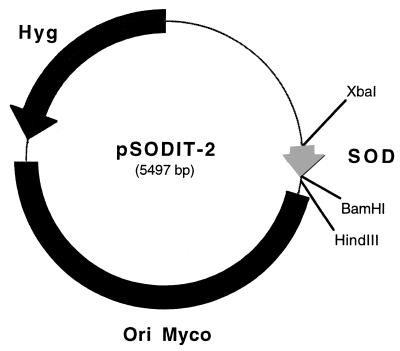
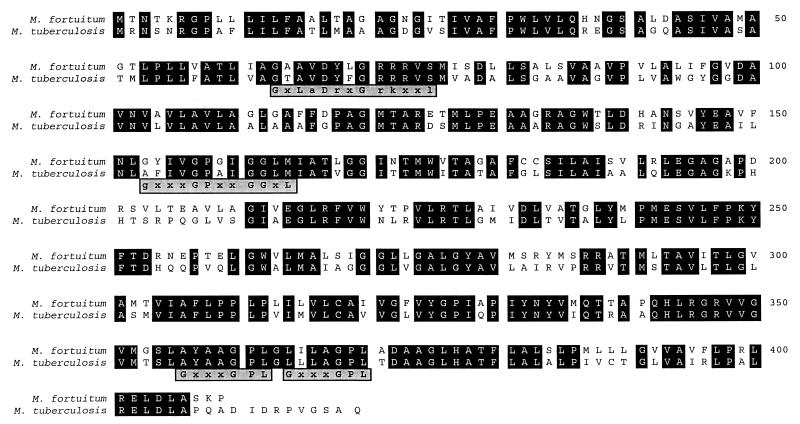
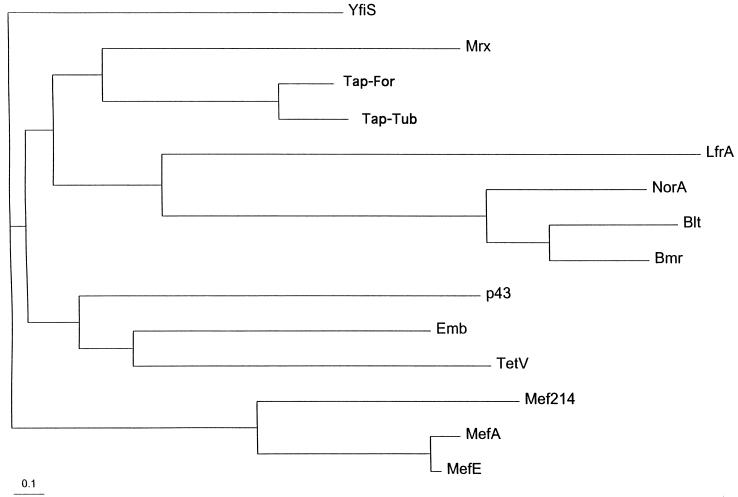
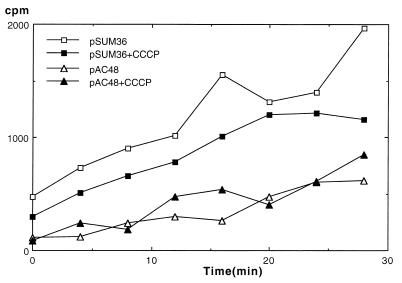
A recombinant plasmid isolated from a Mycobacterium fortuitum genomic library by selection for gentamicin and 2-N'-ethylnetilmicin resistance conferred low-level aminoglycoside and tetracycline resistance when introduced into M. smegmatis. Further characterization of this plasmid allowed the identification of the M. fortuitum tap gene. A homologous gene in the M. tuberculosis H37Rv genome has been identified. The M. tuberculosis tap gene (Rv1258 in the annotated sequence of the M. tuberculosis genome) was cloned and conferred low-level resistance to tetracycline when introduced into M. smegmatis. The sequences of the putative Tap proteins showed 20 to 30% amino acid identity to membrane efflux pumps of the major facilitator superfamily (MFS), mainly tetracycline and macrolide efflux pumps, and to other proteins of unknown function but with similar antibiotic resistance patterns. Approximately 12 transmembrane regions and different sequence motifs characteristic of the MFS proteins also were detected. In the presence of the protonophore carbonyl cyanide m-chlorophenylhydrazone (CCCP), the levels of resistance to antibiotics conferred by plasmids containing the tap genes were decreased. When tetracycline accumulation experiments were carried out with the M. fortuitum tap gene, the level of tetracycline accumulation was lower than that in control cells but was independent of the presence of CCCP. We conclude that the Tap proteins of the opportunistic organism M. fortuitum and the important pathogen M. tuberculosis are probably proton-dependent efflux pumps, although we cannot exclude the possibility that they act as regulatory proteins.
Figures
References
-
- Aínsa J A, Martín C, Cabeza M, De la Cruz F, Mendiola M V. Construction of a family of Mycobacterium/Escherichia coli shuttle vectors derived from pAL5000 and pACYC184: their use for cloning an antibiotic resistance gene from Mycobacterium fortuitum. Gene. 1996;176:23–26. - PubMed
Publication types
MeSH terms
Substances
Associated data
- Actions
LinkOut - more resources
Full Text Sources
Molecular Biology Databases
Research Materials
Miscellaneous
