


An adenovirus vector with genetically modified fibers demonstrates expanded tropism via utilization of a coxsackievirus and adenovirus receptor-independent cell entry mechanism
- PMID: 9811704
- PMCID: PMC110480
- DOI: 10.1128/JVI.72.12.9706-9713.1998
An adenovirus vector with genetically modified fibers demonstrates expanded tropism via utilization of a coxsackievirus and adenovirus receptor-independent cell entry mechanism
Abstract
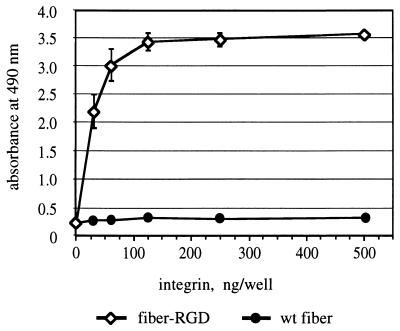
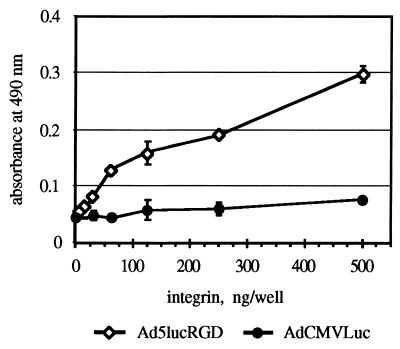
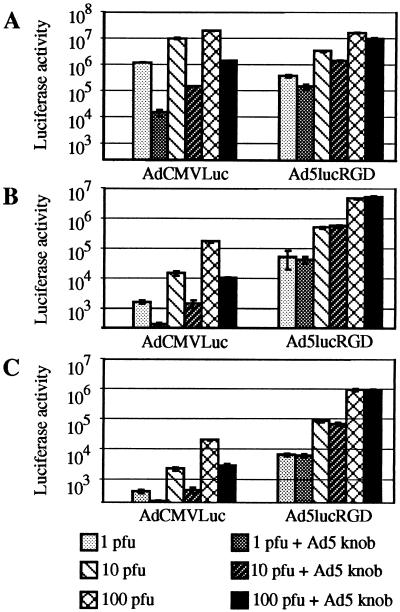
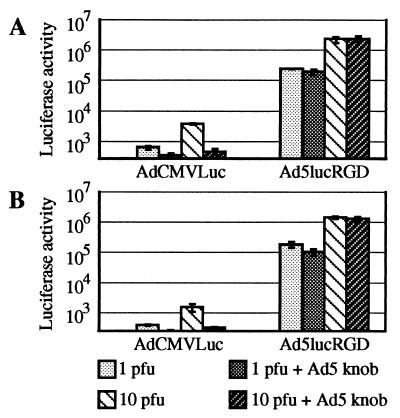
Recombinant adenoviruses (Ad) have become the vector system of choice for a variety of gene therapy applications. However, the utility of Ad vectors is limited due to the low efficiency of Ad-mediated gene transfer to cells expressing marginal levels of the coxsackievirus and adenovirus receptor (CAR). In order to achieve CAR-independent gene transfer by Ad vectors in clinically important contexts, we proposed modification of viral tropism via genetic alterations to the viral fiber protein. We have shown that incorporation of an Arg-Gly-Asp (RGD)-containing peptide in the HI loop of the fiber knob domain results in the ability of the virus to utilize an alternative receptor during the cell entry process. We have also demonstrated that due to its expanded tissue tropism, this novel vector is capable of efficient transduction of primary tumor cells. An increase in gene transfer to ovarian cancer cells of 2 to 3 orders of magnitude was demonstrated by the vector, suggesting that recombinant Ad containing fibers with an incorporated RGD peptide may be of great utility for treatment of neoplasms characterized by deficiency of the primary Ad type 5 receptor.
Figures
References
-
- Alvarez R D, Curiel D T. A phase I study of recombinant adenovirus vector-mediated delivery of an anti-erbB-2 single-chain (sFv) antibody gene for previously treated ovarian and extraovarian cancer patients. Hum Gene Ther. 1997;8:229–242. - PubMed
-
- Alvarez R D, Curiel D T. A phase I study of recombinant adenovirus vector-mediated intraperitoneal delivery of herpes simplex virus thymidine kinase (HSV-TK) gene and intravenous ganciclovir for previously treated ovarian and extraovarian cancer patients. Hum Gene Ther. 1997;8:597–613. - PubMed
-
- Arap W, Pasqualini R, Ruoslahti E. Cancer treatment by targeted drug delivery to tumor vasculature in a mouse model. Science. 1998;279:377–380. - PubMed
Publication types
MeSH terms
Substances
Grants and funding
LinkOut - more resources
Full Text Sources
Other Literature Sources
