


Human-specific integrations of the HERV-K endogenous retrovirus family
- PMID: 9811713
- PMCID: PMC110489
- DOI: 10.1128/JVI.72.12.9782-9787.1998
Human-specific integrations of the HERV-K endogenous retrovirus family
Abstract
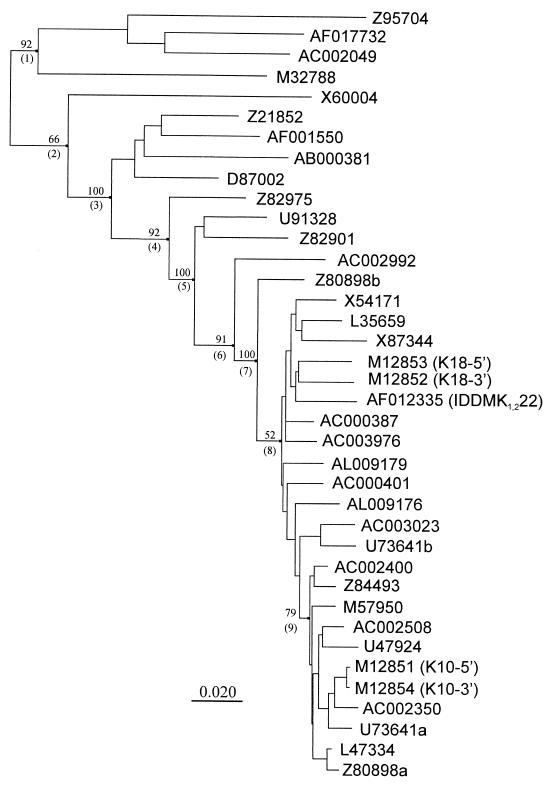
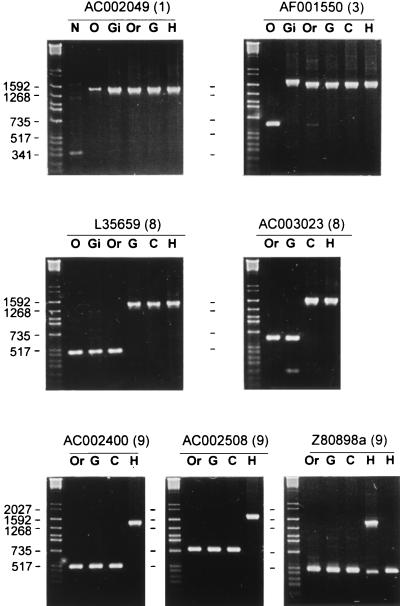
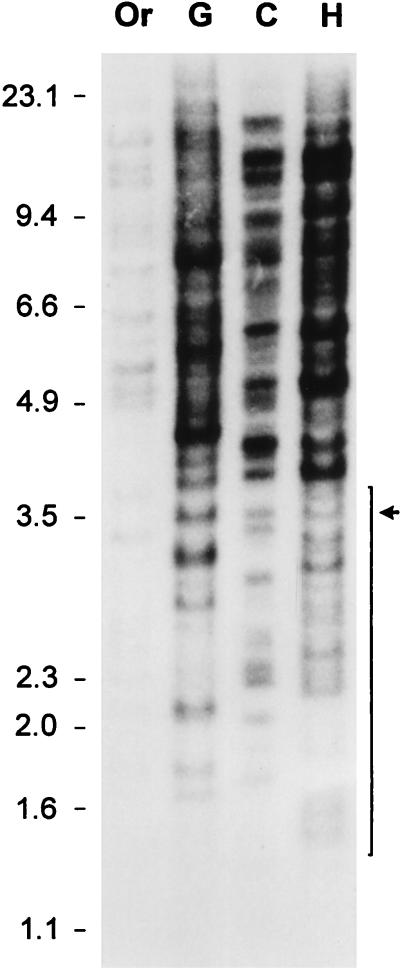
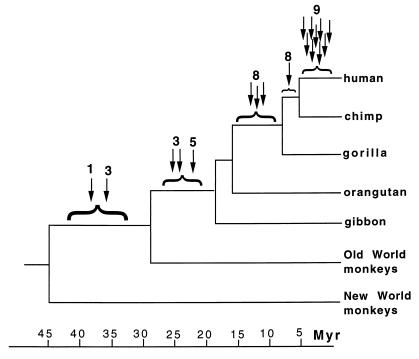
Several distinct families of endogenous retrovirus-like sequences (HERVs) exist in the genomes of humans and other primates. One of these families, the HERV-K group, contains members that encode functional proteins and that have been implicated in the etiology of insulin-dependent diabetes mellitus (IDDM). Because of potential functional and disease relevance, it is important to determine if there are HERV-K-associated genetic differences between individuals. In this study, we have investigated the divergence and evolutionary age of HERV-K long terminal repeats (LTRs). Thirty-seven LTRs, taken primarily from random human clones in GenBank, were aligned and grouped into nine clusters with decreasing sequence divergence. Cluster 1 sequences are 8.6% divergent, on average, whereas cluster 9 LTRs, represented by the LTRs of the fully sequenced HERV-K10 clone, show an average of only 1.1% divergence from each other. The evolutionary age of 18 LTRs from different clusters was then investigated by genomic PCR to determine presence or absence of the retroviral element in different primate species. LTRs from clusters of higher divergence were detected in monkeys and apes, whereas LTRs in clusters with lower divergence were acquired later in evolution. Notably, LTRs of cluster 9 were found only in humans at all nine loci examined. Genomic Southern analysis with an oligonucleotide probe specific for cluster 9 LTRs suggests that HERV-K elements with this type of LTR expanded independently in the genomes of humans and the great apes. This is the first report of endogenous retroviral integrations that are specific to humans and indicates that some HERVs have amplified much later than previously thought. These elements may still be actively transposing and may therefore represent a source of genetic variation linked to disease development.
Figures
References
-
- Altschul S F, Gish W, Miller W, Myers E W, Lipman D J. Basic local alignment search tool. J Mol Biol. 1990;215:403–410. - PubMed
-
- Andersson M-L, Medstrand P, Yin H, Blomberg J. Differential expression of human endogenous retroviral sequences similar to mouse mammary tumor virus in normal peripheral blood mononuclear cells. AIDS Res Hum Retroviruses. 1996;12:833–840. - PubMed
-
- Ayala F J, Escalante A A. The evolution of human populations: a molecular perspective. Mol Phylogenet Evol. 1996;5:188–201. - PubMed
-
- Badenhoop K, Tonjes R R, Rau H, Donner H, Rieker W, Braun J, Herwig J, Mytilineos J, Kurth R, Usadel K H. Endogenous retroviral long terminal repeats of the HLA-DQ region are associated with susceptibility to insulin-dependent diabetes mellitus. Hum Immunol. 1996;50:103–110. - PubMed
-
- Bailey W J, Fitch D H, Tagle D A, Czelusniak J, Slightom J L, Goodman M. Molecular evolution of the psi-eta globin gene locus: gibbon phylogeny and the human slowdown. Mol Biol Evol. 1991;8:155–184. - PubMed
Publication types
MeSH terms
LinkOut - more resources
Full Text Sources
Other Literature Sources
Research Materials
