


A structural explanation for the recognition of tyrosine-based endocytotic signals
- PMID: 9812899
- PMCID: PMC5600252
- DOI: 10.1126/science.282.5392.1327
A structural explanation for the recognition of tyrosine-based endocytotic signals
Abstract
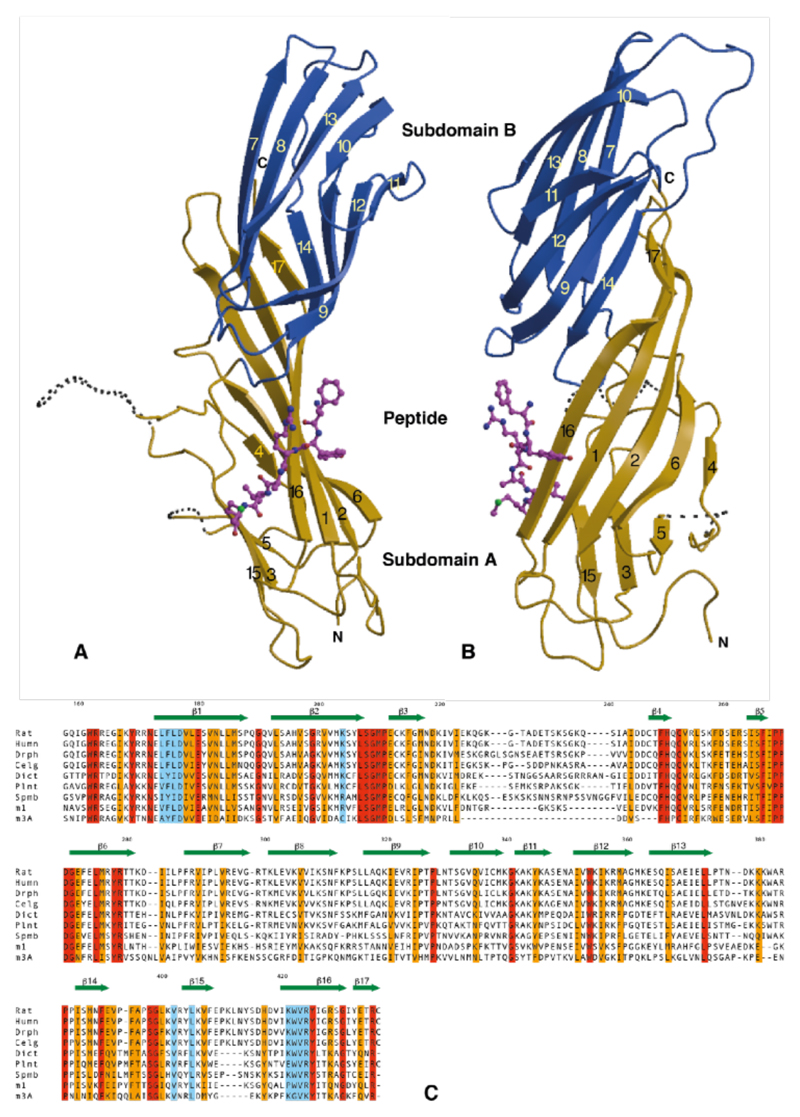
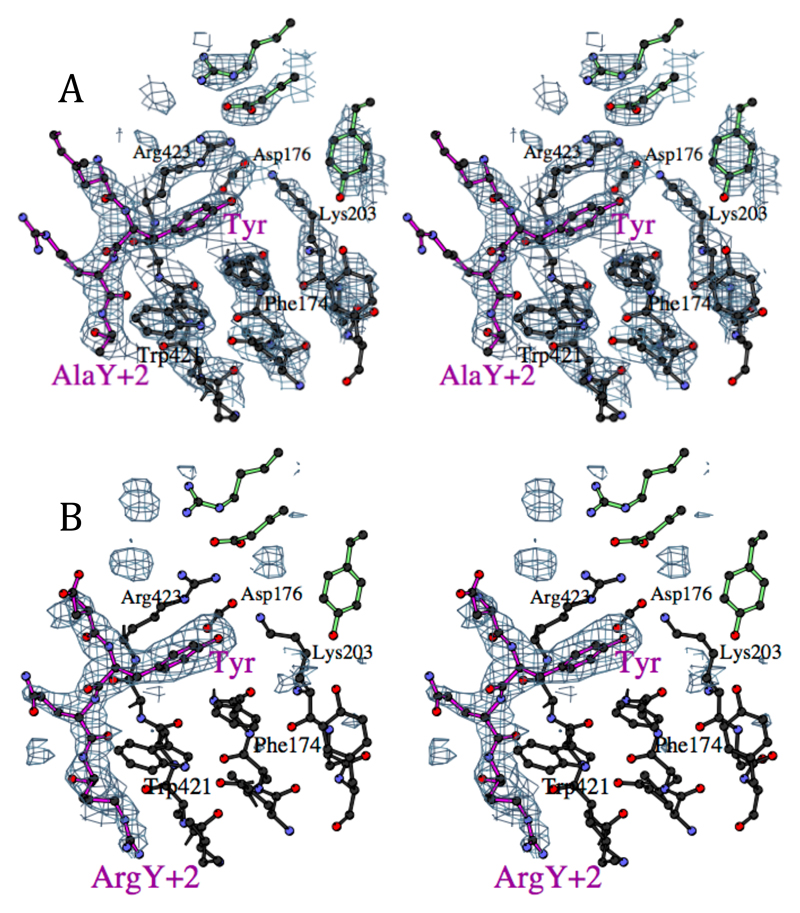
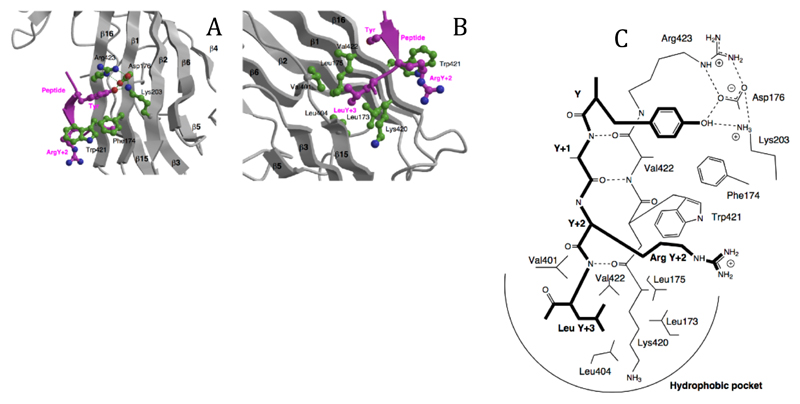
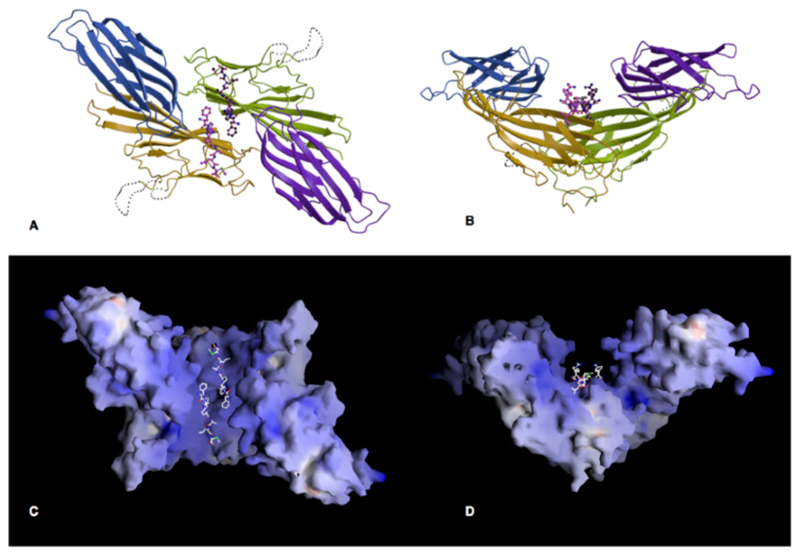
Many cell surface proteins are marked for endocytosis by a cytoplasmic sequence motif, tyrosine-X-X-(hydrophobic residue), that is recognized by the mu2 subunit of AP2 adaptors. Crystal structures of the internalization signal binding domain of mu2 complexed with the internalization signal peptides of epidermal growth factor receptor and the trans-Golgi network protein TGN38 have been determined at 2.7 angstrom resolution. The signal peptides adopted an extended conformation rather than the expected tight turn. Specificity was conferred by hydrophobic pockets that bind the tyrosine and leucine in the peptide. In the crystal, the protein forms dimers that could increase the strength and specificity of binding to dimeric receptors.
Figures
References
MeSH terms
Substances
Grants and funding
LinkOut - more resources
Full Text Sources
Molecular Biology Databases
Research Materials
