


Identification of three new single nucleotide polymorphisms in the human tumor necrosis factor-alpha gene promoter
- PMID: 9820599
- PMCID: PMC2518982
- DOI: 10.1111/j.1399-0039.1998.tb03056.x
Identification of three new single nucleotide polymorphisms in the human tumor necrosis factor-alpha gene promoter
Abstract
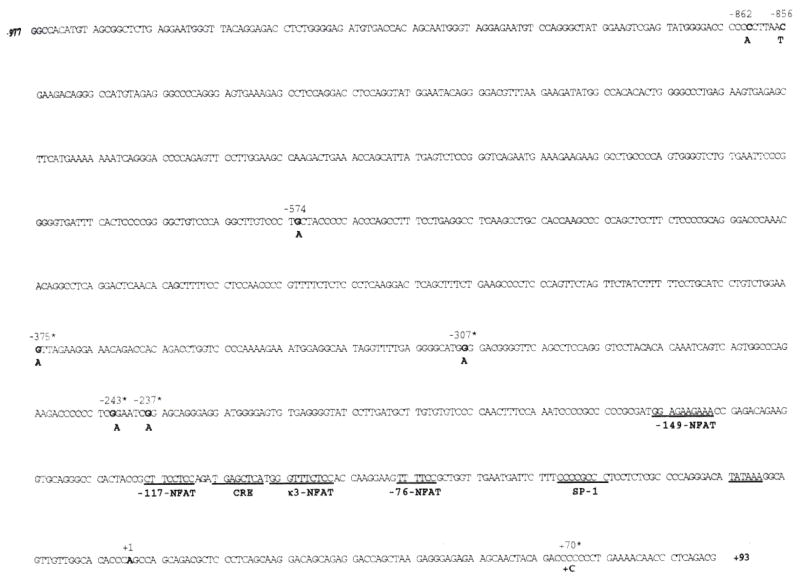
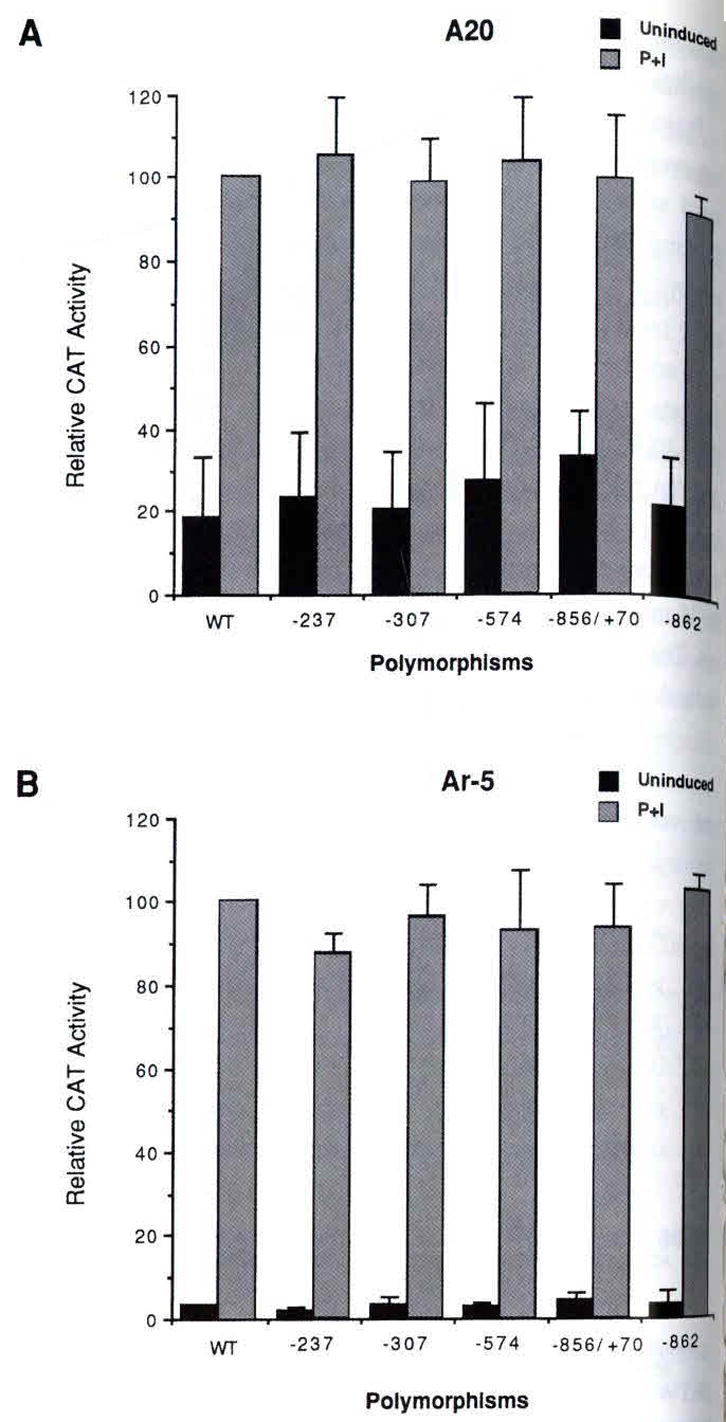
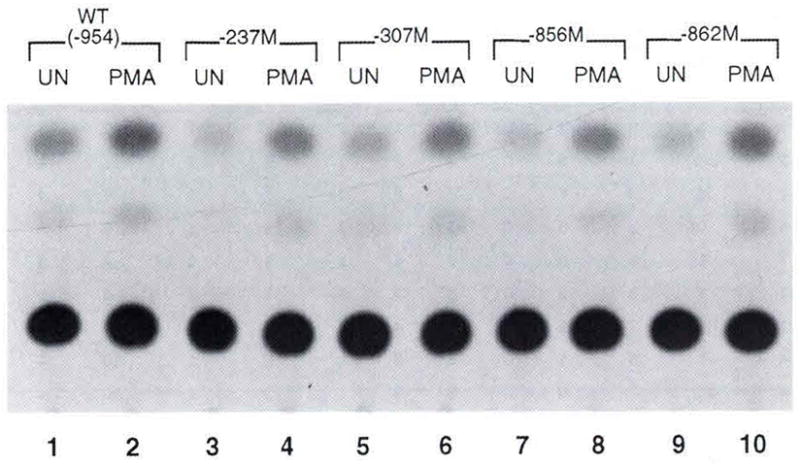
We have identified three new human tumor necrosis factor-alpha (TNF-alpha) promoter polymorphisms with single nucleotide (nt) substitutions at -862, -856, and -574 nt relative to the TNF-alpha transcription start site. The -862 and -856 nt TNF-alpha promoter polymorphisms occur with high frequency in Caucasian and Cambodian individuals and are each non-randomly associated with three extended HLA haplotypes. This study, in which 61 independent TNF-alpha promoters were analyzed spanning from -977 to +93 nt relative to the TNF-alpha mRNA cap site, establishes a new canonical TNF-alpha promoter sequence. Furthermore, we show that none of the three novel polymorphisms at -862, -856 and -574 nt or polymorphisms previously described at positions -238, -308 and +70 have an effect upon TNF-alpha gene expression in activated lymphocytes. Thus, these TNF-alpha promoter polymorphisms likely serve as markers for neighboring genes encoding HLA or other undefined molecules in the MHC that may influence disease susceptibility.
Figures
References
-
- Aggarwal BB, Puri RK, editors. Human cytokines: their role in disease and therapy. Cambridge: Blackwell Science; 1995.
-
- Garcia I, Mlyazaki Y, Araki K, et al. Transgenic mice expressing high levels of soluble TNF-R1 fusion protein are protected from lethal septic shock and cerebral malaria, and are highly sensitive to Listeria monocytogenes and Leishmania major infections. Eur J Immunol. 1995;25:2401–7. - PubMed
-
- Flynn JL, Goldstein MM, Chan J, et al. Tumor necrosis factor-alpha is required in the protective immune response against Mycobacterium tuberculosis in mice. Immunity. 1995;2:561–72. - PubMed
-
- Lucas R, Juilliard P, Redard M, et al. Lack of TNF receptor 2 but not of TNFR1 protects mice from experimental murine cerebral malaria. Eur Cytokine Netw. 1996;7:247.
-
- Goldfeld A, Tsai EY. TNF-alpha and genetic susceptibility to parasitic disease. Exp Parasitol. 1996;84:300–3. - PubMed
Publication types
MeSH terms
Substances
Grants and funding
LinkOut - more resources
Full Text Sources
Other Literature Sources
Research Materials
Miscellaneous
