


Characterization of cry genes in a Mexican Bacillus thuringiensis strain collection
- PMID: 9835590
- PMCID: PMC90950
- DOI: 10.1128/AEM.64.12.4965-4972.1998
Characterization of cry genes in a Mexican Bacillus thuringiensis strain collection
Abstract
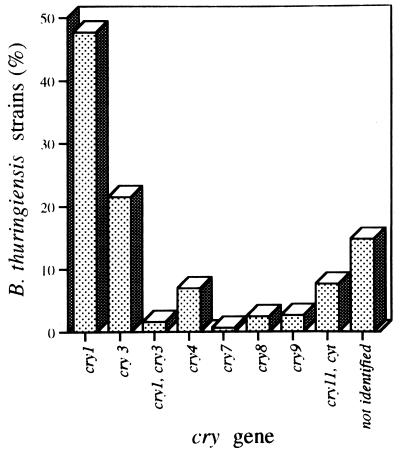
Mexico is located in a transition zone between the Nearctic and Neotropical biogeographical regions and contains a rich and unique biodiversity. A total of 496 Bacillus thuringiensis strains were isolated from 503 soil samples collected from the five macroregions of the country. The characterization of the strain collection provided useful information on the ecological patterns of distribution of B. thuringiensis and opportunities for the selection of strains to develop novel bioinsecticidal products. The analysis of the strains was based on multiplex PCR with novel general and specific primers that could detect the cry1, cry3, cry5, cry7, cry8, cry9, cry11, cry12, cry13, cry14, cry21, and cyt genes. The proteins belonging to the Cry1 and Cry9 groups are toxic for lepidopteran insects. The Cry3, Cry7, and Cry8 proteins are active against coleopteran insects. The Cry5, Cry12, Cry13, and Cry14 proteins are nematocidal. The Cry11, Cry21, and Cyt proteins are toxic for dipteran insects. Six pairs of general primers are used in this method. Strains for which unique PCR product profiles were obtained with the general primers were further characterized by additional PCRs with specific primers. Strains containing cry1 genes were the most abundant in our collection (49.5%). Thirty-three different cry1-type profiles were identified. B. thuringiensis strains harboring cry3 genes represented 21.5% of the strains, and 7.9% of the strains contained cry11 and cyt genes. cry7, cry8, and cry9 genes were found in 0.6, 2.4, and 2.6% of the strains, respectively. No strains carrying cry5, cry12, cry13, cry14, or cry21 genes were found. Finally, 14% of the strains did not give any PCR product and did not react with any polyclonal antisera. Our results indicate the presence of strains that may harbor potentially novel Cry proteins as well as strains with combinations of less frequently observed cry genes.
Figures
References
-
- Aranda E, Sánchez J, Peferoen M, Güereca L, Bravo A. Interaction of Bacillus thuringiensis crystal protein with the midgut epithelial cells of Spodoptera frugiperda (Lepidoptera: Noctuidae) J Invertebr Pathol. 1996;68:203–212. - PubMed
-
- Aronson A I. Bacillus thuringiensis and its use as biological insecticide. Plant Breed Rev. 1994;12:19–45.
-
- Bernhard K, Jarret P, Meadows M, Butt J, Ellis D J, Roberts G M, Pauli S, Rodgers P, Burges H D. Natural isolates of Bacillus thuringiensis: worldwide distribution, characterization and activity against insect pests. J Invertebr Pathol. 1997;70:59–68.
Publication types
MeSH terms
Substances
LinkOut - more resources
Full Text Sources
Other Literature Sources
