


Attachment and adolescent psychosocial functioning
- PMID: 9839424
- PMCID: PMC1557707
Attachment and adolescent psychosocial functioning
Abstract
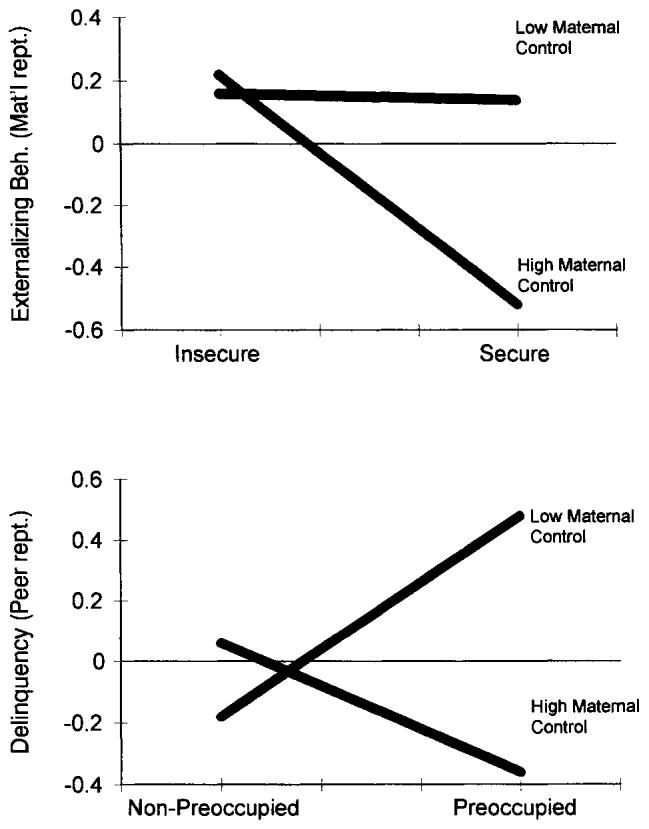
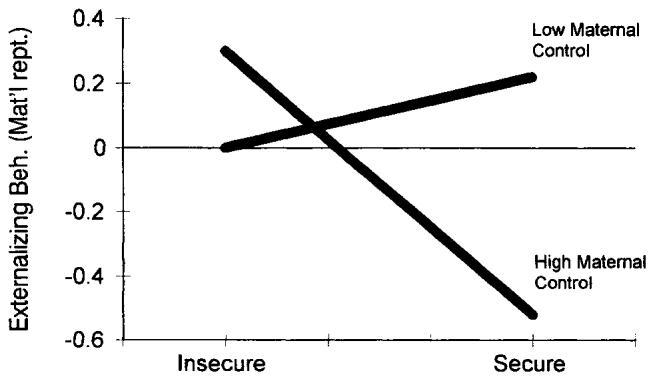
To explore the meaning and function of attachment organization during adolescence, its relation to multiple domains of psychosocial functioning was examined in a sample of 131 moderately at-risk adolescents. Attachment organization was assessed using the Adult Attachment Interview; multiple measures of functioning were obtained from parents, adolescents, and their peers. Security displayed in adolescents' organization of discourse about attachment experiences was related to competence with peers (as reported by peers), lower levels of internalizing behaviors (as reported by adolescents), and lower levels of deviant behavior (as reported by peers and by mothers). Preoccupation with attachment experiences, seen in angry or diffuse and unfocused discussion of attachment experiences, was linked to higher levels of both internalizing and deviant behaviors. These relations generally remained even when other attachment-related constructs that had been previously related to adolescent functioning were covaried in analysis. Results are interpreted as suggesting an important role for attachment organization in a wide array of aspects of adolescent psychosocial development.
Figures
References
-
- Achenbach TM. Manual for the Youth Self-Report and 1991 Profile. University of Vermont, Department of Psychiatry; Burlington: 1991.
-
- Achenbach TM, Edelbrock CS. The child behavior profile: II. Boys aged 12–16 and girls aged 6–11 and 12–16. Journal of Consulting and Clinical Psychology. 1979;47:223–233. - PubMed
-
- Achenbach TM, Edelbrock CS. Manual for the child behavior checklist. University of Vermont, Department of Psychiatry; Burlington: 1983.
-
- Achenbach TM, Edelbrock CS. Behavioral problems and competencies reported by parents of normal and disturbed children aged four through sixteen. (Serial No. 188).Monographs of the Society for Research in Child Development. 1981;46(1) - PubMed
-
- Ainsworth MDS. Attachments beyond infancy. American Psychologist. 1989;44:709–716. - PubMed
Publication types
MeSH terms
Grants and funding
LinkOut - more resources
Full Text Sources
Medical