


Molecular characterization of a bovine enteric calicivirus: relationship to the Norwalk-like viruses
- PMID: 9847396
- PMCID: PMC103897
- DOI: 10.1128/JVI.73.1.819-825.1999
Molecular characterization of a bovine enteric calicivirus: relationship to the Norwalk-like viruses
Abstract
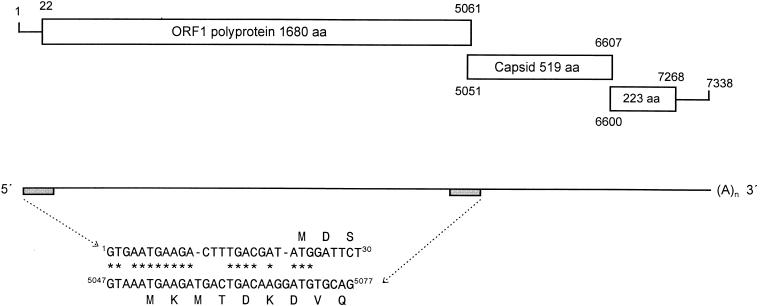
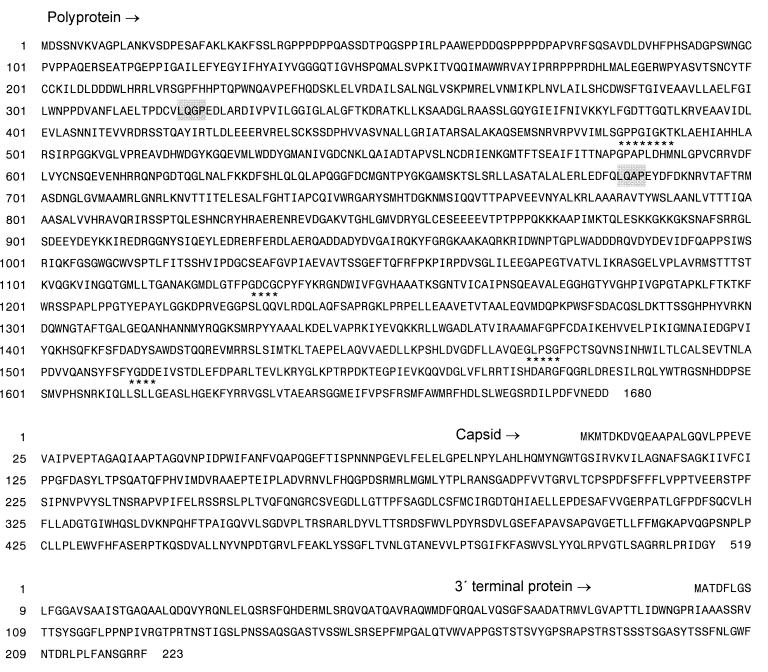
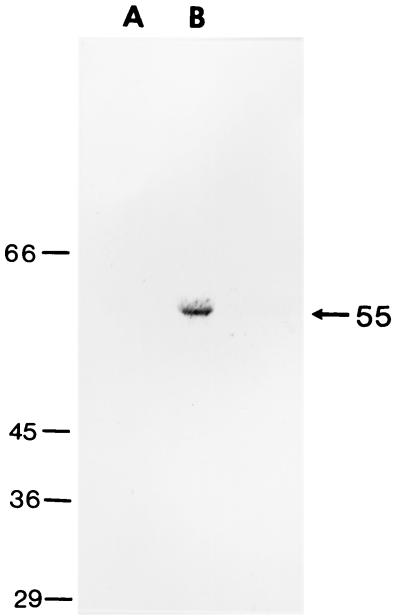
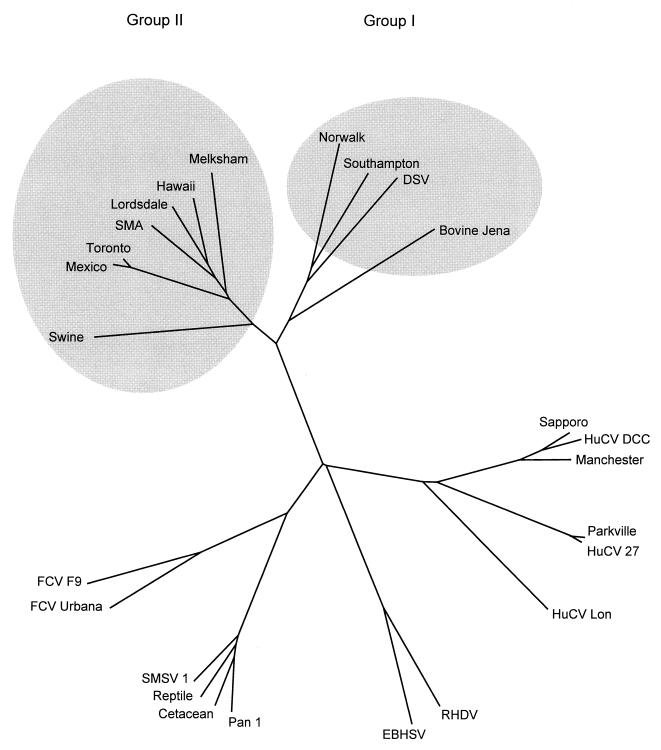
Jena virus (JV) is a noncultivatable bovine enteric calicivirus associated with diarrhea in calves and was first described in Jena, Germany. The virus was serially passaged 11 times in colostrum-deprived newborn calves and caused diarrheal disease symptoms at each passage. The complete JV genome sequence was determined by using cDNA made from partially purified virus obtained from a single stool sample. JV has a positive-sense single-stranded RNA genome which is 7,338 nucleotides in length, excluding the poly(A) tail. JV genome organization is similar to that of the human Norwalk-like viruses (NLVs), with three separate open reading frames (ORFs) and a 24-nucleotide sequence motif located at the 5' terminus of the genome and at the start of ORF 2. The polyprotein (ORF 1) consists of 1,680 amino acids and has the characteristic 2C helicase, 3C protease, and 3D RNA polymerase motifs also found in the NLVs. However, comparison of the N-terminal 100 amino acids of the JV polyprotein with those of the group 1 and group 2 NLVs showed a considerable divergence in sequence. The capsid protein (ORF 2) at 519 amino acids is smaller than that of all other caliciviruses. JV ORF 2 was translated in vitro to produce a 55-kDa protein that reacted with postinfection serum but not preinfection serum. Phylogenetic studies based on partial RNA polymerase sequences indicate that within the Caliciviridae JV is most closely related to the group 1 NLVs.
Figures
References
-
- Agus S G, Dolin R, Wyatt R G, Tousimis A J, Northrup R S. Acute infectious nonbacterial gastroenteritis: intestinal histopathology. Histologic and enzymatic alterations during illness produced by the Norwalk agent in man. Ann Intern Med. 1973;79:18–25. - PubMed
-
- Almeida J D, Craig C R, Hall T E. Multiple viruses present in the faeces of a scouring calf. Vet Rec. 1978;102:170–171. - PubMed
-
- Berke T, Golding B, Jiang X, Cubitt D W, Wolfaardt M, Smith A W, Matson D O. Phylogenetic analysis of the caliciviruses. J Med Virol. 1997;52:419–424. - PubMed
-
- Bridger J C. Small viruses associated with gastroenteritis in animals. In: Saif L J, Theil K W, editors. Viral diarrheas of man and animals. Boca Raton, Fla: CRC Press; 1990. pp. 161–182.
MeSH terms
Associated data
- Actions
LinkOut - more resources
Full Text Sources
Medical
