


An in vitro study of theaflavins extracted from black tea to neutralize bovine rotavirus and bovine coronavirus infections
- PMID: 9850995
- PMCID: PMC7117136
- DOI: 10.1016/s0378-1135(98)00242-9
An in vitro study of theaflavins extracted from black tea to neutralize bovine rotavirus and bovine coronavirus infections
Abstract
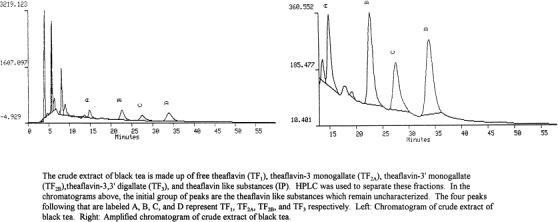
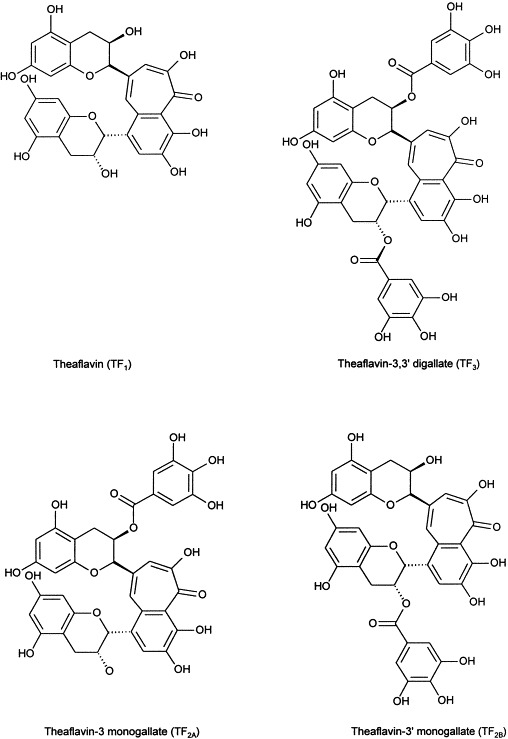
Crude theaflavin was extracted from black tea and then fractionated by HPLC into five components (initial peaks (IP), TF1, TF2A, TF2B, and TF3). The crude extract and the various fractions of theaflavin were collected and tested, individually and in combination, for antirotaviral activity. The mean effective concentration (EC50) was calculated and compared. Activity varied from the most active being the uncharacterized theaflavin-like initial peaks (IP) with an EC50 of 0.125 microgram/ml to the least active being theaflavin-3 monogallate (TF2A) with an EC50 of 251.39 micrograms/ ml. The combination of TF1 + TF2A + TF2B + TF3 was more active than the sum of the activities of these four fractions individually, indicating synergism among the peaks. Only the crude extract was assayed for activity against coronavirus; the EC50 was 34.7 micrograms/ml.
Figures
References
-
- Anonymous, 1993. ChemPlus: Extension for HyperChem. Hypercube, Ont., Canada, pp. 95–127
-
- Anonymous, 1994. HyperChem: Computational Chemistry. Hypercube, Ont., Canada, pp. 1–285
-
- Fernelius A.L., Ritchie A.E., Classick L.G., Norman J.O., Mebus C.A. Cell culture adaptation and propagation of a reovirus-like agent of calf diarrhea from a field outbreak in Nebraska. Arch. Virusforsch. 1972;37:114–130. - PubMed
Publication types
MeSH terms
Substances
LinkOut - more resources
Full Text Sources
Other Literature Sources
Medical
