Disseminated infection due to Chrysosporium zonatum in a patient with chronic granulomatous disease and review of non-Aspergillus fungal infections in patients with this disease
- PMID: 9854057
- PMCID: PMC84155
- DOI: 10.1128/JCM.37.1.18-25.1999
Disseminated infection due to Chrysosporium zonatum in a patient with chronic granulomatous disease and review of non-Aspergillus fungal infections in patients with this disease
Abstract
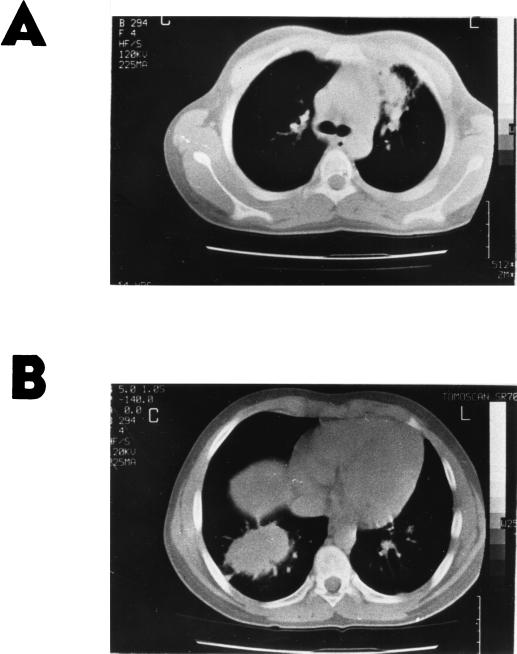
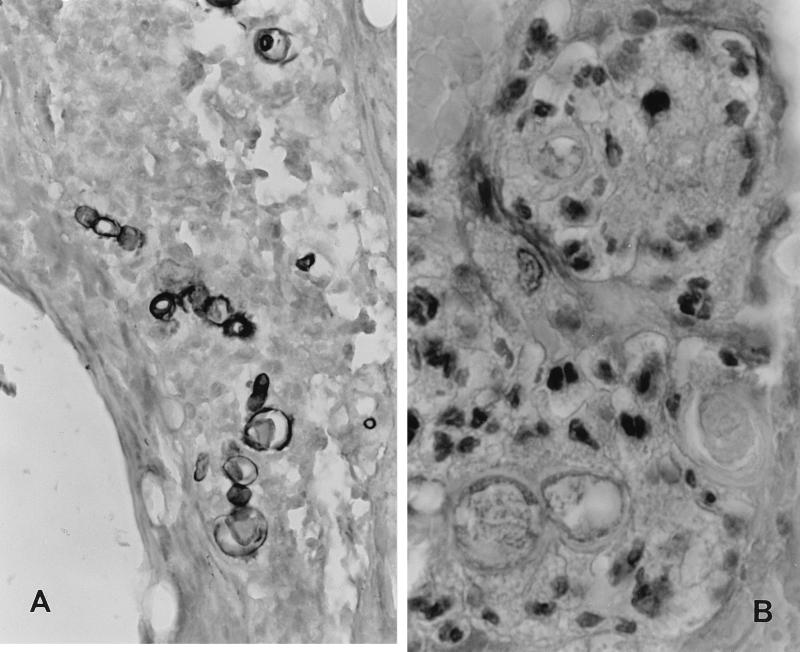
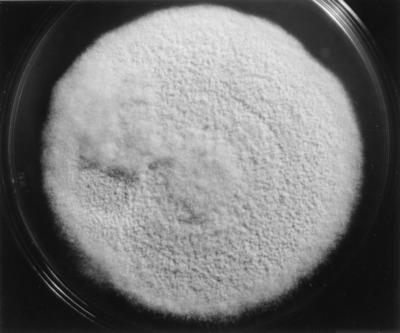
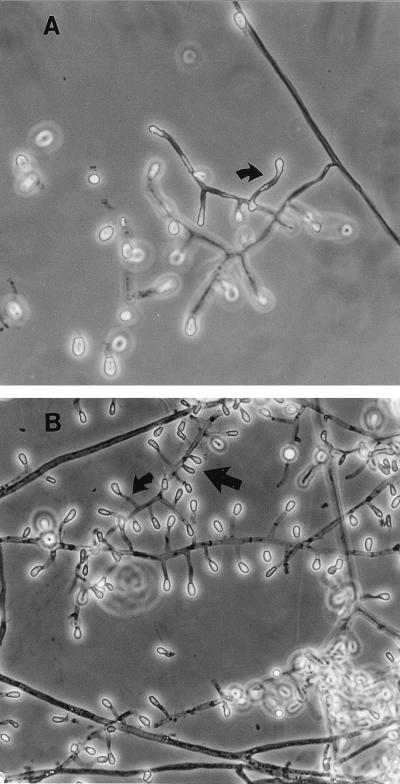
We report the first case of Chrysosporium zonatum infection in a 15-year-old male with chronic granulomatous disease who developed a lobar pneumonia and tibia osteomyelitis while on prophylaxis with gamma interferon. The fungus was isolated from sputum and affected bone, and hyphae were observed in the bone by histopathology. Therapy with amphotericin B eradicated the osteomyelitis and pneumonia, but pneumonia recurred in association with pericarditis and pleuritis during therapy with itraconazole. These manifestations subsided, and no recurrences occurred with liposomal amphotericin B therapy. Infections caused by Chrysosporium species are very rare, and C. zonatum has not previously been reported to cause mycosis in humans. This species, the anamorph of the heterothallic ascomycete Uncinocarpus orissi (family Onygenaceae), is distinguished by its thermotolerance, by colonies which darken from yellowish white to buff, and by club-shaped terminal aleurioconidia borne at the ends of short, typically curved stalks. The case isolate produced fertile ascomata in mating tests with representative isolates. The median (range) MICs for our isolate as well as those for two other human isolates and a nonhuman isolate determined by the National Committee for Clinical Laboratory Standards method adapted for moulds were </=0.06 microg/ml (</=0.06 to 0.25 microg/ml) for amphotericin B, 0. 687 microg/ml (0.25 to 2 microg/ml) for itraconazole, >128 microg/ml (>128 microg/ml) for flucytosine, and 48 microg/ml (32 to >128 microg/ml) for fluconazole.
Figures
References
-
- Al-Musallam A, Tan C S. Chrysosporium zonatum, a new keratinophilic fungus. Persoonia. 1989;14:69–71.
-
- Boltansky H, Kwon-Chung K J, Macher A M, Gallin J I. Acremonium strictum-related pulmonary infection in a patient with chronic granulomatous disease. J Infect Dis. 1984;149:653. - PubMed
-
- Bowman B H, White T J, Taylor J W. Human pathogenic fungi and their close nonpathogenic relatives. Mol Phylogenet Evol. 1996;6:89–96. - PubMed
-
- Cohen M S, Isturiz R E, Malech H L, Root R K, Wilfert C M, Gutman L, Buckley R H. Fungal infection in chronic granulomatous disease. The importance of the phagocyte in defense against fungi. Am J Med. 1981;71:59–66. - PubMed
Publication types
MeSH terms
LinkOut - more resources
Full Text Sources
Medical