


Novel intestinal Helicobacter species isolated from cotton-top tamarins (Saguinus oedipus) with chronic colitis
- PMID: 9854080
- PMCID: PMC84191
- DOI: 10.1128/JCM.37.1.146-151.1999
Novel intestinal Helicobacter species isolated from cotton-top tamarins (Saguinus oedipus) with chronic colitis
Abstract
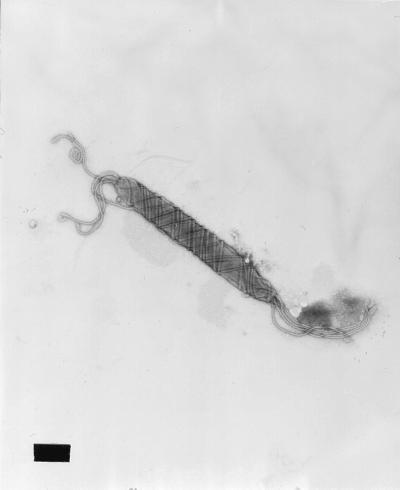
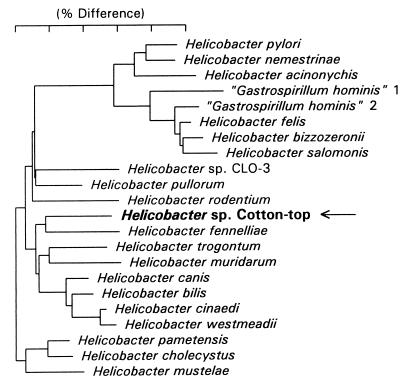
A disease similar to ulcerative colitis in humans has been identified in cotton-top tamarins (CTTs) in captivity. The clinical signs include weight loss, diarrhea, and rectal bleeding with the pathological features and biochemical abnormalities of ulcerative colitis. Approximately 25 to 40% of these animals develop colon cancer after 2 to 5 years of captivity. An infectious etiology has been proposed; however, no microbial agent to date has been identified. Helicobacter spp. have been associated with enterocolitis and inflammatory bowel disease (IBD) in humans and animals. Infection with Helicobacter pylori or Helicobacter mustelae is associated with an increased risk of gastric adenocarcinoma and lymphoma of the mucosa-associated lymphoid tissue. Helicobacter hepaticus causes hepatitis, hepatic adenomas, and hepatocellular carcinomas in susceptible strains of mice. The aim of this study was to assess a colony of CTTs with a high incidence of IBD and colon cancer for the presence of colonic Helicobacter spp. A fusiform, gram-negative bacterium with bipolar flagella and periplasmic fibers was isolated from the feces of CTTs. The bacterium grew under microaerobic conditions at 37 and 42 degrees C but not at 25 degrees C, did not hydrolyze urea, was positive for catalase and oxidase, did not reduce nitrate to nitrite, did not hydrolyze indoxyl acetate or alkaline phosphatase, and was resistant to nalidixic acid, cephalothin, and trimethoprim-sulfamethoxazole. On the basis of 16S rRNA gene sequence analysis, the organism was classified as a novel Helicobacter species. This is the first Helicobacter isolated from CTTs. Further studies are needed to elucidate the role of this novel Helicobacter sp. in the pathogenesis of ulcerative colitis and colonic adenocarcinoma in CTTs.
Figures
References
-
- Bertone E R, Giovannucci E L, King N W, Jr, Petto A J, Johnson L D. Family history as a risk factor for ulcerative colitis-associated colon cancer in cotton-top tamarin. Gastroenterology. 1998;114:669–674. - PubMed
-
- Brian D A, Shockley L J. Coronaviruses in tamarins and marmoset colitis. In: Clapp N K, editor. A primate model for the study of colitis and colonic carcinoma the cotton-top tamarin Saguinus oedipus. Boca Raton, Fla: CRC Press, Inc.; 1993. pp. 145–160.
-
- Chalifoux L V, Brieland J K, King N W. Evolution and natural history of colonic disease in cotton-top tamarins (Saguinus oedipus) Dig Dis Sci. 1985;30:54S–58S. - PubMed
-
- Clapp N K, Henke M A, Hansard R M, Carson R L, Adams L J, Nardi R V. Natural history, time course, and pathogenesis of idiopathic colitis in cotton-top tamarins Saguinus oedipus. In: Clapp N K, editor. A primate model for the study of colitis and colonic carcinoma the cotton-top tamarin Saguinus oedipus. Boca Raton, Fla: CRC Press, Inc.; 1993. pp. 83–100.
Publication types
MeSH terms
Associated data
- Actions
Grants and funding
LinkOut - more resources
Full Text Sources
Other Literature Sources
Medical
Molecular Biology Databases
Miscellaneous
