Glucagon-like peptide-1: a potent regulator of food intake in humans
- PMID: 9862830
- PMCID: PMC1760073
- DOI: 10.1136/gut.44.1.81
Glucagon-like peptide-1: a potent regulator of food intake in humans
Abstract
Background/aims: Studies in animals suggest a physiological role for glucagon-like peptide-1-(7-36)-amide (GLP-1) in regulating satiety. The role of GLP-1 in regulating food intake in man has, however, not been investigated. Subjects-Sixteen healthy male subjects were examined in a double blind placebo controlled fashion.
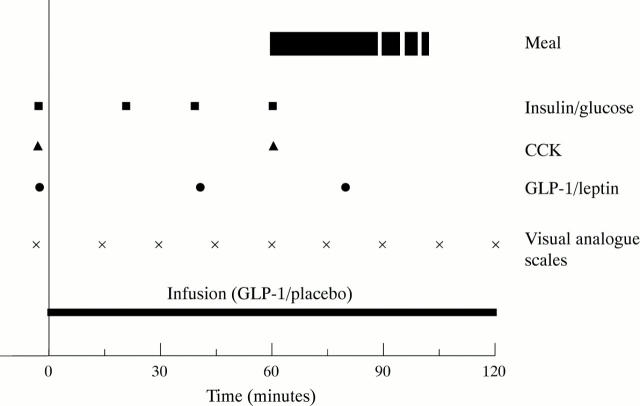
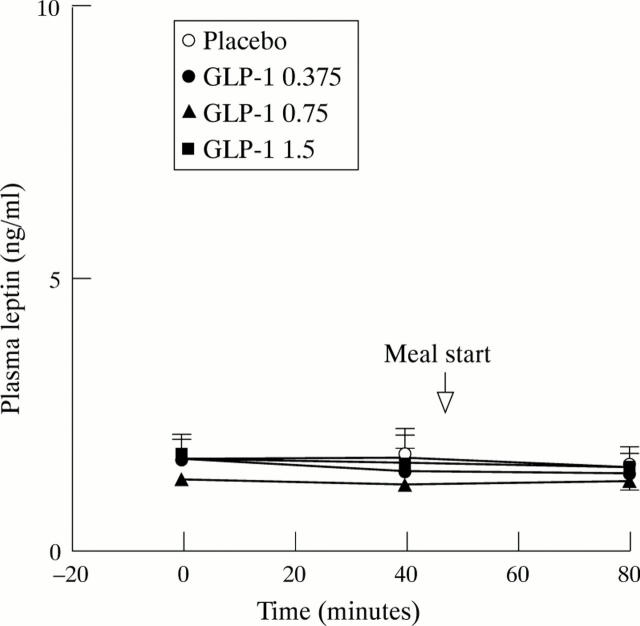
Methods: The effect of graded intravenous doses (0, 0.375, 0.75, and 1.5 pmol/kg/min) of synthetic human GLP-1 on food intake and feelings of hunger and satiety was tested in healthy volunteers.
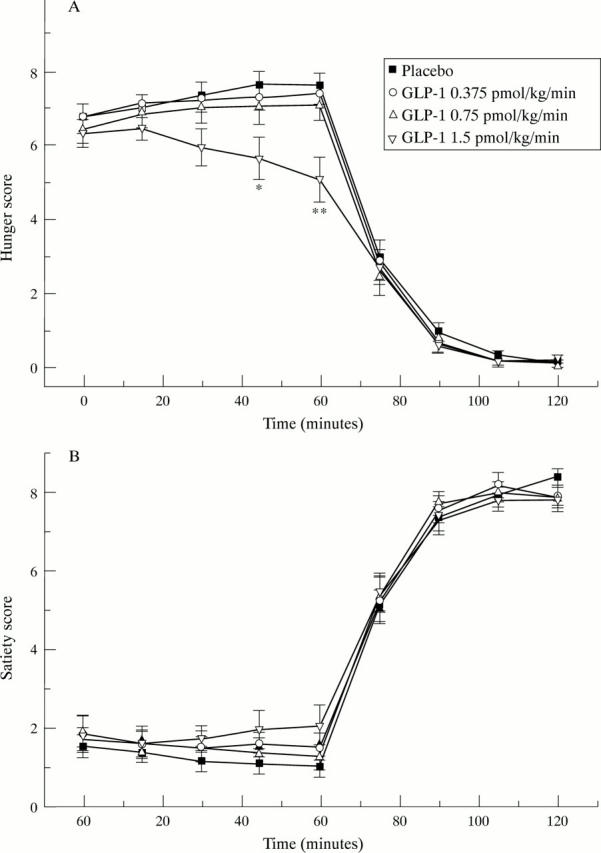
Results: Graded GLP-1 infusions resulted in a dose dependent reduction in food intake (maximal inhibition 35%, p<0.001 v control) and a similar reduction in calorie intake (32%; p<0.001). Fluid ingestion was also reduced by GLP-1 (18% reduction, p<0.01). No overt side effects were produced by GLP-1, but subjects experienced less hunger and early fullness in the period before a meal during GLP-1 infusion at the highest dose (p<0.05).
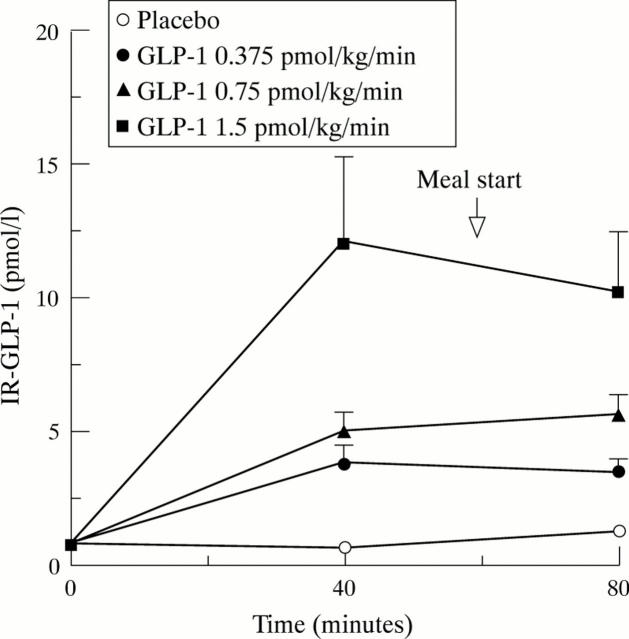
Conclusions: Intravenous infusions of GLP-1 decrease spontaneous food intake even at physiological plasma concentrations, implying an important role for GLP-1 in the regulation of the early satiety response in humans.
Figures
References
Publication types
MeSH terms
Substances
LinkOut - more resources
Full Text Sources
Other Literature Sources