doi: 10.1101/gad.12.24.3797.
c-myc null cells misregulate cad and gadd45 but not other proposed c-Myc targets
Affiliations
- PMID: 9869632
- PMCID: PMC317273
- DOI: 10.1101/gad.12.24.3797
Item in Clipboard
c-myc null cells misregulate cad and gadd45 but not other proposed c-Myc targets
Genes Dev.
.
Abstract
We report here that the expression of virtually all proposed c-Myc target genes is unchanged in cells containing a homozygous null deletion of c-myc. Two noteworthy exceptions are the gene cad, which has reduced log phase expression and serum induction in c-myc null cells, and the growth arrest gene gadd45, which is derepressed by c-myc knockout. Thus, cad and gadd45 are the only proposed targets of c-Myc that may contribute to the dramatic slow growth phenotype of c-myc null cells. Our results demonstrate that a loss-of-function approach is critical for the evaluation of potential c-Myc target genes.
Figures
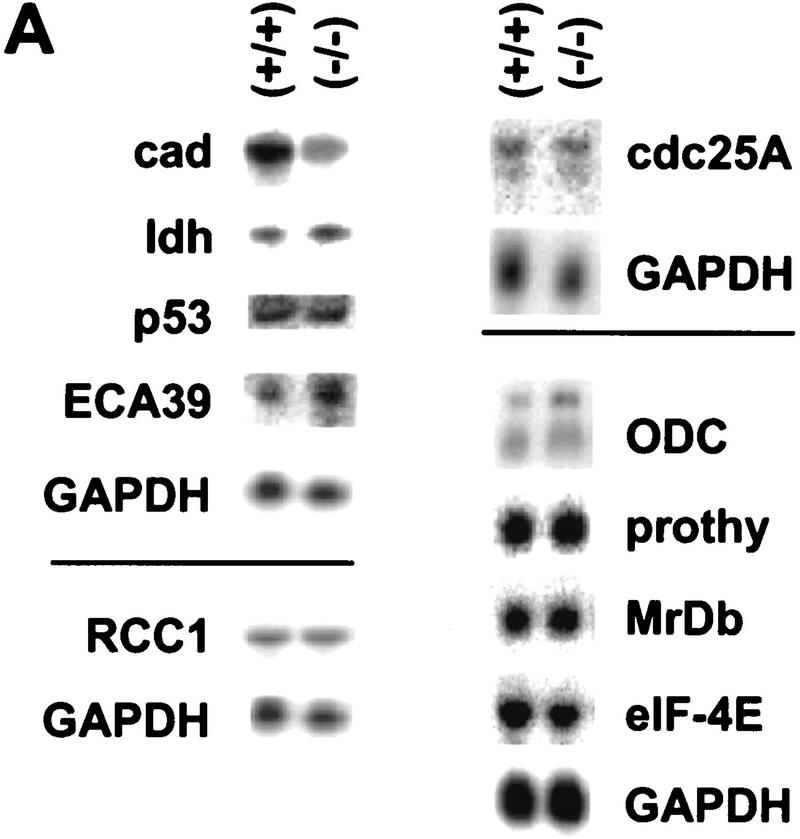
The expression of most proposed c-myc target genes is unchanged in c-myc null fibroblasts. (A) Total RNA was isolated from exponentially growing parental c-myc wild-type (+/+) or null (−/−) cells and analyzed by Northern blotting. To ensure vigorous cell growth, RNA was isolated from subconfluent dishes 22–28 hr after replating. mRNA levels were measured three to five times for each gene with equivalent results for independent samples. The corresponding GAPDH expression level is shown for each panel of RNAs. (B) Total RNA was analyzed for c-myc wild-type TGR (+/+), c-myc null HO15.19 (−/−), and c-myc null cells reconstituted with a retrovirally transduced mouse c-myc cDNA, HOmyc3.
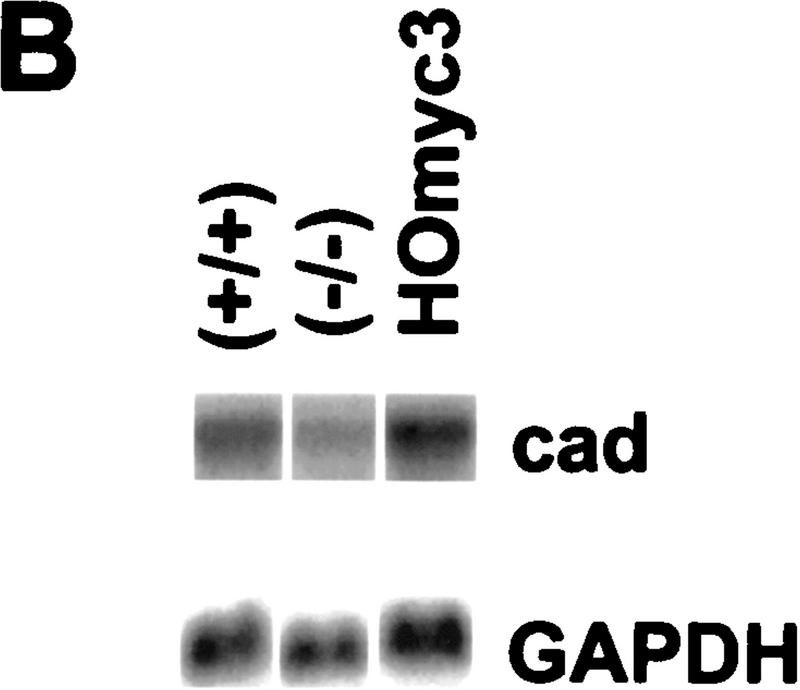
The expression of most proposed c-myc target genes is unchanged in c-myc null fibroblasts. (A) Total RNA was isolated from exponentially growing parental c-myc wild-type (+/+) or null (−/−) cells and analyzed by Northern blotting. To ensure vigorous cell growth, RNA was isolated from subconfluent dishes 22–28 hr after replating. mRNA levels were measured three to five times for each gene with equivalent results for independent samples. The corresponding GAPDH expression level is shown for each panel of RNAs. (B) Total RNA was analyzed for c-myc wild-type TGR (+/+), c-myc null HO15.19 (−/−), and c-myc null cells reconstituted with a retrovirally transduced mouse c-myc cDNA, HOmyc3.
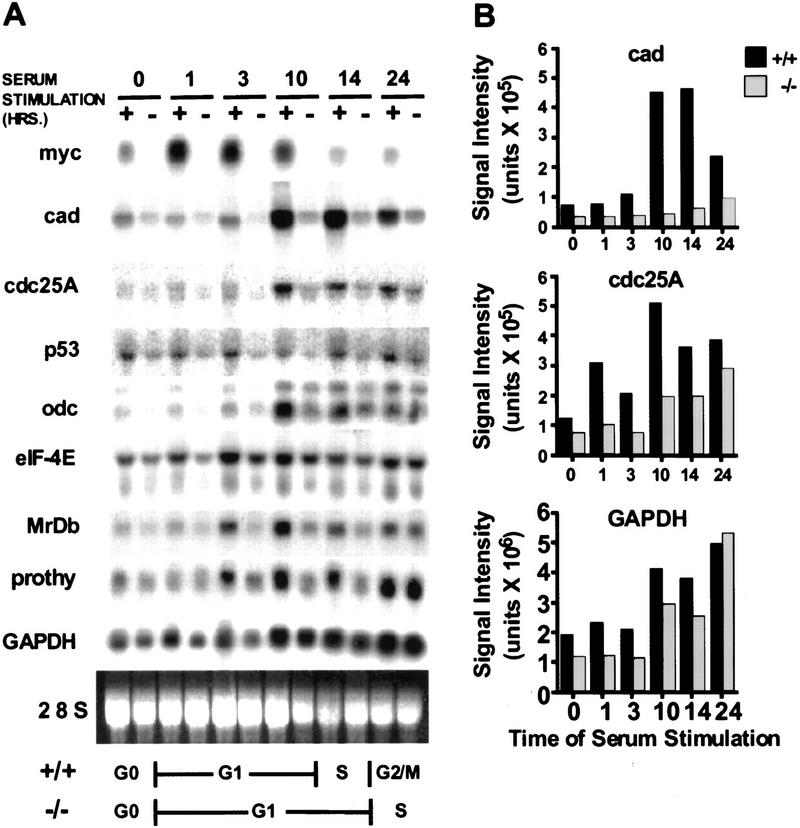
cad expression is greatly diminished by c-myc knockout during serum stimulation. c-myc wild-type and null cells were rendered quiescent by culturing in 0.1% serum for 48 hr and were then induced to re-enter the cell cycle with 10% serum medium. Total RNA was isolated at the indicated time points. The 14- and 24-hr RNA samples were slightly underloaded compared to earlier time points based on 28S rRNA staining; hence, the relative hybridization signals for all genes are slightly under-represented at these points. (A) Northern blots using the indicated gene probes. Cell-cycle transitions for the two cell types (bottom lines) are based on Mateyak et al. (1997), as described in the text. (B) Quantitation of bands in A. (C) Normalization of target gene signals using the ratio of GAPDH in c-myc wild-type to null cells.
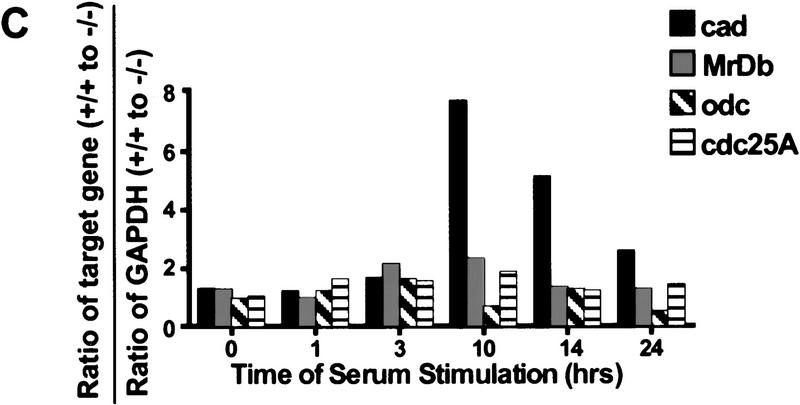
cad expression is greatly diminished by c-myc knockout during serum stimulation. c-myc wild-type and null cells were rendered quiescent by culturing in 0.1% serum for 48 hr and were then induced to re-enter the cell cycle with 10% serum medium. Total RNA was isolated at the indicated time points. The 14- and 24-hr RNA samples were slightly underloaded compared to earlier time points based on 28S rRNA staining; hence, the relative hybridization signals for all genes are slightly under-represented at these points. (A) Northern blots using the indicated gene probes. Cell-cycle transitions for the two cell types (bottom lines) are based on Mateyak et al. (1997), as described in the text. (B) Quantitation of bands in A. (C) Normalization of target gene signals using the ratio of GAPDH in c-myc wild-type to null cells.
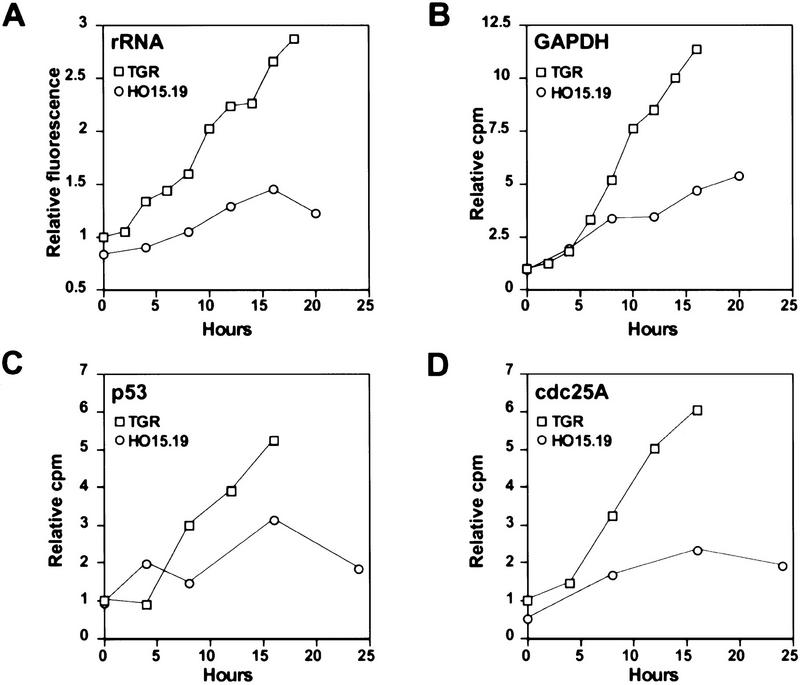
Serum regulation of rRNA, GAPDH, p53, and cdc25A expression in c-myc null and wild-type cells. Quiescent cells were stimulated with serum, and RNA samples were harvested at the indicated times. The zero time point corresponds to the addition of serum. All values are expressed relative to the TGR-1 sample at t = 0, which has been assigned a value of 1.0. (A) rRNA. Total RNA was resolved by agarose gel electrophoresis, and the ethidium bromide fluorescence in the 28S rRNA band was digitized. (B) GAPDH. Total RNA was analyzed by Northern blotting. (C) p53. (D) cdc25A. Total RNA was analyzed by ribonuclease protection. The values were normalized to GAPDH internal controls, and the data are presented on the basis of equal cell number.
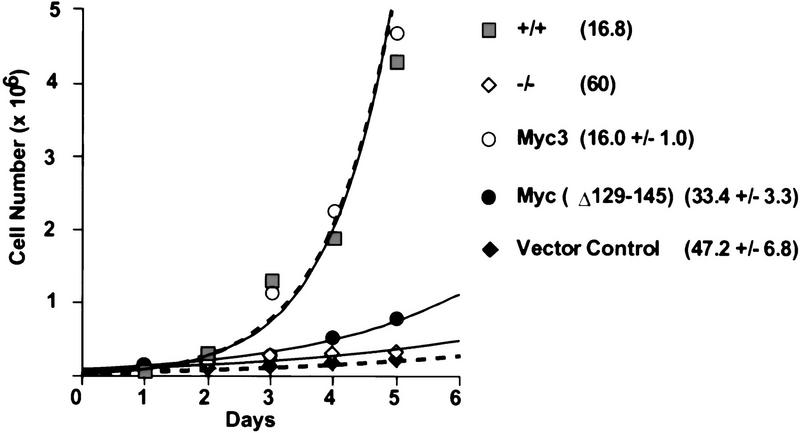
MbII is necessary for wild-type growth rate. c-myc (wild type) or c-myc with a deletion in MbII (Δ129–145) was reintroduced into c-myc null cells using the LXSH retrovirus, and clonal cell lines were analyzed for growth rate. Growth rates were determined by plating cells at low density (1 × 10⁵/10-cm plate) and counting cells at the indicated time (in duplicate). The curves in A depict the data from one representative experiment, and doubling times (mean ± s.e.m. ) were calculated using an exponential curve fit. Doubling time (hr) in parentheses.
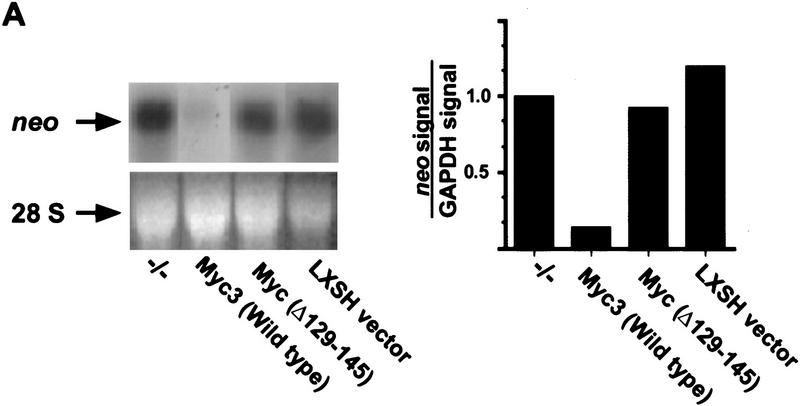
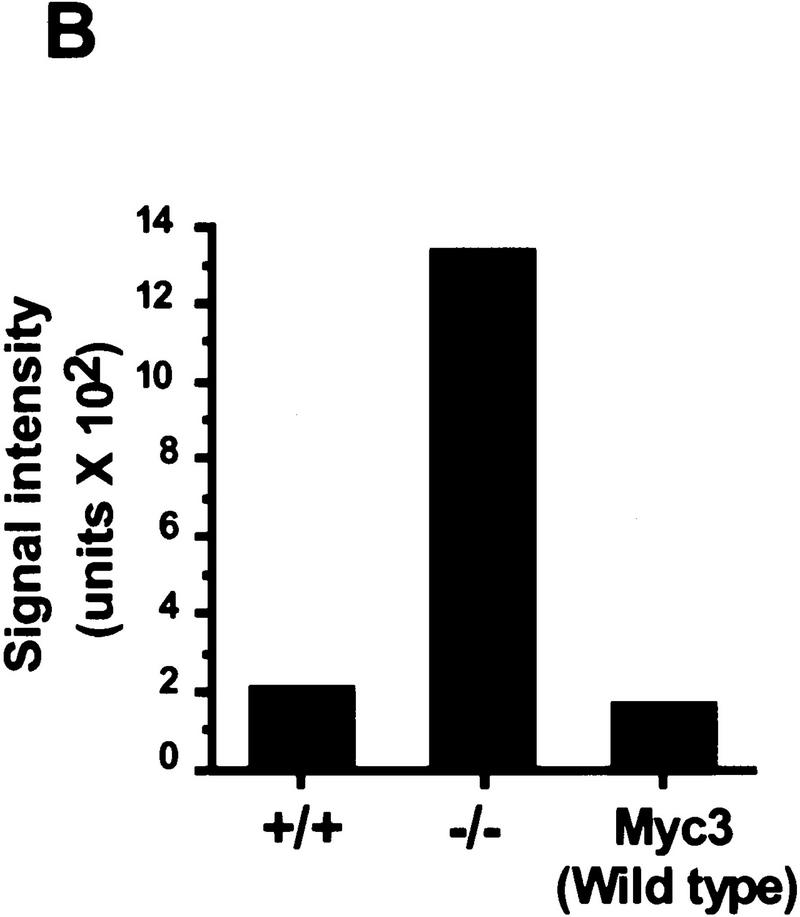
c-myc and gadd45 repression in c-myc null cells. (A) (Left) c-myc promoter activity was monitored by Northern blot using a neo probe in c-myc null cells (−/−) or in c-myc null cells reconstituted with wild-type c-Myc, Myc(Δ129–145) or vector only. (Right) The neo hybridization signal was normalized to that of GAPDH using a PhosphorImager after reprobing the same Northern blot. (B) Levels of gadd45 mRNA are elevated during log-phase growth in c-myc null cells. Total RNA was analyzed by Northern blot and the level of gadd45 was normalized to GAPDH using a PhosphorImager. (C) RNase protection assay showing levels of gadd45 mRNA during serum stimulation of quiescent cells. There is a 7-fold difference in gadd45 levels between wild-type (solid bars) and c-myc null cells (shaded bars) at 4 hr and a 4.6-fold difference at 8 hr.
c-myc and gadd45 repression in c-myc null cells. (A) (Left) c-myc promoter activity was monitored by Northern blot using a neo probe in c-myc null cells (−/−) or in c-myc null cells reconstituted with wild-type c-Myc, Myc(Δ129–145) or vector only. (Right) The neo hybridization signal was normalized to that of GAPDH using a PhosphorImager after reprobing the same Northern blot. (B) Levels of gadd45 mRNA are elevated during log-phase growth in c-myc null cells. Total RNA was analyzed by Northern blot and the level of gadd45 was normalized to GAPDH using a PhosphorImager. (C) RNase protection assay showing levels of gadd45 mRNA during serum stimulation of quiescent cells. There is a 7-fold difference in gadd45 levels between wild-type (solid bars) and c-myc null cells (shaded bars) at 4 hr and a 4.6-fold difference at 8 hr.
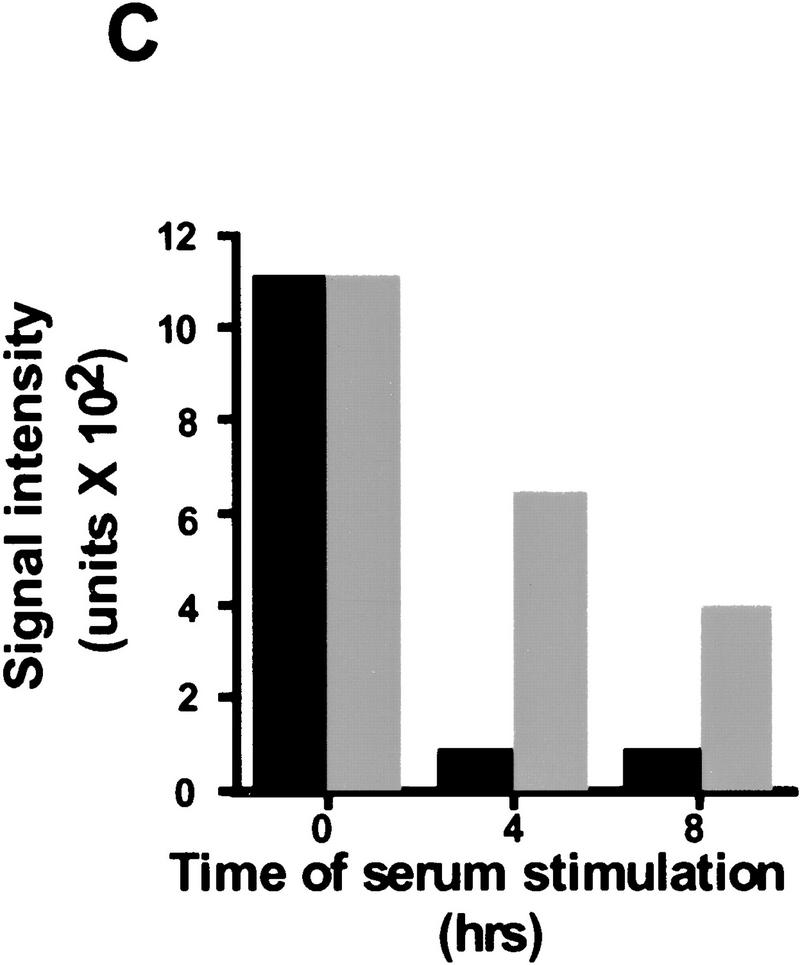
c-myc and gadd45 repression in c-myc null cells. (A) (Left) c-myc promoter activity was monitored by Northern blot using a neo probe in c-myc null cells (−/−) or in c-myc null cells reconstituted with wild-type c-Myc, Myc(Δ129–145) or vector only. (Right) The neo hybridization signal was normalized to that of GAPDH using a PhosphorImager after reprobing the same Northern blot. (B) Levels of gadd45 mRNA are elevated during log-phase growth in c-myc null cells. Total RNA was analyzed by Northern blot and the level of gadd45 was normalized to GAPDH using a PhosphorImager. (C) RNase protection assay showing levels of gadd45 mRNA during serum stimulation of quiescent cells. There is a 7-fold difference in gadd45 levels between wild-type (solid bars) and c-myc null cells (shaded bars) at 4 hr and a 4.6-fold difference at 8 hr.
References
-
- Armelin H, Armelin M, Kelly K, Stewart T, Leder P, Cochran B, Stiles C. Functional role for c-myc in mitogenic response to platelet-derived growth factor. Nature. 1984;310:655–660. - PubMed
-
- Benvenisty N, Leder A, Kuo A, Leder P. An embryonically expressed gene is a target for c-Myc regulation via the c-Myc-binding sequence. Genes & Dev. 1992;6:2513–2523. - PubMed
Publication types
MeSH terms
Substances
LinkOut - more resources
Full Text Sources
Other Literature Sources
Miscellaneous