


Glycerol overproduction by engineered saccharomyces cerevisiae wine yeast strains leads to substantial changes in By-product formation and to a stimulation of fermentation rate in stationary phase
- PMID: 9872772
- PMCID: PMC90995
- DOI: 10.1128/AEM.65.1.143-149.1999
Glycerol overproduction by engineered saccharomyces cerevisiae wine yeast strains leads to substantial changes in By-product formation and to a stimulation of fermentation rate in stationary phase
Abstract
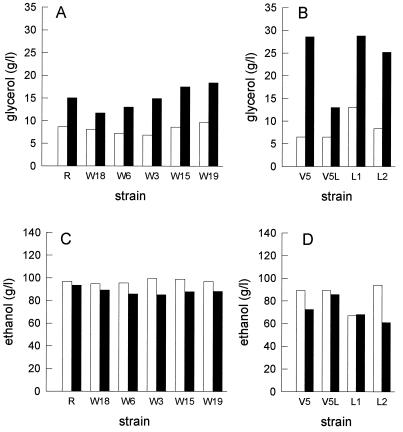
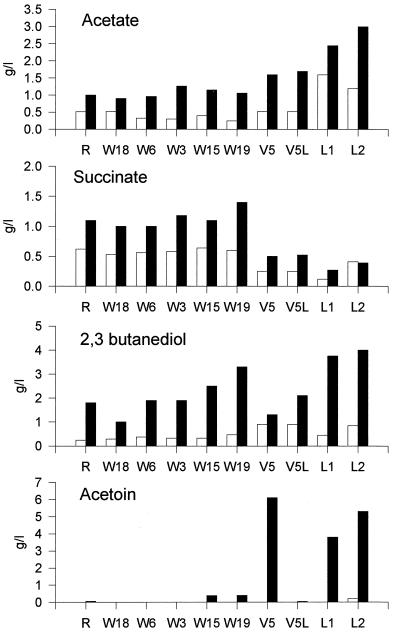
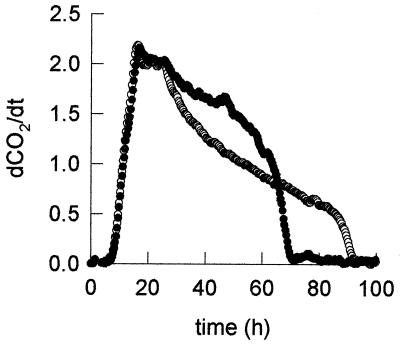
Six commercial wine yeast strains and three nonindustrial strains (two laboratory strains and one haploid strain derived from a wine yeast strain) were engineered to produce large amounts of glycerol with a lower ethanol yield. Overexpression of the GPD1 gene, encoding a glycerol-3-phosphate dehydrogenase, resulted in a 1.5- to 2.5-fold increase in glycerol production and a slight decrease in ethanol formation under conditions simulating wine fermentation. All the strains overexpressing GPD1 produced a larger amount of succinate and acetate, with marked differences in the level of these compounds between industrial and nonindustrial engineered strains. Acetoin and 2,3-butanediol formation was enhanced with significant variation between strains and in relation to the level of glycerol produced. Wine strains overproducing glycerol at moderate levels (12 to 18 g/liter) reduced acetoin almost completely to 2,3-butanediol. A lower biomass concentration was attained by GPD1-overexpressing strains, probably due to high acetaldehyde production during the growth phase. Despite the reduction in cell numbers, complete sugar exhaustion was achieved during fermentation in a sugar-rich medium. Surprisingly, the engineered wine yeast strains exhibited a significant increase in the fermentation rate in the stationary phase, which reduced the time of fermentation.
Figures
References
-
- Albertyn J, Hohmann S, Thevelein J M, Prior B A. GPD1, which encodes glycerol-3-phosphate dehydrogenase is essential for growth under osmotic stress in Saccharomyces cerevisiae and its expression is regulated by the high-osmolarity glycerol response pathway. Mol Cell Biol. 1994;14:4135–4144. - PMC - PubMed
-
- Bely M, Sablayrolles J M, Barre P. Automatic detection of assimilable nitrogen deficiencies during alcoholic fermentation in enological conditions. J Ferment Bioeng. 1990;70:246–252.
-
- Bidenne C, Blondin B, Dequin S, Vezhinet F. Analysis of the chromosomal DNA polymorphism of wine yeast strains of Saccharomyces cerevisiae. Curr Genet. 1992;22:1–7. - PubMed
-
- Blomberg A, Adler L. Physiology of osmotolerance in fungi. Adv Microb Physiol. 1992;33:145–212. - PubMed
LinkOut - more resources
Full Text Sources
Other Literature Sources
Molecular Biology Databases
Miscellaneous
