


A comparison of laparoscopic and open appendectomy
- PMID: 9876729
- PMCID: PMC3015275
A comparison of laparoscopic and open appendectomy
Abstract
Background and objectives: To compare laparoscopic appendectomy with traditional open appendectomy.
Methods: Seventy-one patients requiring operative intervention for suspected acute appendicitis were prospectively compared. Thirty-seven patients underwent laparoscopic appendectomy, and 34 had open appendectomy through a right lower quadrant incision. Length of surgery, postoperative morbidity and length of postoperative stay (LOS) were recorded. Both groups were similar with regard to age, gender, height, weight, fever, leukocytosis, and incidence of normal vs. gangrenous or perforated appendix.
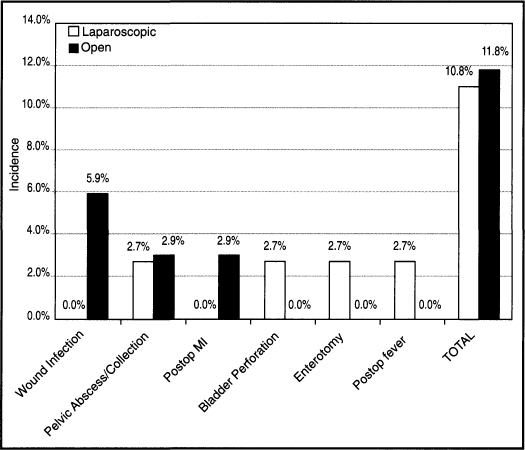
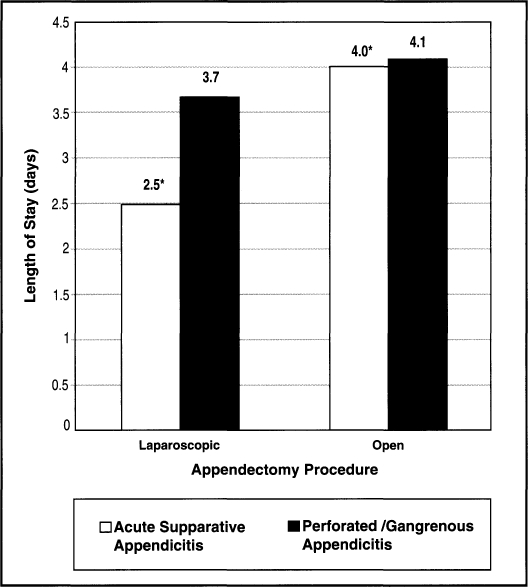
Results: Mean LOS was significantly shorter for patients with acute suppurative appendicitis who underwent laparoscopic appendectomy (2.5 days vs. 4.0 days, p < 0.01). Mean LOS was no different when patients classified as having gangrenous or perforated appendicitis were included in the analysis (3.7 days vs. 4.1 days, P = 0.11). The laparoscopy group had significantly longer surgery times (72 min vs. 58 min, p < 0.001). There was no significant difference in the incidence of postoperative morbidity.
Conclusions: Laparoscopic appendectomy reduces LOS as compared with the traditional open technique in patients with acute suppurative appendicitis. The longer operative time for the laparoscopic approach in our study is likely related to the learning curve associated with the procedure and did not increase morbidity.
Figures
References
-
- Semm K. Endoscopic appendectomy. Endoscopy. 1983;15:59–64 - PubMed
-
- Peir A, Gotz F, Bacher C. Laparoscopic appendectomy in 625 cases: from innovation to routine. Surg Laparosc Endosc. 1991;1:8–13 - PubMed
-
- Saye WB, Rives DA, Cochran EB. Laparoscopic appendectomy: three years' experience. Surg Laparosc Endosc. 1991;1:109–115 - PubMed
-
- Nowzardan Y, Westmoreland J, McCarver CT, Harris RJ. Laparoscopic appendectomy for acute appendicitis: indications and current use. J Laparoendosc Surg. 1991;1:247–257 - PubMed
-
- McAnena OJ, Austin O, Hederman WP, et al. Laparoscopic versus open appendectomy. Lancet. 1991;338:693 - PubMed
Publication types
MeSH terms
LinkOut - more resources
Full Text Sources
Medical