


Molecular and phenotypic characterization of genotypic Candida albicans subgroups and comparison with Candida dubliniensis and Candida stellatoidea
- PMID: 9889231
- PMCID: PMC84325
- DOI: 10.1128/JCM.37.2.417-421.1999
Molecular and phenotypic characterization of genotypic Candida albicans subgroups and comparison with Candida dubliniensis and Candida stellatoidea
Abstract
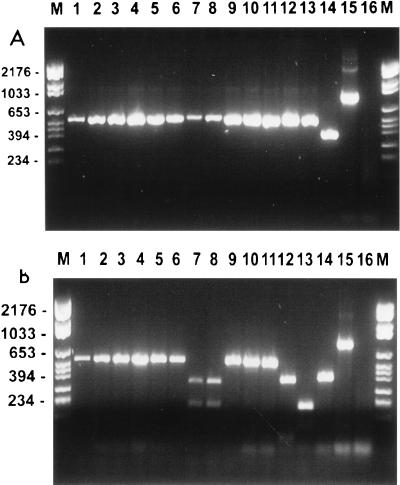
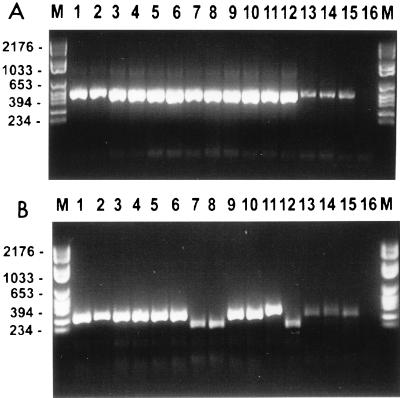
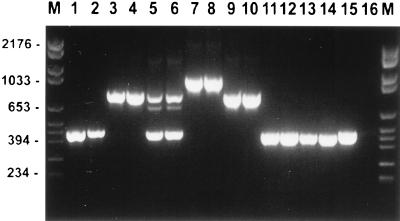
There have been increased reports of the isolation of unusual genotypic groups of Candida albicans (groups C and D) based on a well-defined genotypic method; this method uses cellular DNA digested with the EcoRI enzyme and the restriction fragment length polymorphisms (RFLPs) generated by agarose gel electrophoresis. The aim of the present study was to use additional molecular tools to characterize these unusual strains and to compare them with authentic strains of C. dubliniensis, a recently delineated species, and type I C. stellatoidea. The RFLPs of PCR products generated from the intergenic transcribed spacer (ITS) region did not differentiate among C. albicans genotypes A, B, and C and type I C. stellatoidea. However, this method did differentiate the C. albicans genotype D strains, which were identical to C. dubliniensis. The RFLPs generated by HaeIII digestion of the PCR products of the V3 region of the 25S rRNA gene (rDNA) could differentiate the same groups as RFLP analysis of the PCR amplicon of the ITS region. C. albicans genotype B isolates have been shown to have a transposable intron in the 25S rDNA, whereas genotype A isolates do not; C. dubliniensis strains also have an intron that is larger than that in genotype B C. albicans strains but that is in the same location. PCR designed to span this region resulted in a single product for C. albicans genotype A (450 bp), B (840 bp), type 1 C. stellatoidea (840 bp), and C. dubliniensis (1,080 bp), whereas the C. albicans genotype C isolates had two major products (450 and 840 bp). All C. albicans genotype D isolates gave a PCR product identical to that given by C. dubliniensis. These results indicate that those strains previously designated C. albicans genotype D are in fact C. dubliniensis, that no differences were found between type 1 C. stellatoidea and C. albicans genotype B strains, and that the C. albicans genotype C strains appear to have the transposable intron incompletely inserted throughout the ribosomal repeats in their genomes. The results of the antifungal susceptibility testing of 105 of these strains showed that, for fluconazole, strains of C. dubliniensis were significantly more susceptible than strains of each of the C. albicans genotypes (genotypes A, B, and C). The flucytosine susceptibility results indicated that strains of C. albicans genotype A were significantly less susceptible than either C. albicans genotype B or C. albicans genotype C strains. These results indicate that there is a correlation between the Candida groups and antifungal susceptibility.
Figures
Comment in
-
Molecular epidemiology of Candida.J Clin Microbiol. 2002 Jul;40(7):2710. doi: 10.1128/JCM.40.7.2710.2002. J Clin Microbiol. 2002. PMID: 12089319 Free PMC article. No abstract available.
References
-
- Boucher H, Mercure S, Montplaisir S, Lemay G. A novel group I intron in Candida dubliniensis is homologous to a Candida albicans intron. Gene. 1996;180:189–196. - PubMed
Publication types
MeSH terms
Substances
LinkOut - more resources
Full Text Sources
Other Literature Sources
Medical
