Ocular contact time of a carbomer gel (GelTears) in humans
- PMID: 9924298
- PMCID: PMC1722369
- DOI: 10.1136/bjo.82.10.1131
Ocular contact time of a carbomer gel (GelTears) in humans
Abstract
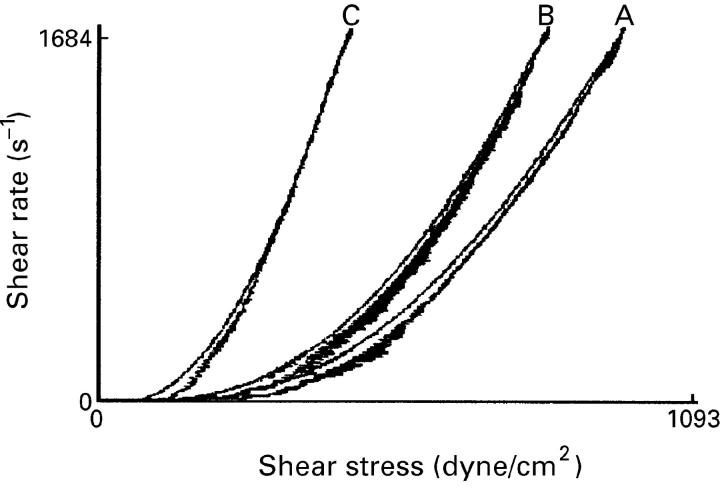
Background/aims: Carbomers are widely used in products for the treatment of dry eye; however, the polymer gel thins on addition of probes (for example, fluorescein salt) confounding the comparison of products by objective clinical tests such as spectrophotofluorimetry or scintigraphy. A novel method of radiolabelling carbomer gels, with minimum change to their rheology, has permitted the non-invasive evaluation of precorneal residence of the gel in volunteers using gamma scintigraphy. The technique was used to evaluate the precorneal clearance of the liquid phase and of a suspended particulate in GelTears.
Methods: Low sodium technetium-99m labelled diethylenetriaminepentacetic acid (99mTc-DTPA) was used to label carbomer 940 gel, either adsorbed onto sterile charcoal to model an entrapped drug, or added directly to the gel to a final activity of 1 MBq per 25 microliters dose. The clearance of the labelled gels was then compared with 99mTc-DTPA labelled saline in 12 volunteers.
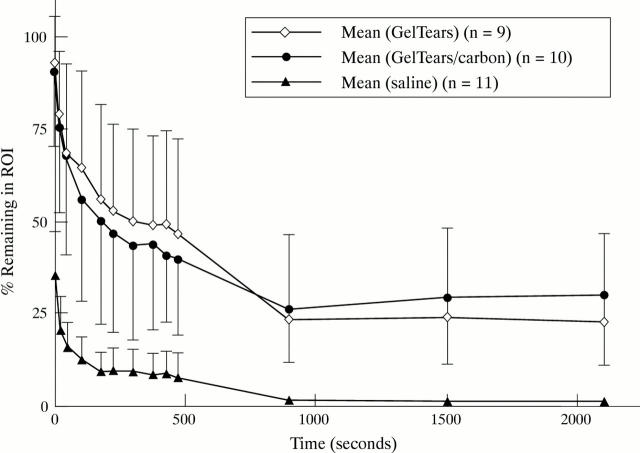
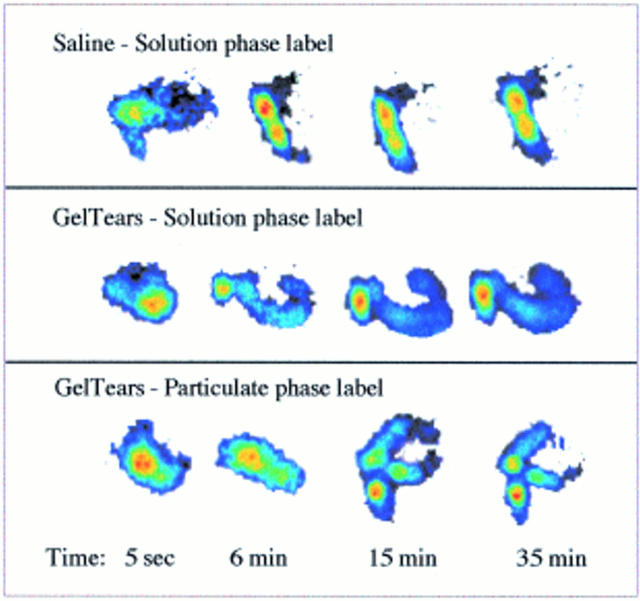
Results: The addition of the low sodium radiopharmaceutical produced insignificant rheological changes in the gel compared with conventional 99mTc-DTPA labelling. The residence times on the eye of the gel formulations were significantly greater than that of the saline control. At 8 minutes postdosing, the label levels retained (mean (SD)) on the ocular surface were: saline, 7% (7%); 99mTc-DTPA gel, 42% (27%); and 99mTc-carbon gel, 42% (20%) of administered dose. There was no difference observed in the precorneal distribution between 99mTc-DTPA solution and particulate markers.
Conclusions: These data demonstrate that carbomer based gels significantly extend contact of solutes or suspended solids with the corneal surface. The method of labelling does not significantly change the initial viscosity and is superior to previous methods which have used sodium salts (for example, sodium fluorescein) and therefore underestimate contact time.
Figures
References
Publication types
MeSH terms
Substances
LinkOut - more resources
Full Text Sources
Other Literature Sources