


Ethanol synthesis by genetic engineering in cyanobacteria
- PMID: 9925577
- PMCID: PMC91056
- DOI: 10.1128/AEM.65.2.523-528.1999
Ethanol synthesis by genetic engineering in cyanobacteria
Abstract
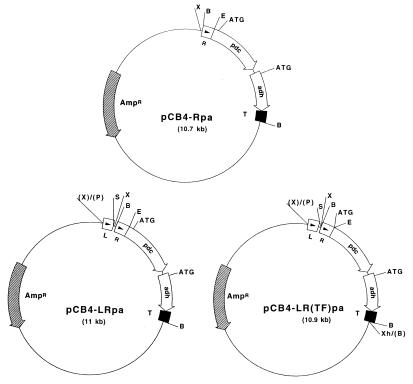
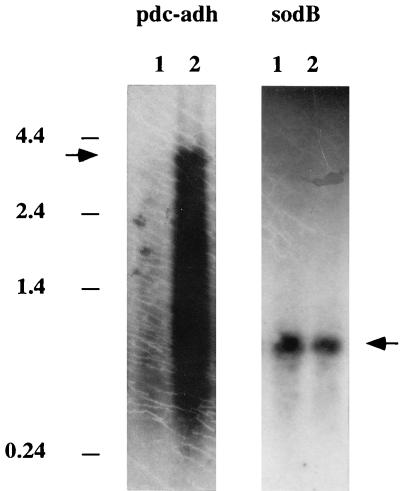
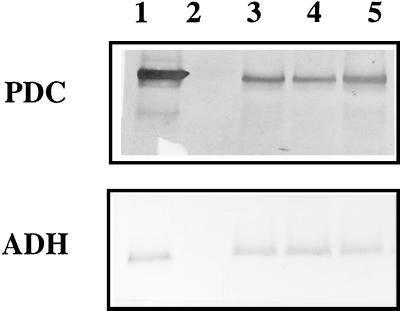
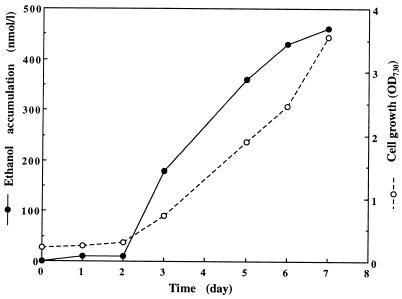
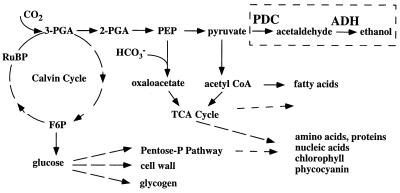
Cyanobacteria are autotrophic prokaryotes which carry out oxygenic photosynthesis and accumulate glycogen as the major form of stored carbon. In this research, we introduced new genes into a cyanobacterium in order to create a novel pathway for fixed carbon utilization which results in the synthesis of ethanol. The coding sequences of pyruvate decarboxylase (pdc) and alcohol dehydrogenase II (adh) from the bacterium Zymomonas mobilis were cloned into the shuttle vector pCB4 and then used to transform the cyanobacterium Synechococcus sp. strain PCC 7942. Under control of the promoter from the rbcLS operon encoding the cyanobacterial ribulose-1, 5-bisphosphate carboxylase/oxygenase, the pdc and adh genes were expressed at high levels, as demonstrated by Western blotting and enzyme activity analyses. The transformed cyanobacterium synthesized ethanol, which diffused from the cells into the culture medium. As cyanobacteria have simple growth requirements and use light, CO2, and inorganic elements efficiently, production of ethanol by cyanobacteria is a potential system for bioconversion of solar energy and CO2 into a valuable resource.
Figures
References
-
- Algar E M, Scopes R K. Studies on cell-free metabolism: ethanol production by extracts of Zymomonas mobilis. J Biotechnol. 1985;2:275–287.
-
- Allen M M. Simple conditions for growth of unicellular blue-green algae on plates. J Phycol. 1968;4:1–4. - PubMed
-
- Belay A, Ota Y, Miyakawa K, Shimamatsu H. Current knowledge on potential health benefits of Spirulina. J Appl Phycol. 1993;5:235–241.
-
- Bradford M M. A rapid and sensitive method for the quantitation of microgram quantities of protein utilizing the principle of protein-dye binding. Anal Biochem. 1976;72:248–254. - PubMed
LinkOut - more resources
Full Text Sources
Other Literature Sources
Research Materials
