


Based on single-cell and transcriptome data, ferroptosis and the immunological landscape in osteosarcoma were discovered
- PMID: 40299087
- PMCID: PMC12040805
- DOI: 10.1007/s12672-025-02427-0
Based on single-cell and transcriptome data, ferroptosis and the immunological landscape in osteosarcoma were discovered
Abstract
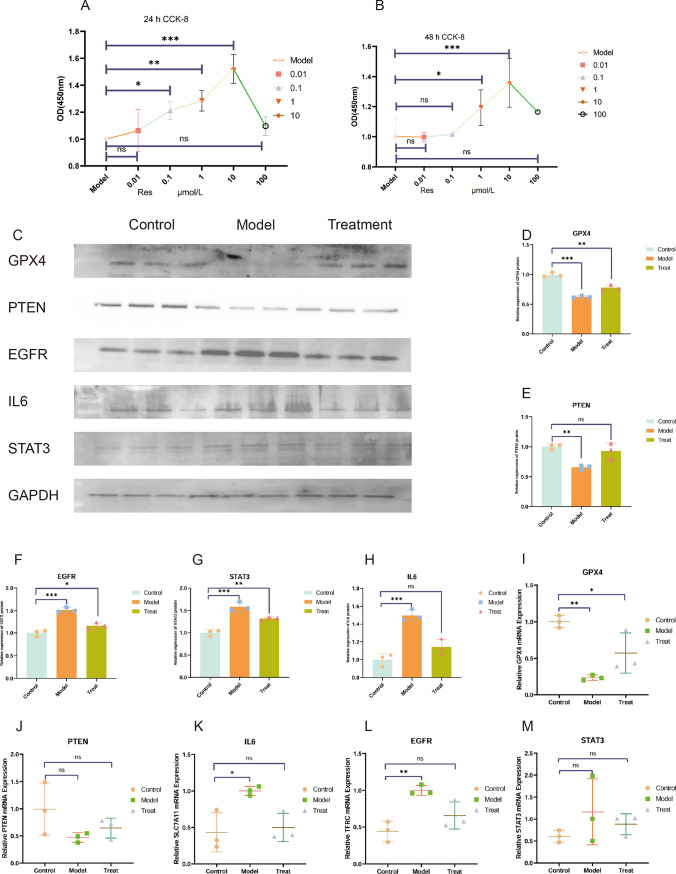
Ferroptosis has been demonstrated to have a significant role in osteosarcoma (OS), a highly aggressive and invasive malignant bone tumor. Nevertheless, the precise molecular mechanism underlying OS remains unknown. Understanding the makeup of the immune microenvironment in OS is crucial for its therapy, as the disease grows in the highly specialized, complex, and dynamic bone microenvironment. Resveratrol (Res) possesses anti-inflammatory, immunomodulatory, chemopreventive, antioxidant, and anticancer properties, it is unknown if it can modify ferroptosis to prevent OS. This time, using single-cell analysis and other bioinformatic studies, we will clarify the targets and composition of the immunological microenvironment of the ferroptosis process in OS, as well as the role of certain transcription factors in it. Ultimately, network pharmacology and vitro experiment have led to the initial identification of the molecular processes governing ferroptosis in OS, which are regulated by Res. The findings suggested the potential use of ALB, EGFR, GPX4, IL6, STAT3, and PTEN as OS prognostic and diagnostic biomarkers. Chondroblastic, myeloid cells, osteoblastic OS, CD4 + T, NK, CD8 + T, B cells, M1 macrophages, Chondro_Proli, etc. made up the majority of the immunological microenvironment of OS. The entire cellular trajectory demonstrates that immune cells infiltrating during the early stages of OS are mostly CD4 + T, NK, CD8 + T, B_cell, and M1 macrophages. This affects the development of myeloid cells and chondroblastic cells, which ultimately leads to the progression of highly malignant chondro cells to OS. Numerous pathways allow transcription factors including BCLAF1, MAF, SP1, TCF12, KLF11, and KMT2D to contribute to the development of tumors. Finally, by interacting with the aforementioned targets, cells, Res is thought to impede the evolution of OS. In conclusion, ferroptosis and alterations in the immunological milieu are significant factors in the development of OS, and Res may one day be employed as a therapeutic drug to treat OS.
Keywords: Ferroptosis; Osteosarcoma; Single-cell analysis; Transcription factors; Tumor microenvironment.
© 2025. The Author(s).
Conflict of interest statement
Declarations. Ethics approval and consent to participate: Not applicable. Consent for publication: Not applicable. Competing interests: The authors declare no competing interests.
Figures


References
Grants and funding
- 2020LC0228/the Program for Special project of Traditional Chinese Medicine scientific research of Sichuan Science and Traditional Chinese Medicine Administration
- 2022-RCM-178/Luzhou Science and Technology Program-Innovation Seedlings
- 2022-SYF-42/Luzhou's major scientific and technology research and development project
- 2022YFS0609/2022YFS0609-B3/Joint Innovation Special of the Sichuan Provincial Science and Technology Plan
- 2022YFS0628/Sichuan Provincial Science and Technology Department Project
LinkOut - more resources
Full Text Sources
Research Materials
Miscellaneous