


N2O production, a widespread trait in fungi
- PMID: 25894103
- PMCID: PMC4403702
- DOI: 10.1038/srep09697
N2O production, a widespread trait in fungi
Abstract
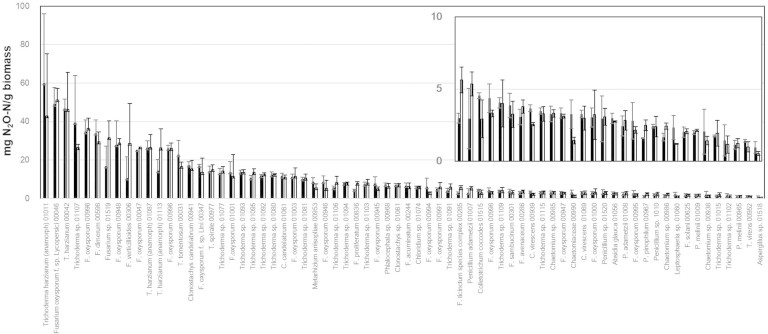
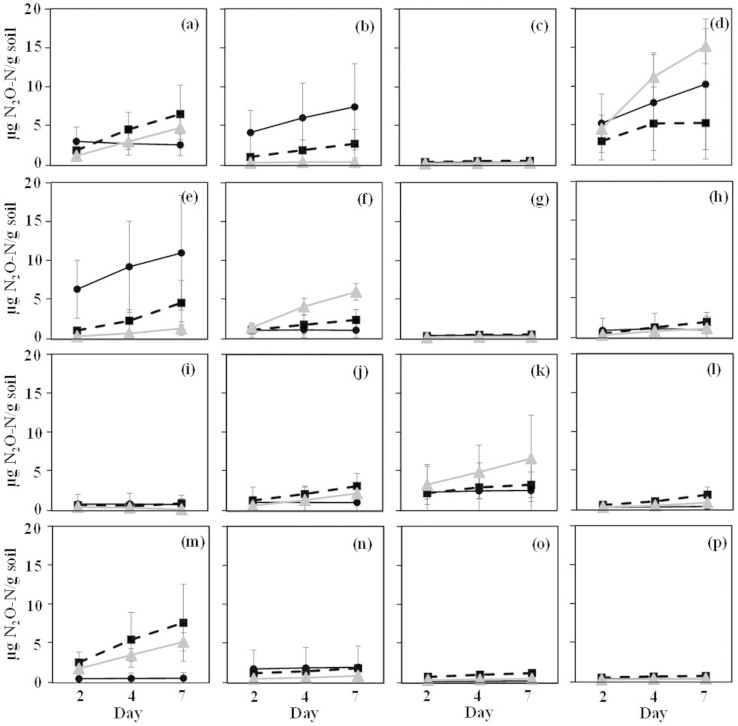
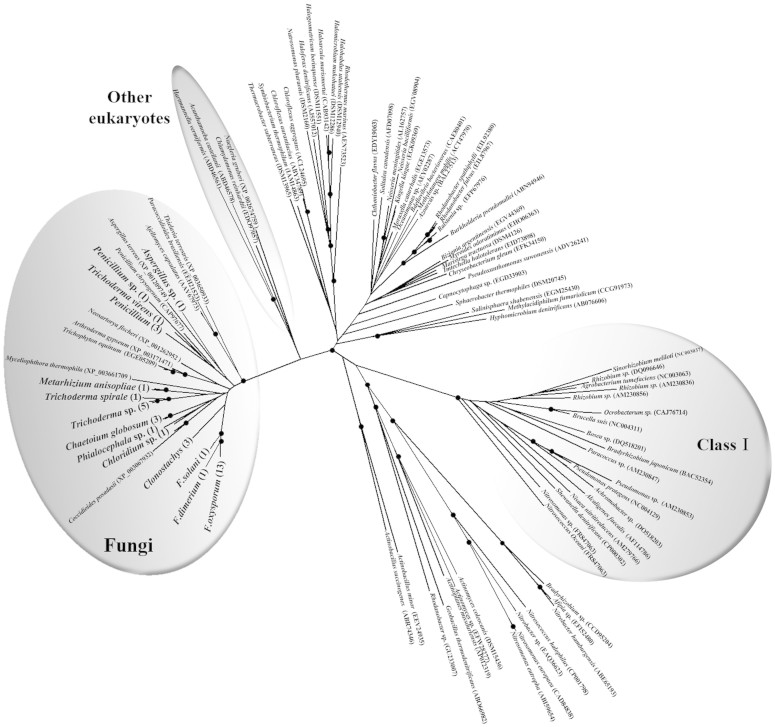
N2O is a powerful greenhouse gas contributing both to global warming and ozone depletion. While fungi have been identified as a putative source of N2O, little is known about their production of this greenhouse gas. Here we investigated the N2O-producing ability of a collection of 207 fungal isolates. Seventy strains producing N2O in pure culture were identified. They were mostly species from the order Hypocreales order-particularly Fusarium oxysporum and Trichoderma spp.-and to a lesser extent species from the orders Eurotiales, Sordariales, and Chaetosphaeriales. The N2O (15)N site preference (SP) values of the fungal strains ranged from 15.8‰ to 36.7‰, and we observed a significant taxa effect, with Penicillium strains displaying lower SP values than the other fungal genera. Inoculation of 15 N2O-producing strains into pre-sterilized arable, forest and grassland soils confirmed the ability of the strains to produce N2O in soil with a significant strain-by-soil effect. The copper-containing nitrite reductase gene (nirK) was amplified from 45 N2O-producing strains, and its genetic variability showed a strong congruence with the ITS phylogeny, indicating vertical inheritance of this trait. Taken together, this comprehensive set of findings should enhance our knowledge of fungi as a source of N2O in the environment.
Figures
References
-
- Davidson E. A., Rogers J. & Whitman W. Fluxes of nitrous oxide and nitric oxide from terrestrial ecosystems. In: Microbial production and consumption of greenhouse gases: methane, nitrogen oxides, and halomethanes. (eds. Rogers J. E., , Whitman W. B., eds. ) 219–235. (American Society for Microbiology, 1991).
-
- Davidson E. The contribution of manure and fertilizer nitrogen to atmospheric nitrous oxide since 1860. Nat. Geosci. 2, 659–662 (2009).
-
- Forster P. et al. Changes in Atmospheric Constituents and in Radiative Forcing. In: Climate Change 2007: The Physical Science Basis. (eds. Solomon S., et al.) Ch.2, 130–234. (Cambridge University Press, 2007).
-
- Ravishankara A., Daniel J. & Portmann R. Nitrous oxide (N2O): the dominant ozone-depleting substance emitted in the 21st century. Science 326, 123–125 (2009). - PubMed
-
- Hooper A. B. & Terry K. Hydroxylamine oxidoreductase of Nitrosomonas: Production of nitric oxide from hydroxylamine. BBA-Enzymol. 571, 12–20 (1979). - PubMed
Publication types
MeSH terms
Substances
Associated data
- Actions
- Actions
- Actions
- Actions
- Actions
- Actions
- Actions
- Actions
- Actions
- Actions
- Actions
- Actions
- Actions
- Actions
- Actions
- Actions
- Actions
- Actions
- Actions
- Actions
- Actions
- Actions
- Actions
- Actions
- Actions
- Actions
- Actions
- Actions
- Actions
- Actions
- Actions
- Actions
- Actions
- Actions
- Actions
- Actions
- Actions
LinkOut - more resources
Full Text Sources
Other Literature Sources
Medical
Research Materials
Miscellaneous
