


Strain variation in adenovirus serotypes 4 and 7a causing acute respiratory disease
- PMID: 10074533
- PMCID: PMC88656
- DOI: 10.1128/JCM.37.4.1107-1112.1999
Strain variation in adenovirus serotypes 4 and 7a causing acute respiratory disease
Abstract
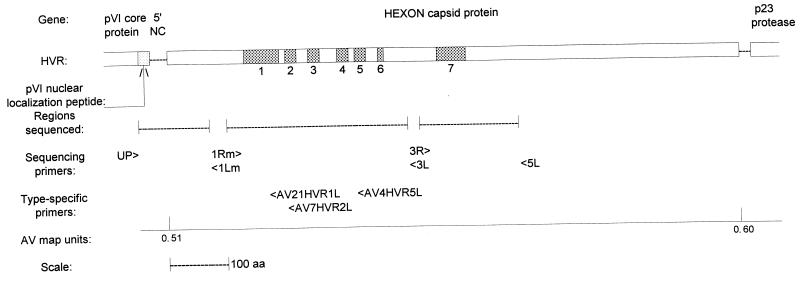
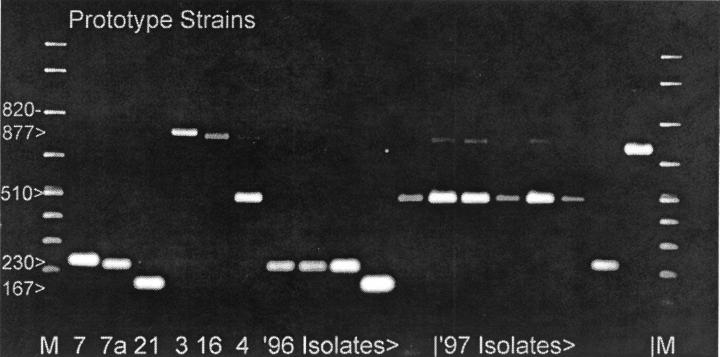
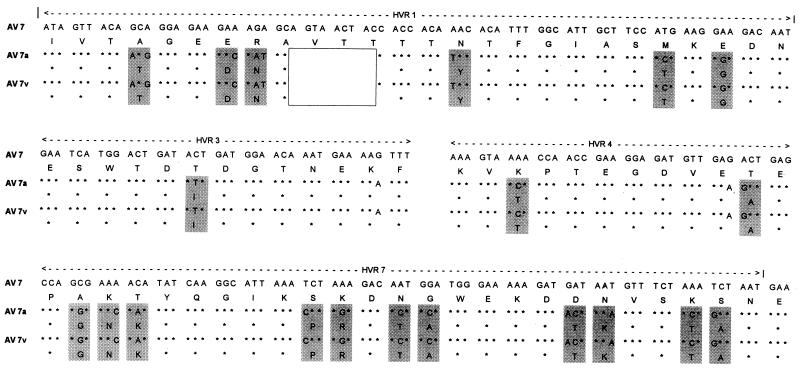
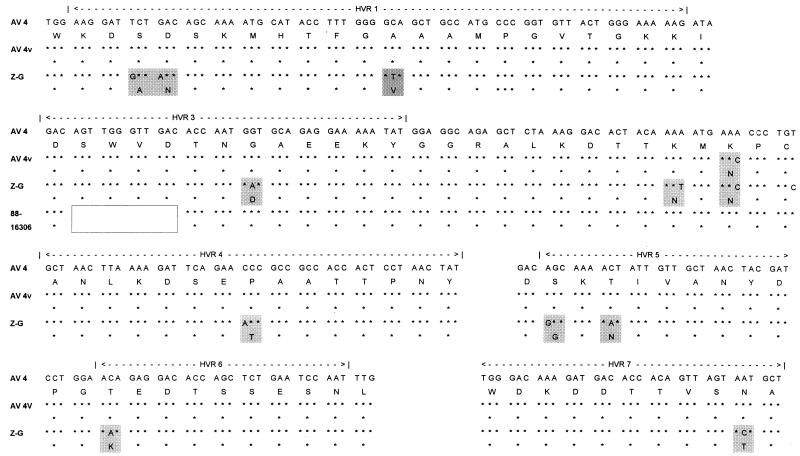
In order to determine the suitability of vaccine strains established in the 1960s for a new vaccine, a comprehensive study of strain variation of adenovirus serotype 4 (AV 4) and AV 7 was undertaken. A 1,500-bp region of the hexon gene containing the AV neutralization epitopes from prototype, vaccine, and community-acquired strains and from wild-type strains from military personnel that cause acute respiratory disease (ARD) was sequenced and analyzed. The whole hexon gene from prototype strains, vaccine strains, and selected isolates was sequenced. AV 7 and AV 7a were found to have distinct genotypes, and all vaccine and wild-type strains recovered from 1963 to 1997 had the AV 7a genotype. There was no significant strain variation in the neutralization epitopes of the AV 7a genotype over a 42-year period. The evolution of AV 4 was more complex, with continuous genetic drift punctuated by replacement with a new strain. The current strain of AV 4, which has been in circulation since 1995, is significantly different from the AV 4 prototype and the vaccine strains. Genetic differences were confirmed to be antigenic differences by neutralization tests, which define the new strain as an AV 4 variant. A type-specific PCR for AV 4, AV 7/7a, and AV 21 was developed, and this PCR facilitated the rapid identification of isolates from outbreaks of ARD.
Figures
References
-
- Berge T O, England B, Mauris C, Shuey H E, Lennette E H. Etiology of acute respiratory disease among service personnel at Fort Ord, California. Am J Hyg. 1955;62:283–294. - PubMed
-
- Binn L N, Hilleman M R, Rodriquez J E, Glabere R R. Antigenic relationships among adenoviruses with appraisal of reliability of complement-fixation test for typing isolates. J Immunol. 1958;80:501–508. - PubMed
-
- Cooper R J, Bailey A S, Killough R, Richmond S J. Genome analysis of adenovirus 4 isolated over a six year period. J Med Virol. 1993;39:62–66. - PubMed
-
- Couch R B, Chanock R M, Cates T B, Lang D J, Knight V, Huebner R J. Immunization with types 4 and 7 adenovirus by selective infection of the intestinal tract. Annu Rev Respir Dis. 1963;88(Suppl.):394–403. - PubMed
Publication types
MeSH terms
Substances
Associated data
- Actions
- Actions
- Actions
- Actions
- Actions
- Actions
- Actions
LinkOut - more resources
Full Text Sources
Other Literature Sources
