


Somatic hypermutation of the new antigen receptor gene (NAR) in the nurse shark does not generate the repertoire: possible role in antigen-driven reactions in the absence of germinal centers
- PMID: 9826702
- PMCID: PMC24375
- DOI: 10.1073/pnas.95.24.14343
Somatic hypermutation of the new antigen receptor gene (NAR) in the nurse shark does not generate the repertoire: possible role in antigen-driven reactions in the absence of germinal centers
Abstract
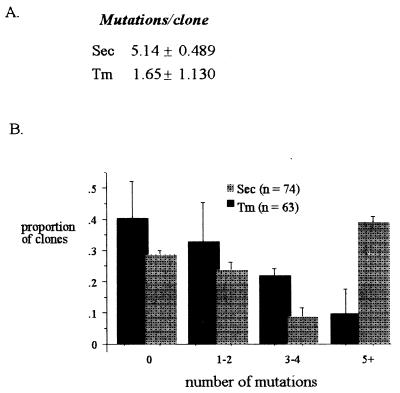
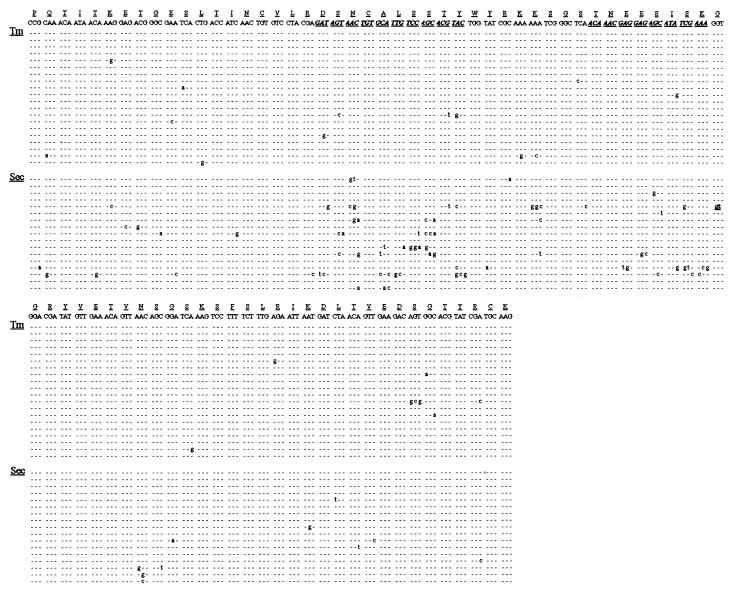
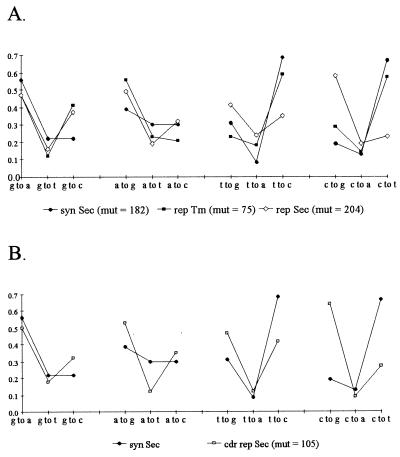
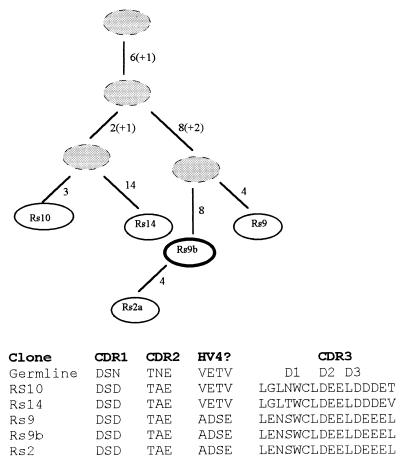
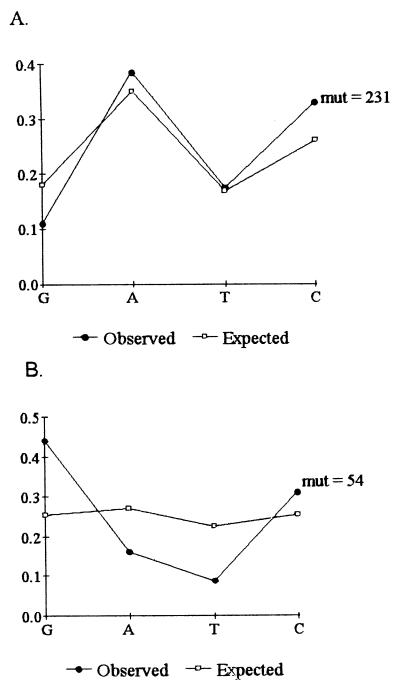
The new antigen receptor (NAR) gene in the nurse shark diversifies extensively by somatic hypermutation. It is not known, however, whether NAR somatic hypermutation generates the primary repertoire (like in the sheep) or rather is used in antigen-driven immune responses. To address this issue, the sequences of NAR transmembrane (Tm) and secretory (Sec) forms, presumed to represent the primary and secondary repertoires, respectively, were examined from the peripheral blood lymphocytes of three adult nurse sharks. More than 40% of the Sec clones but fewer than 11% of Tm clones contained five mutations or more. Furthermore, more than 75% of the Tm clones had few or no mutations. Mutations in the Sec clones occurred mostly in the complementarity-determining regions (CDR) with a significant bias toward replacement substitutions in CDR1; in Tm clones there was no significant bias toward replacements and only a low level of targeting to the CDRs. Unlike the Tm clones where the replacement mutational pattern was similar to that seen for synonymous changes, Sec replacements displayed a distinct pattern of mutations. The types of mutations in NAR were similar to those found in mouse Ig genes rather than to the unusual pattern reported for shark and Xenopus Ig. Finally, an oligoclonal family of Sec clones revealed a striking trend toward acquisition of glutamic/aspartic acid, suggesting some degree of selection. These data strongly suggest that hypermutation of NAR does not generate the repertoire, but instead is involved in antigen-driven immune responses.
Figures
References
-
- Greenberg A S, Avila D, Hughes M, Hughes A, McKinney E C, Flajnik M F. Nature (London) 1995;374:168–173. - PubMed
-
- Diaz M, Flajnik M F. Immunol Rev. 1998;162:13–24. - PubMed
-
- Tsiagbe V K, Inghirami G, Thorbecke G J. Crit Rev Immunol. 1996;16:381–421. - PubMed
-
- Reynaud C-A, Garcia C, Hein W R, Weill J-C. Cell. 1995;80:115–125. - PubMed
Publication types
MeSH terms
Substances
Associated data
- Actions
- Actions
- Actions
- Actions
- Actions
- Actions
- Actions
- Actions
- Actions
- Actions
- Actions
- Actions
- Actions
- Actions
- Actions
- Actions
- Actions
- Actions
- Actions
- Actions
- Actions
- Actions
- Actions
- Actions
- Actions
- Actions
- Actions
- Actions
- Actions
- Actions
Grants and funding
LinkOut - more resources
Full Text Sources
Other Literature Sources
