


Comparative analysis of methane-oxidizing archaea and sulfate-reducing bacteria in anoxic marine sediments
- PMID: 11282650
- PMCID: PMC92814
- DOI: 10.1128/AEM.67.4.1922-1934.2001
Comparative analysis of methane-oxidizing archaea and sulfate-reducing bacteria in anoxic marine sediments
Abstract
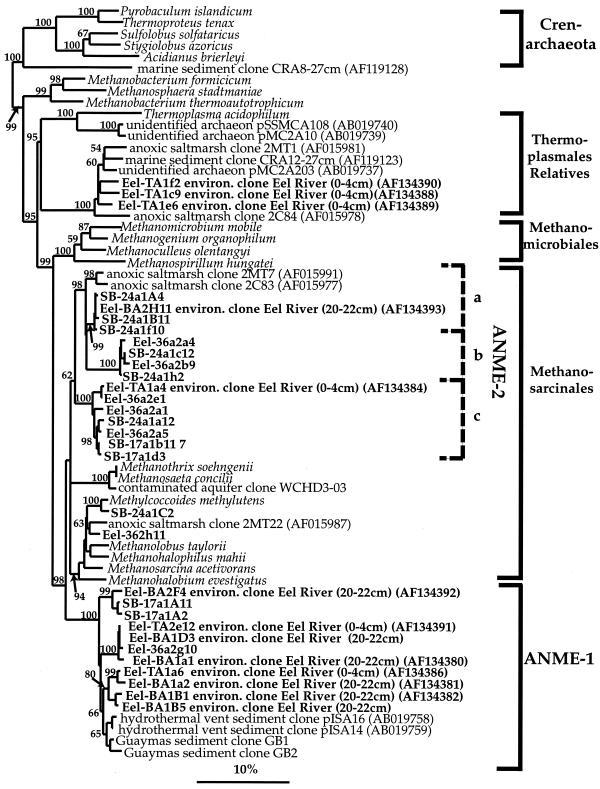
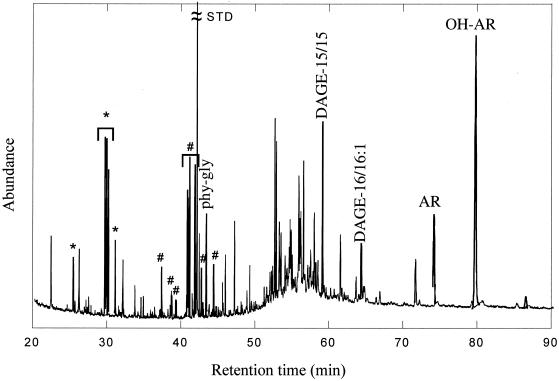
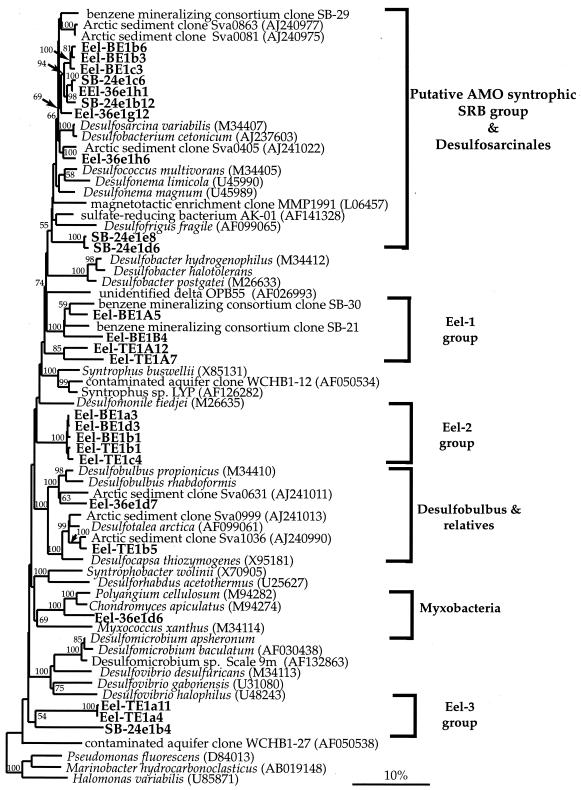
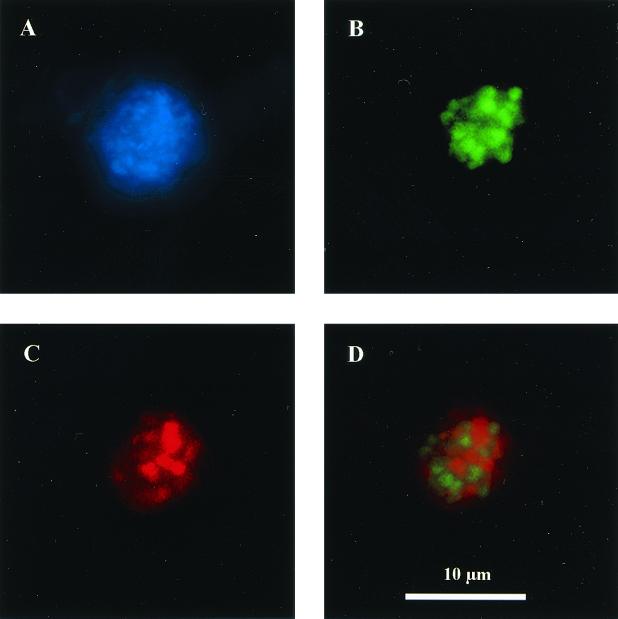
The oxidation of methane in anoxic marine sediments is thought to be mediated by a consortium of methane-consuming archaea and sulfate-reducing bacteria. In this study, we compared results of rRNA gene (rDNA) surveys and lipid analyses of archaea and bacteria associated with methane seep sediments from several different sites on the Californian continental margin. Two distinct archaeal lineages (ANME-1 and ANME-2), peripherally related to the order Methanosarcinales, were consistently associated with methane seep marine sediments. The same sediments contained abundant (13)C-depleted archaeal lipids, indicating that one or both of these archaeal groups are members of anaerobic methane-oxidizing consortia. (13)C-depleted lipids and the signature 16S rDNAs for these archaeal groups were absent in nearby control sediments. Concurrent surveys of bacterial rDNAs revealed a predominance of delta-proteobacteria, in particular, close relatives of Desulfosarcina variabilis. Biomarker analyses of the same sediments showed bacterial fatty acids with strong (13)C depletion that are likely products of these sulfate-reducing bacteria. Consistent with these observations, whole-cell fluorescent in situ hybridization revealed aggregations of ANME-2 archaea and sulfate-reducing Desulfosarcina and Desulfococcus species. Additionally, the presence of abundant (13)C-depleted ether lipids, presumed to be of bacterial origin but unrelated to ether lipids of members of the order Desulfosarcinales, suggests the participation of additional bacterial groups in the methane-oxidizing process. Although the Desulfosarcinales and ANME-2 consortia appear to participate in the anaerobic oxidation of methane in marine sediments, our data suggest that other bacteria and archaea are also involved in methane oxidation in these environments.
Figures
References
-
- Barry J P, Kochevar R E, Baxter C H. The influence of pore-water chemistry and physiology on the distribution of vesicomyid clams at cold seeps in Monterey Bay: implications for patterns of chemosynthetic community organization. Limnol Oceanogr. 1997;42:318–328.
-
- Bidle K, Kastner M, Bartlett D H. A phylogenetic analysis of microbial communities associated with methane hydrate containing marine fluids and sediments in the Cascadia margin (ODP site 892B) FEMS Microbiol Lett. 1999;177:101–108. - PubMed
-
- Boetius A, Ravenschlag K, Schubert C J, Rickert D, Widdel F, Gieseke A, Amann R, Jørgensen B B, Witte U, Pfannkuche O. Microscopic identification of a microbial consortium apparently mediating anaerobic methane oxidation above marine gas hydrate. Nature (London) 2000;407:623–626. - PubMed
-
- Borowski W, Paull C K, Ussler W. Global and local variations of interstitial sulfate gradients in deep-water, continental margin sediments: sensitivity to underlying methane and gas hydrates. Mar Geol. 1999;159:131–154.
Publication types
MeSH terms
Substances
Associated data
- Actions
- Actions
- Actions
- Actions
- Actions
- Actions
- Actions
- Actions
- Actions
- Actions
- Actions
- Actions
- Actions
- Actions
- Actions
- Actions
- Actions
- Actions
- Actions
- Actions
- Actions
- Actions
- Actions
- Actions
- Actions
- Actions
- Actions
- Actions
- Actions
- Actions
- Actions
- Actions
- Actions
- Actions
- Actions
- Actions
- Actions
- Actions
- Actions
- Actions
- Actions
- Actions
Grants and funding
LinkOut - more resources
Full Text Sources
Molecular Biology Databases
