


Speciation and phylogeography in the cosmopolitan marine moon jelly, Aurelia sp
- PMID: 11801181
- PMCID: PMC64640
- DOI: 10.1186/1471-2148-2-1
Speciation and phylogeography in the cosmopolitan marine moon jelly, Aurelia sp
Abstract
Background: The cosmopolitan moon jelly Aurelia is characterized by high degrees of morphological and ecological plasticity, and subsequently by an unclear taxonomic status. The latter has been revised repeatedly over the last century, dividing the genus Aurelia in as many as 12 or as little as two species. We used molecular data and phenotypic traits to unravel speciation processes and phylogeographic patterns in Aurelia.
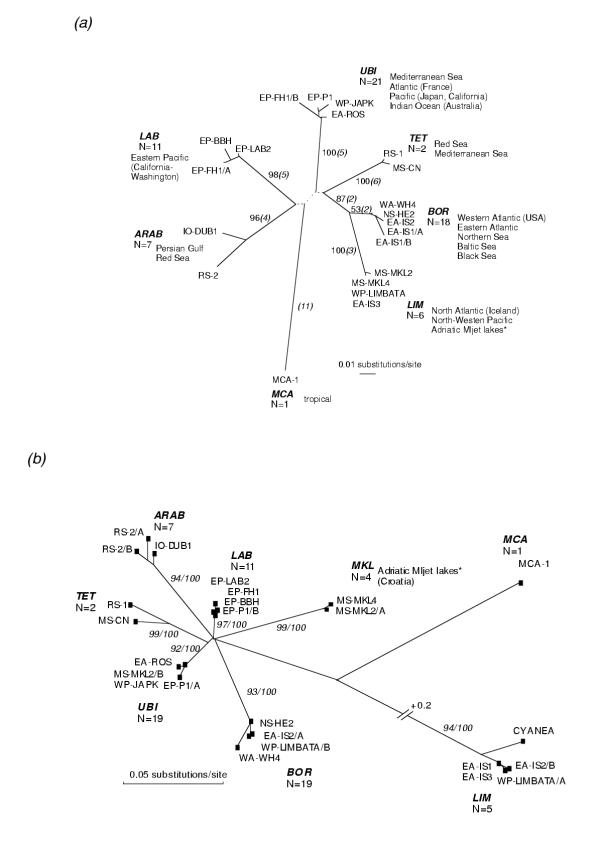
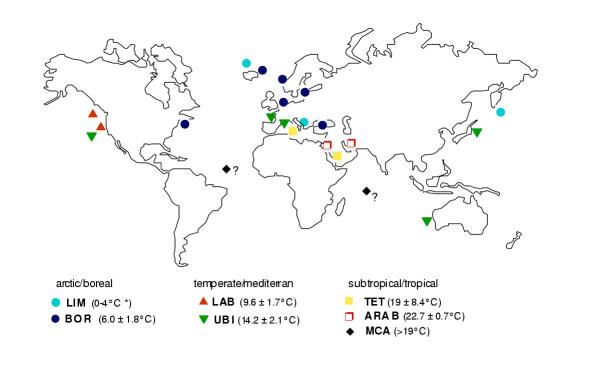
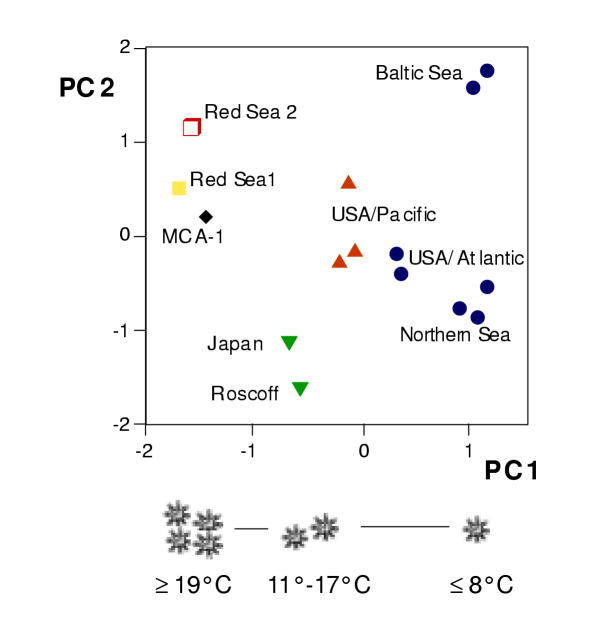
Results: Mitochondrial and nuclear DNA data (16S and ITS-1/5.8S rDNA) from 66 world-wide sampled specimens reveal star-like tree topologies, unambiguously differentiating 7 (mtDNA) and 8 (ncDNA) genetic entities with sequence divergences ranging from 7.8 to 14% (mtDNA) and 5 to 32% (ncDNA), respectively. Phylogenetic patterns strongly suggest historic speciation events and the reconstruction of at least 7 different species within Aurelia. Both genetic divergences and life history traits showed associations to environmental factors, suggesting ecological differentiation forced by divergent selection. Hybridization and introgression between Aurelia lineages likely occurred due to secondary contacts, which, however, did not disrupt the unambiguousness of genetic separation.
Conclusions: Our findings recommend Aurelia as a model system for using the combined power of organismic, ecological, and molecular data to unravel speciation processes in cosmopolitan marine organisms.
Figures
References
-
- DeSalle R, Schierwater B. Molecular approaches to ecology and evolution. Basel: Birkhäuser Verlag. 1998.
-
- Schluter D. Ecological causes of adaptive radiation. Am Nat. 1996;148:40–64. doi: 10.1086/285901. - DOI
-
- Gosling EM. Speciation and species concepts in the marine environment. Genetics and evolution of aquatic organisms Edited by Beaumont AR. London: Chapman & Hall; 1994.
-
- Palumbi SR. Genetic divergence, reproductive isolation, and marine speciation. Annu Rev Ecol Syst. 1994;25:547–572. doi: 10.1146/annurev.es.25.110194.002555. - DOI
Publication types
MeSH terms
Substances
Associated data
- Actions
- Actions
- Actions
- Actions
- Actions
- Actions
- Actions
- Actions
- Actions
- Actions
- Actions
- Actions
- Actions
- Actions
- Actions
- Actions
- Actions
LinkOut - more resources
Full Text Sources
