


Functional heterogeneity of RpoS in stress tolerance of enterohemorrhagic Escherichia coli strains
- PMID: 16820496
- PMCID: PMC1489321
- DOI: 10.1128/AEM.02842-05
Functional heterogeneity of RpoS in stress tolerance of enterohemorrhagic Escherichia coli strains
Abstract
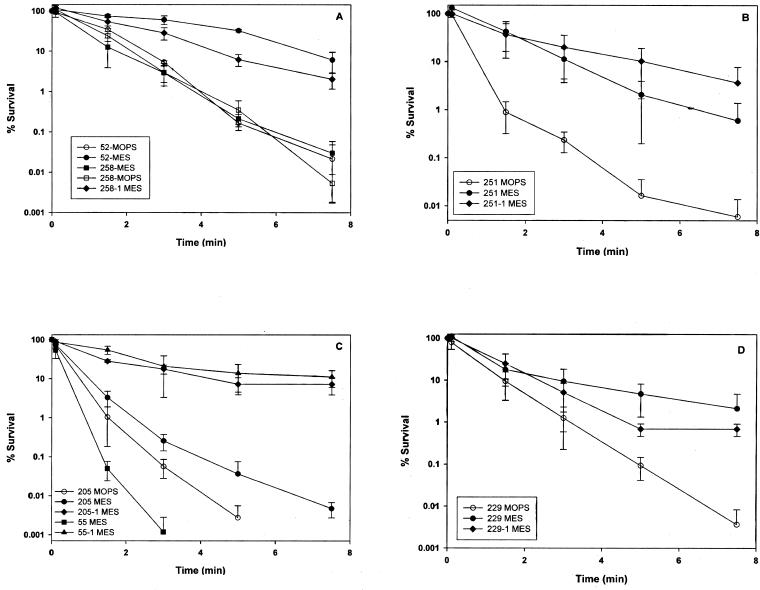
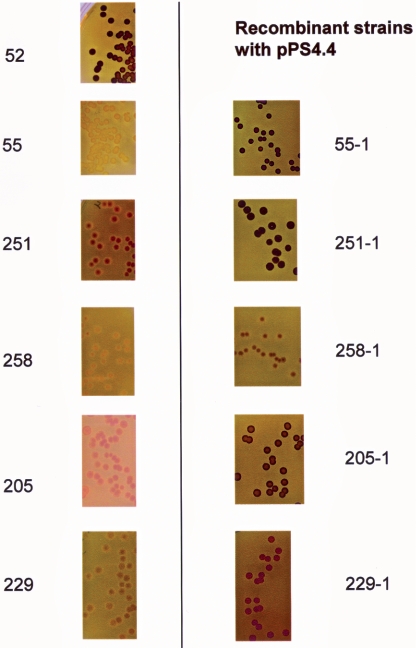
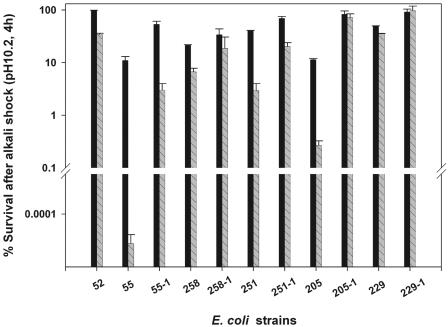
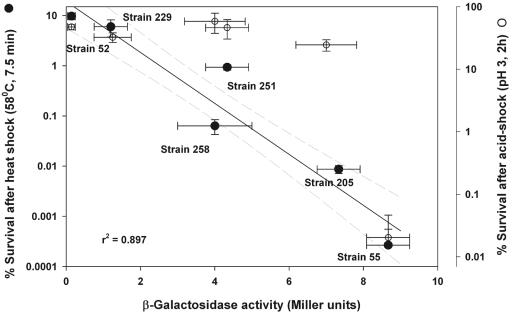
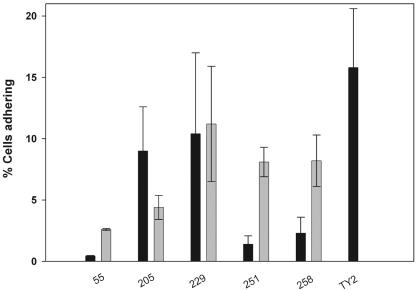
The stationary-phase sigma factor (RpoS) regulates many cellular responses to environmental stress conditions such as heat, acid, and alkali shocks. On the other hand, mutations at the rpoS locus have frequently been detected among pathogenic as well as commensal strains of Escherichia coli. The objective of this study was to perform a functional analysis of the RpoS-mediated stress responses of enterohemorrhagic E. coli strains from food-borne outbreaks. E. coli strains belonging to serotypes O157:H7, O111:H11, and O26:H11 exhibited polymorphisms for two phenotypes widely used to monitor rpoS mutations, heat tolerance and glycogen synthesis, as well as for two others, alkali tolerance and adherence to Caco-2 cells. However, these strains synthesized the oxidative acid resistance system through an rpoS-dependent pathway. During the transition from mildly acidic growth conditions (pH 5.5) to alkaline stress (pH 10.2), cell survival was dependent on rpoS functionality. Some strains were able to overcome negative regulation by RpoS and induced higher beta-galactosidase activity without compromising their acid resistance. There were no major differences in the DNA sequences in the rpoS coding regions among the tested strains. The heterogeneity of rpoS-dependent phenotypes observed for stress-related phenotypes was also evident in the Caco-2 cell adherence assay. Wild-type O157:H7 strains with native rpoS were less adherent than rpoS-complemented counterpart strains, suggesting that rpoS functionality is needed. These results show that some pathogenic E. coli strains can maintain their acid tolerance capability while compromising other RpoS-dependent stress responses. Such adaptation processes may have significant impact on a pathogen's survival in food processing environments, as well in the host's stomach and intestine.
Figures

References
-
- Audia, J. P., C. C. Webb, and J. W. Foster. 2001. Breaking through the acid barrier: an orchestrated response to proton stress by enteric bacteria. Int. J. Med. Microbiol. 291:97-106. - PubMed
-
- Bhagwat, A. A. 2003. Regulation of the glutamate-dependent acid-resistant system of diarrheagenic Escherichia coli strains. FEMS Microbiol. Lett. 227:39-45. - PubMed
-
- Bhagwat, A. A., and M. A. Bhagwat. 2004. Comparative analysis of transcriptional regulatory elements of glutamate-dependent acid-resistance systems of Shigella flexneri and Escherichia coli O157:H7. FEMS Microbiol. Lett. 234:139-147. - PubMed
Publication types
MeSH terms
Substances
Associated data
- Actions
- Actions
- Actions
- Actions
- Actions
LinkOut - more resources
Full Text Sources
Molecular Biology Databases
