


Elephant transcriptome provides insights into the evolution of eutherian placentation
- PMID: 22546564
- PMCID: PMC3381679
- DOI: 10.1093/gbe/evs045
Elephant transcriptome provides insights into the evolution of eutherian placentation
Abstract
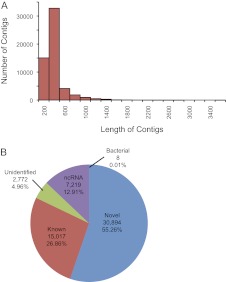
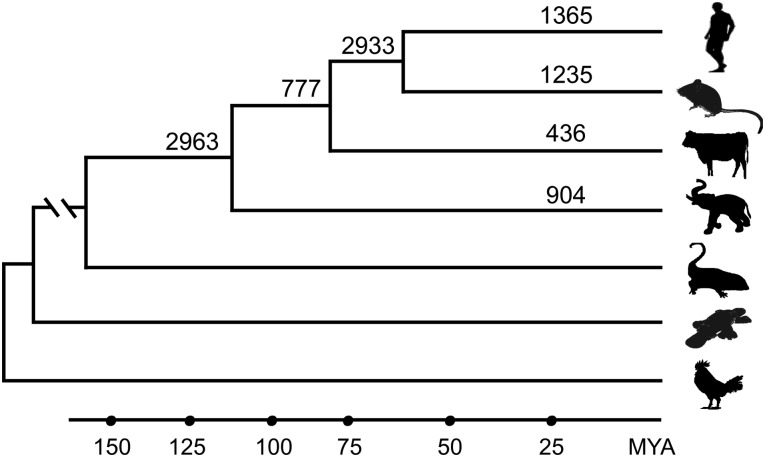
The chorioallantoic placenta connects mother and fetus in eutherian pregnancies. In order to understand the evolution of the placenta and provide further understanding of placenta biology, we sequenced the transcriptome of a term placenta of an African elephant (Loxodonta africana) and compared these data with RNA sequence and microarray data from other eutherian placentas including human, mouse, and cow. We characterized the composition of 55,910 expressed sequence tag (i.e., cDNA) contigs using our custom annotation pipeline. A Markov algorithm was used to cluster orthologs of human, mouse, cow, and elephant placenta transcripts. We found 2,963 genes are commonly expressed in the placentas of these eutherian mammals. Gene ontology categories previously suggested to be important for placenta function (e.g., estrogen receptor signaling pathway, cell motion and migration, and adherens junctions) were significantly enriched in these eutherian placenta-expressed genes. Genes duplicated in different lineages and also specifically expressed in the placenta contribute to the great diversity observed in mammalian placenta anatomy. We identified 1,365 human lineage-specific, 1,235 mouse lineage-specific, 436 cow lineage-specific, and 904 elephant-specific placenta-expressed (PE) genes. The most enriched clusters of human-specific PE genes are signal/glycoprotein and immunoglobulin, and humans possess a deeply invasive human hemochorial placenta that comes into direct contact with maternal immune cells. Inference of phylogenetically conserved and derived transcripts demonstrates the power of comparative transcriptomics to trace placenta evolution and variation across mammals and identified candidate genes that may be important in the normal function of the human placenta, and their dysfunction may be related to human pregnancy complications.
Figures

References
-
- Alsat E, Guibourdenche J, Couturier A, Evain-Brion D. Physiological role of human placental growth hormone. Mol Cell Endocrinol. 1998;140:121–127. - PubMed
-
- Alvarez-Oxiley AV, de Sousa NM, Beckers JF. Native and recombinant bovine placental lactogens. Reprod Biol. 2008;8:85–106. - PubMed
-
- Archibald DJ, Rose KD. Womb with a view: the rise of placentals. In: Rose KD, Archibald DJ, editors. The rise of placental mammals. Baltimore (MD): The Johns Hopkins University Press; 2005. pp. 1–8.
Publication types
MeSH terms
Associated data
- Actions
- Actions
- Actions
- Actions
- Actions
- Actions
- Actions
- Actions
Grants and funding
LinkOut - more resources
Full Text Sources
Other Literature Sources
