


Comparative bioinformatics, temporal and spatial expression analyses of Ixodes scapularis organic anion transporting polypeptides
- PMID: 24582512
- PMCID: PMC4432481
- DOI: 10.1016/j.ttbdis.2013.12.002
Comparative bioinformatics, temporal and spatial expression analyses of Ixodes scapularis organic anion transporting polypeptides
Abstract
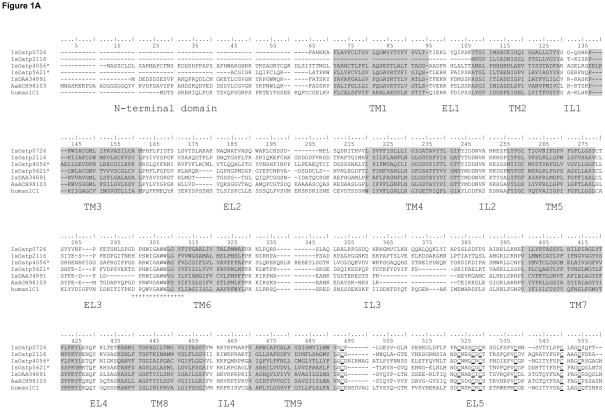
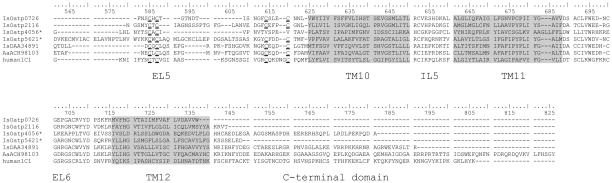
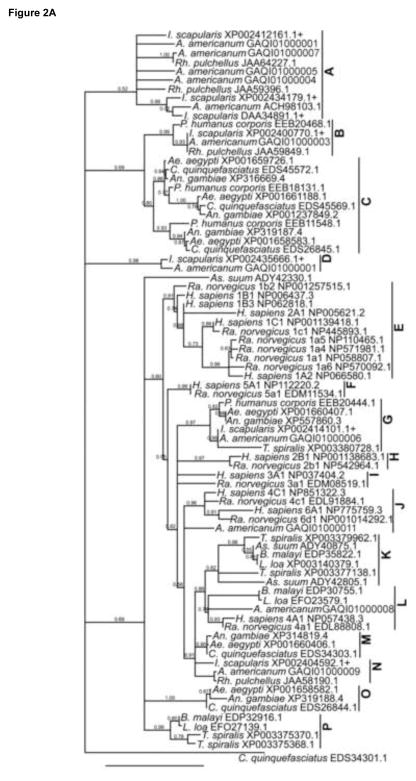
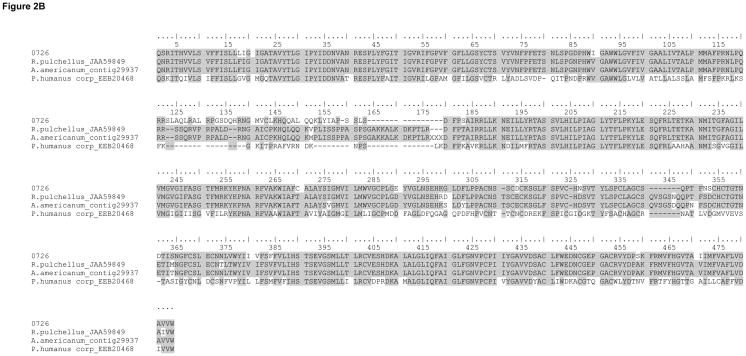
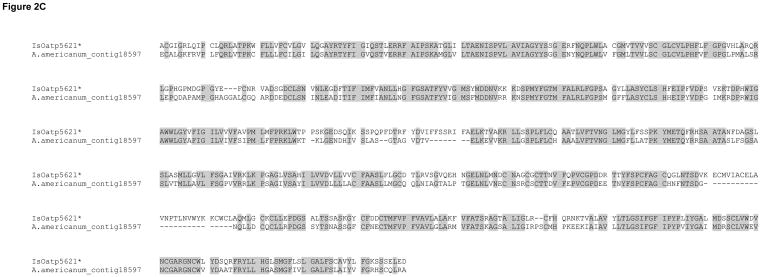
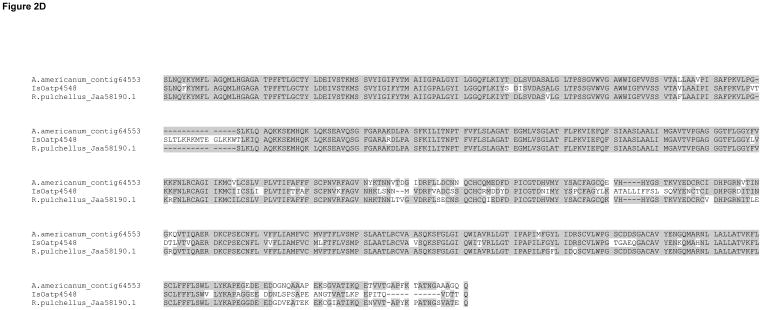
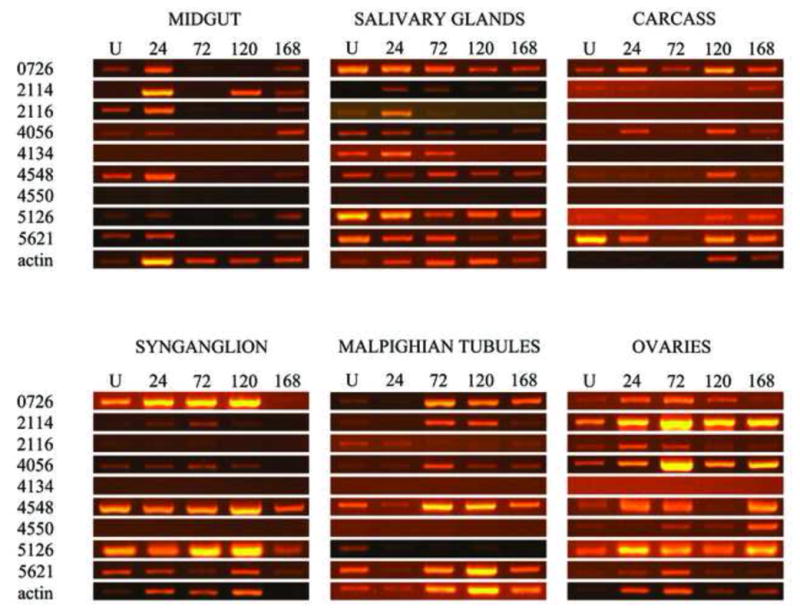
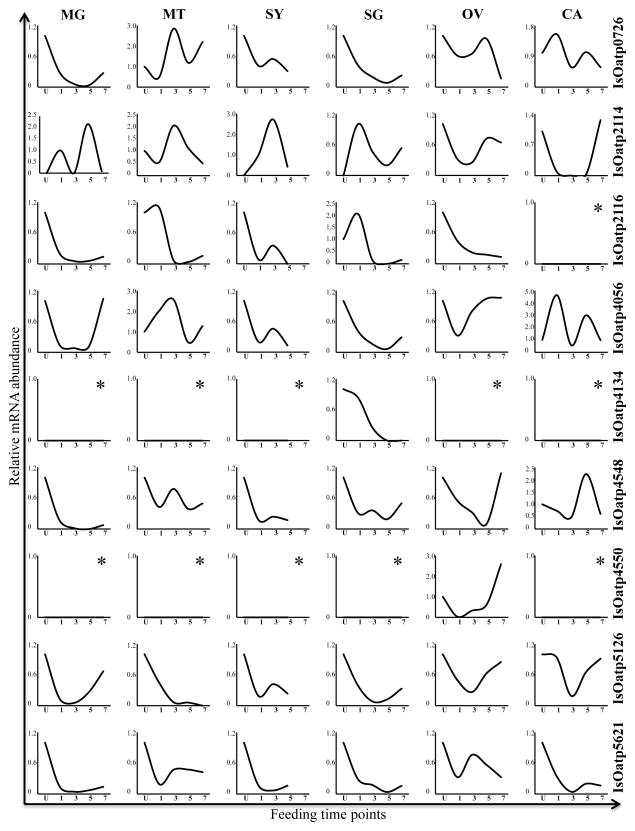
Organic anion-transporting polypeptides (Oatps) are an integral part of the detoxification mechanism in vertebrates and invertebrates. These cell surface proteins are involved in mediating the sodium-independent uptake and/or distribution of a broad array of organic amphipathic compounds and xenobiotic drugs. This study describes bioinformatics and biological characterization of 9 Oatp sequences in the Ixodes scapularis genome. These sequences have been annotated on the basis of 12 transmembrane domains, consensus motif D-X-RW-(I,V)-GAWW-X-G-(F,L)-L, and 11 conserved cysteine amino acid residues in the large extracellular loop 5 that characterize the Oatp superfamily. Ixodes scapularis Oatps may regulate non-redundant cross-tick species conserved functions in that they did not cluster as a monolithic group on the phylogeny tree and that they have orthologs in other ticks. Phylogeny clustering patterns also suggest that some tick Oatp sequences transport substrates that are similar to those of body louse, mosquito, eye worm, and filarial worm Oatps. Semi-quantitative RT-PCR analysis demonstrated that all 9 I. scapularis Oatp sequences were expressed during tick feeding. Ixodes scapularis Oatp genes potentially regulate functions during early and/or late-stage tick feeding as revealed by normalized mRNA profiles. Normalized transcript abundance indicates that I. scapularis Oatp genes are strongly expressed in unfed ticks during the first 24h of feeding and/or at the end of the tick feeding process. Except for 2 I. scapularis Oatps, which were expressed in the salivary glands and ovaries, all other genes were expressed in all tested organs, suggesting the significance of I. scapularis Oatps in maintaining tick homeostasis. Different I. scapularis Oatp mRNA expression patterns were detected and discussed with reference to different physiological states of unfed and feeding ticks.
Keywords: Expression analyses; Ixodes scapularis; Organic anion transporting polypeptides.
Copyright © 2014 Elsevier GmbH. All rights reserved.
Figures

References
-
- Abe T, Kakyo M, Sakagami H, Tokui T, Nishio T, Tanemoto M, Nomura H, Hebert SC, Matsuno S, Kondo H, Yawo H. Molecular characterization and tissue distribution of a new organic anion transporter subtype (oatp3) that transports thyroid hormones and taurocholate and comparison with oatp2. J Biol Chem. 1998;273:22395–22401. - PubMed
-
- Abe T, Kakyo M, Tokui T, Nagakomi R, Nishio T, Nakai D, Nomura H, Unno M, Suzuki M, Naitoh T, Matsuno S, Yawo H. Identification of a novel gene family encoding human liver-specific organic anion transporter LST-1. J Biol Chem. 1999;274:17159–17163. - PubMed
-
- Alekseev AN, Semenov AV, Dubinina HV. Evidence of Babesia microti infection in multi-infected Ixodes persulcatus ticks in Russia. Exp Appl Acarol. 2003;29:345–353. - PubMed
-
- Briz O, Serrano MA, Rebollo N, Hagenbuch B, Meier PJ, Koepsell H, Marin JJ. Carriers involved in targeting the cytostatic bile acid-cisplatin derivatives cis-diammine-chloro-cholylglycinate-platinum(II) and cis-diammine-bisursodeoxycholate-platinum(II) toward liver cells. Mol Pharmacol. 2002;61:853–860. - PubMed
Publication types
MeSH terms
Substances
Associated data
- Actions
- Actions
- Actions
Grants and funding
LinkOut - more resources
Full Text Sources
Other Literature Sources
