


Multi-peaked adaptive landscape for chikungunya virus evolution predicts continued fitness optimization in Aedes albopictus mosquitoes
- PMID: 24933611
- PMCID: PMC7091890
- DOI: 10.1038/ncomms5084
Multi-peaked adaptive landscape for chikungunya virus evolution predicts continued fitness optimization in Aedes albopictus mosquitoes
Abstract
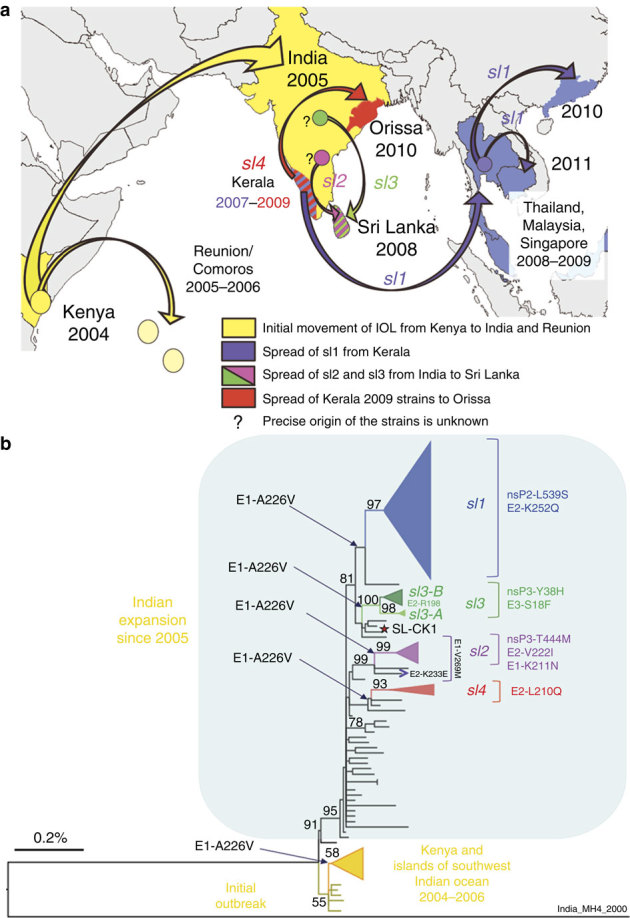
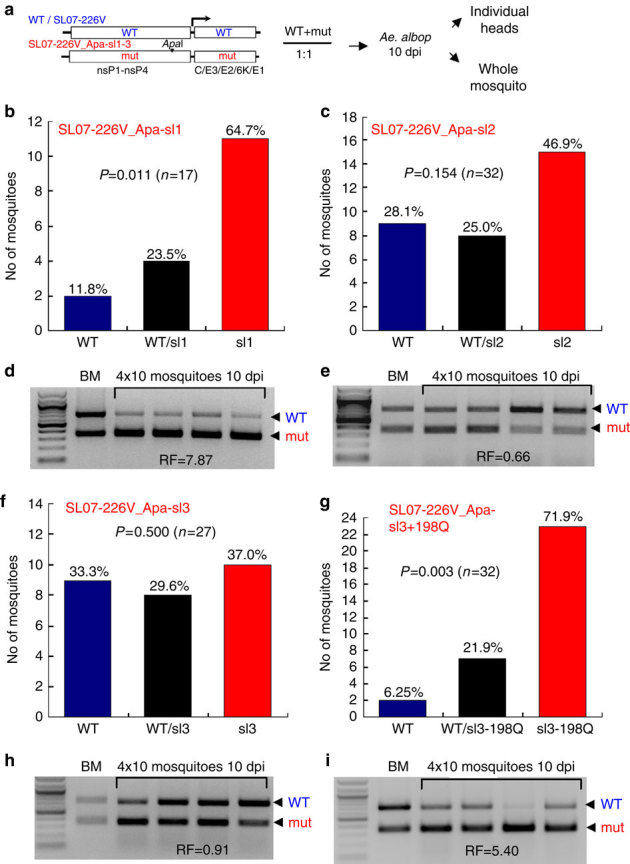
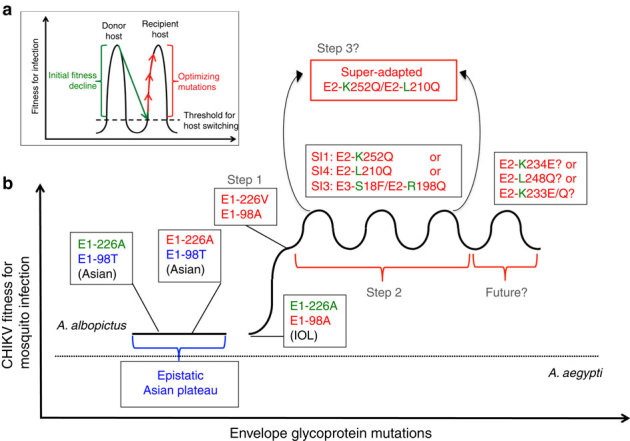
Host species-specific fitness landscapes largely determine the outcome of host switching during pathogen emergence. Using chikungunya virus (CHIKV) to study adaptation to a mosquito vector, we evaluated mutations associated with recently evolved sub-lineages. Multiple Aedes albopictus-adaptive fitness peaks became available after CHIKV acquired an initial adaptive (E1-A226V) substitution, permitting rapid lineage diversification observed in nature. All second-step mutations involved replacements by glutamine or glutamic acid of E2 glycoprotein amino acids in the acid-sensitive region, providing a framework to anticipate additional A. albopictus-adaptive mutations. The combination of second-step adaptive mutations into a single, 'super-adaptive' fitness peak also predicted the future emergence of CHIKV strains with even greater transmission efficiency in some current regions of endemic circulation, followed by their likely global spread.
Conflict of interest statement
The authors declare no competing financial interests.
Figures
References
Publication types
MeSH terms
Substances
Associated data
- Actions
- Actions
- Actions
- Actions
- Actions
- Actions
- Actions
- Actions
- Actions
Grants and funding
LinkOut - more resources
Full Text Sources
Other Literature Sources
Medical
