


Influenza-like illnesses in Senegal: not only focus on influenza viruses
- PMID: 24675982
- PMCID: PMC3968133
- DOI: 10.1371/journal.pone.0093227
Influenza-like illnesses in Senegal: not only focus on influenza viruses
Erratum in
- PLoS One. 2014;9(6):e101722
Abstract
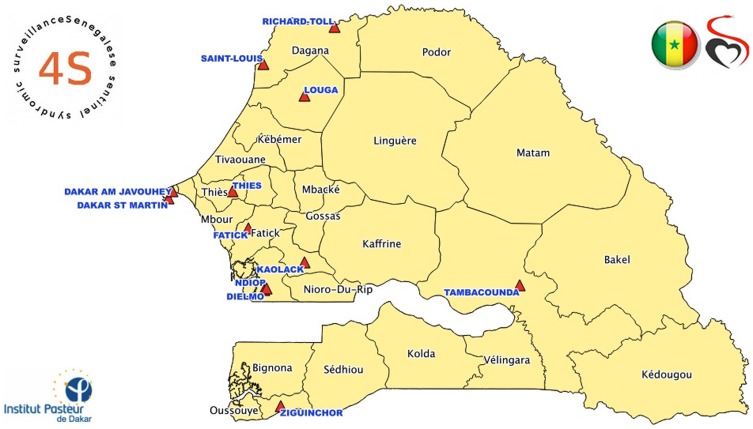
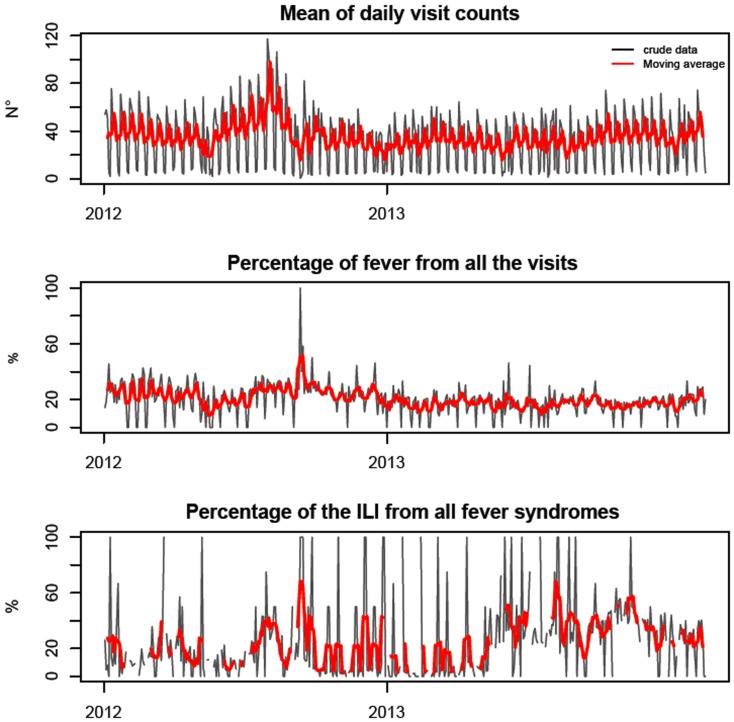
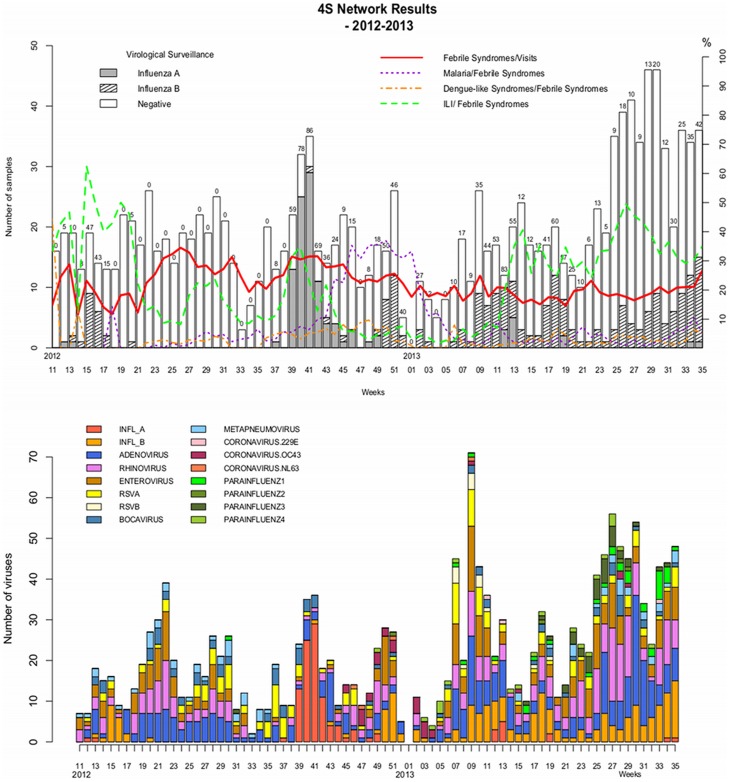
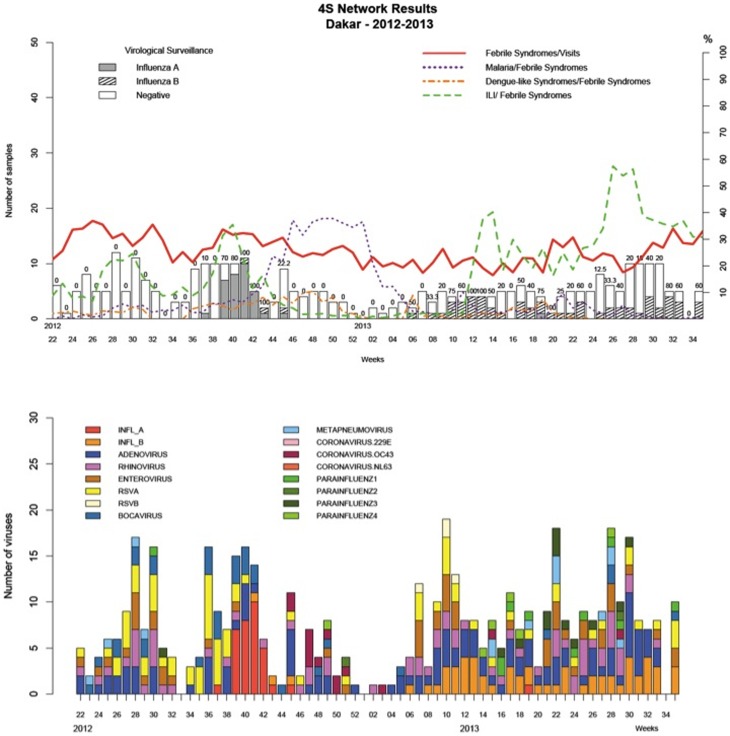
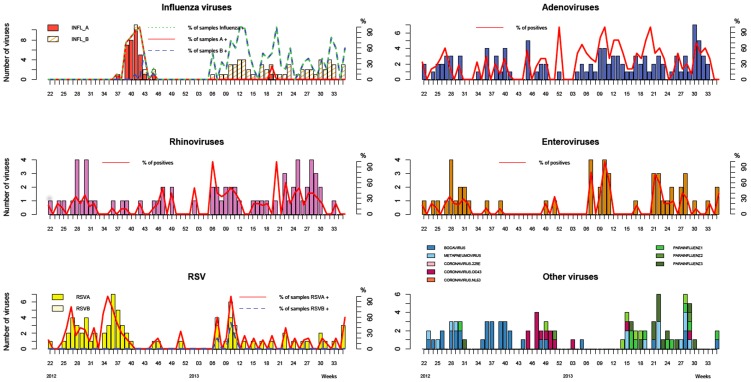
Influenza surveillance in African countries was initially restricted to the identification of circulating strains. In Senegal, the network has recently been enhanced (i) to include epidemiological data from Dakar and other regions and (ii) to extend virological surveillance to other respiratory viruses. Epidemiological data from the sentinel sites is transmitted daily by mobile phone. The data include those for other febrile syndromes similar to influenza-like illnesses (ILI), corresponding to integrated approach. Also, clinical samples are randomly selected and analyzed for influenza and other respiratory viruses. There were 101,640 declared visits to the 11 sentinel sites between week 11-2012 and week 35-2013; 22% of the visits were for fever syndromes and 23% of the cases of fever syndrome were ILI. Influenza viruses were the second most frequent cause of ILI (20%), after adenoviruses (21%) and before rhinoviruses (18%) and enteroviruses (15%). Co-circulation and co-infection were frequent and were responsible for ILI peaks. The first months of implementation of the enhanced surveillance system confirmed that viruses other the influenza make large contributions to influenza-like illnesses. It is therefore important to consider these etiologies in the development of strategies to reduce respiratory infections. More informative tools and research studies are required to assess the burden of respiratory infections in developing countries.
Conflict of interest statement
Figures
References
Publication types
MeSH terms
Grants and funding
LinkOut - more resources
Full Text Sources
Other Literature Sources
Medical
