


Gabapentin for the management of hot flashes in prostate cancer survivors: a longitudinal continuation Study-NCCTG Trial N00CB
- PMID: 20552926
- PMCID: PMC3075822
Gabapentin for the management of hot flashes in prostate cancer survivors: a longitudinal continuation Study-NCCTG Trial N00CB
Abstract
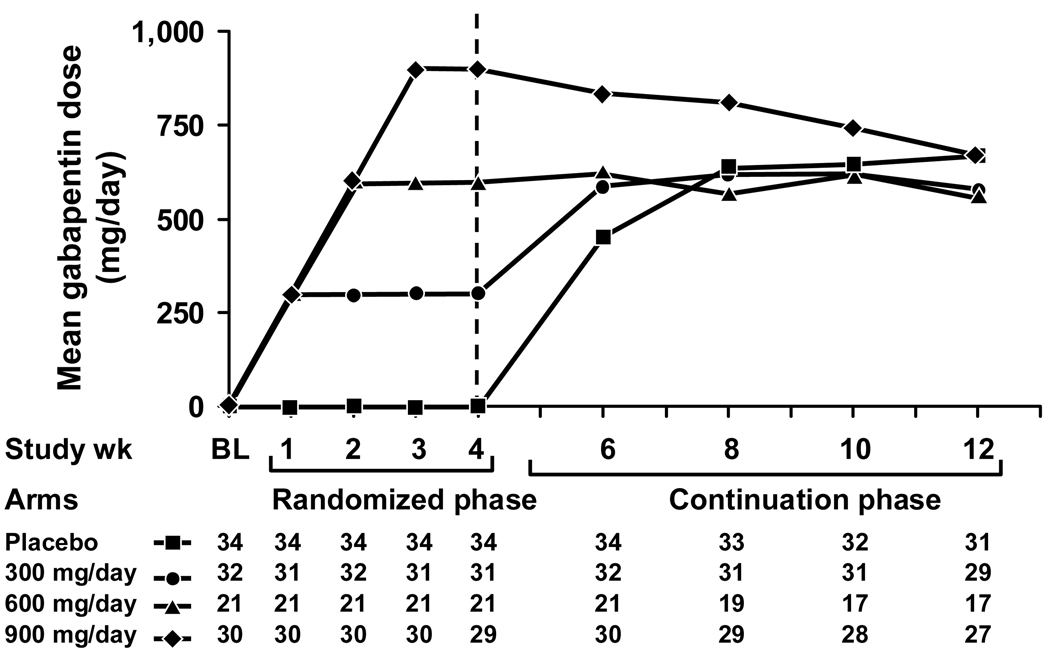
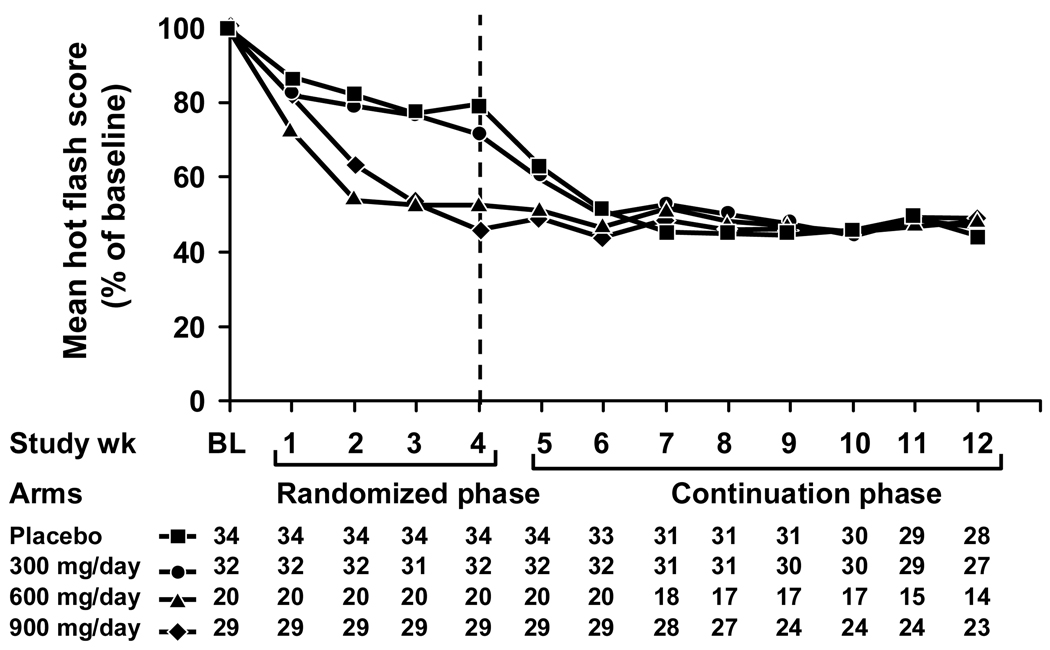
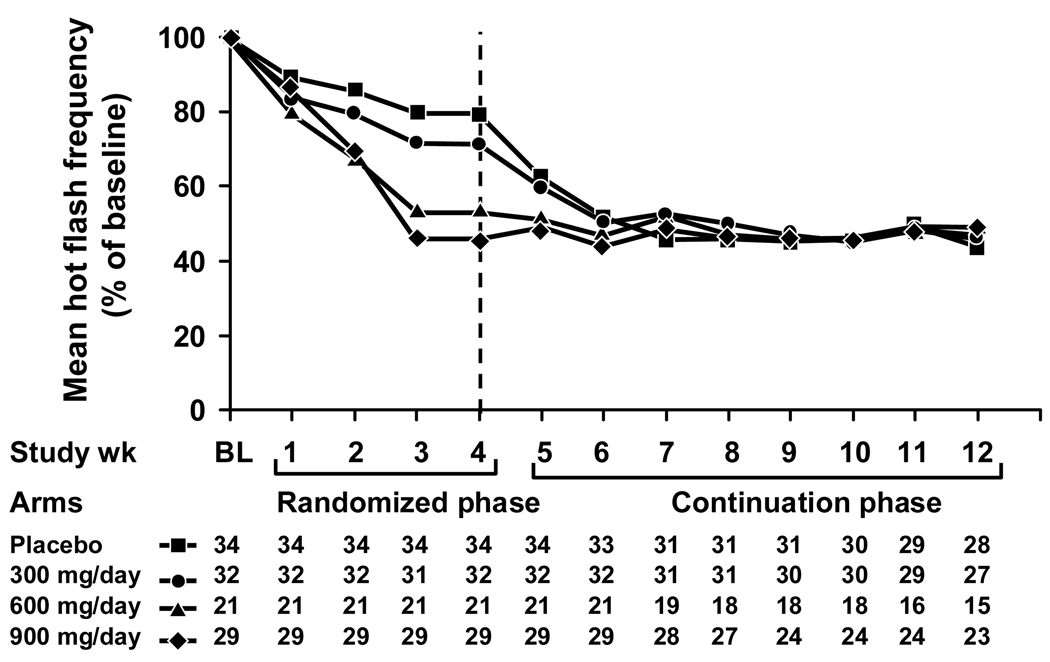
Hot flashes are a complication of androgen deprivation therapy for prostate cancer. A phase III study showed that use of low-dose gabapentin was well tolerated and moderately decreased the frequency of hot flashes due to androgen deprivation therapy when taken for 4 weeks. The current study, an open-label continuation of the randomized study, examined the efficacy and toxicity of gabapentin when taken for (an additional) 8 weeks. Patients were allowed to start, or continue, gabapentin and to titrate the dose to maximum efficacy, up to 900 mg/d. They were asked to complete a hot flash diary daily and keep weekly logs of toxicity, satisfaction with hot flash control, and quality of life. The moderate reduction in hot flash frequency and severity in the randomized phase of the study appeared to be maintained during this continuation phase. Men originally receiving the placebo or lowest dose of gabapentin (300 mg/d) had improved hot flash control relative to that at the end of the randomized phase. Minimal adverse effects were reported. These findings suggest that low-dose gabapentin is moderately efficacious for at least 12 weeks of hot flash treatment in men undergoing androgen deprivation therapy for prostate cancer and seems to be well tolerated. (NCT00028572)
Figures
References
-
- Schow DA, Renfer LG, Rozanski TA, et al. Prevalence of hot flushes during and after neoadjuvant hormonal therapy for localized prostate cancer. South Med J. 1998;91:855–857. - PubMed
-
- Charig CR, Rundle JS. Flushing. Long-term side effect of orchiectomy in treatment of prostatic carcinoma. Urology. 1989;33:175–178. - PubMed
-
- Clark JA, Wray N, Brody B, et al. Dimensions of quality of life expressed by men treated for metastatic prostate cancer. Soc Sci Med. 1997;45:1299–1309. - PubMed
-
- Loprinzi C, Goldberg RM, O'Fallon JR, et al. Transdermal clonidine for ameliorating postorchiectomy hot flashes. J Urol. 1993;151:634–636. - PubMed
-
- Loprinzi CL, Michalak JC, Quella SK, et al. Megestrol acetate for the prevention of hot flashes. N Engl J Med. 1994;331:347–352. - PubMed
Publication types
MeSH terms
Substances
Associated data
Grants and funding
- U10 CA052352/CA/NCI NIH HHS/United States
- U10 CA037417/CA/NCI NIH HHS/United States
- U10 CA060276/CA/NCI NIH HHS/United States
- K05 CA124477/CA/NCI NIH HHS/United States
- CA-52352/CA/NCI NIH HHS/United States
- CA-35195/CA/NCI NIH HHS/United States
- U10 CA037404/CA/NCI NIH HHS/United States
- U10 CA035448/CA/NCI NIH HHS/United States
- CA-25224/CA/NCI NIH HHS/United States
- CA-124477/CA/NCI NIH HHS/United States
- CA-60276/CA/NCI NIH HHS/United States
- U10 CA035272/CA/NCI NIH HHS/United States
- U10 CA035101/CA/NCI NIH HHS/United States
- CA-63849/CA/NCI NIH HHS/United States
- U10 CA035103/CA/NCI NIH HHS/United States
- U10 CA035269/CA/NCI NIH HHS/United States
- CA-37404/CA/NCI NIH HHS/United States
- U10 CA063848/CA/NCI NIH HHS/United States
- U10 CA035195/CA/NCI NIH HHS/United States
- CA-35103/CA/NCI NIH HHS/United States
- CA-63848/CA/NCI NIH HHS/United States
- U10 CA063849/CA/NCI NIH HHS/United States
- CA-37417/CA/NCI NIH HHS/United States
- CA-35272/CA/NCI NIH HHS/United States
- CA-35269/CA/NCI NIH HHS/United States
- CA-35448/CA/NCI NIH HHS/United States
- CA-35101/CA/NCI NIH HHS/United States
- U10 CA025224/CA/NCI NIH HHS/United States
LinkOut - more resources
Full Text Sources
Medical