


Strategies to uncover undiagnosed HIV infection among heterosexuals at high risk and link them to HIV care with high retention: a "seek, test, treat, and retain" study
- PMID: 25958200
- PMCID: PMC4434577
- DOI: 10.1186/s12889-015-1816-0
Strategies to uncover undiagnosed HIV infection among heterosexuals at high risk and link them to HIV care with high retention: a "seek, test, treat, and retain" study
Abstract
Background: Over 50,000 individuals become infected with HIV annually in the U.S., and over a quarter of HIV infected individuals are heterosexuals. Undiagnosed HIV infection, as well as a lack of retention in care among those diagnosed, are both primary factors contributing to ongoing HIV incidence. Further, there are racial/ethnic disparities in undiagnosed HIV and engagement in care, with African Americans/Blacks and Latinos remaining undiagnosed longer and less engaged in care than Whites, signaling the need for culturally targeted intervention approaches to seek and test those with undiagnosed HIV infection, and link them to care with high retention.
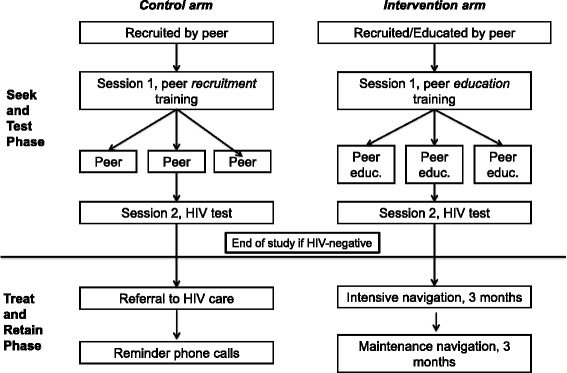
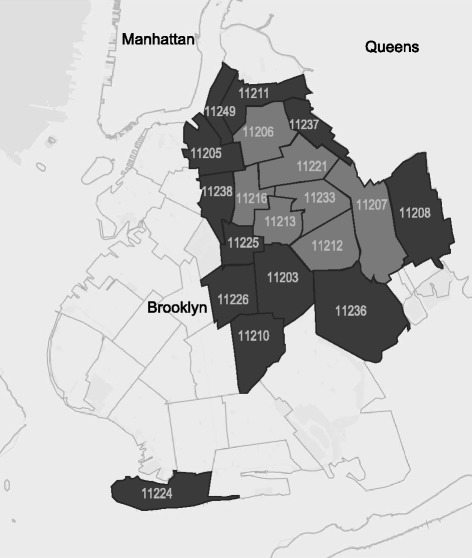
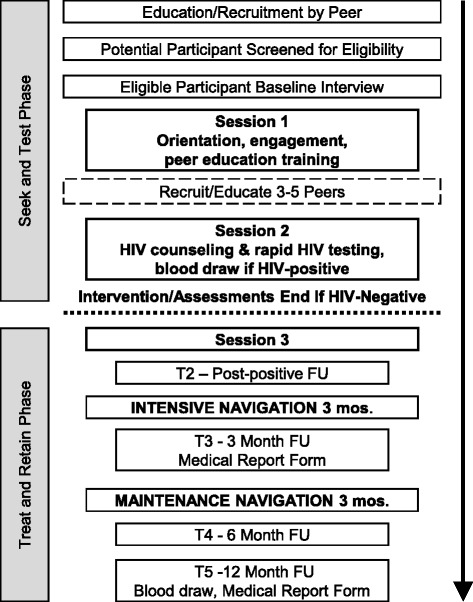
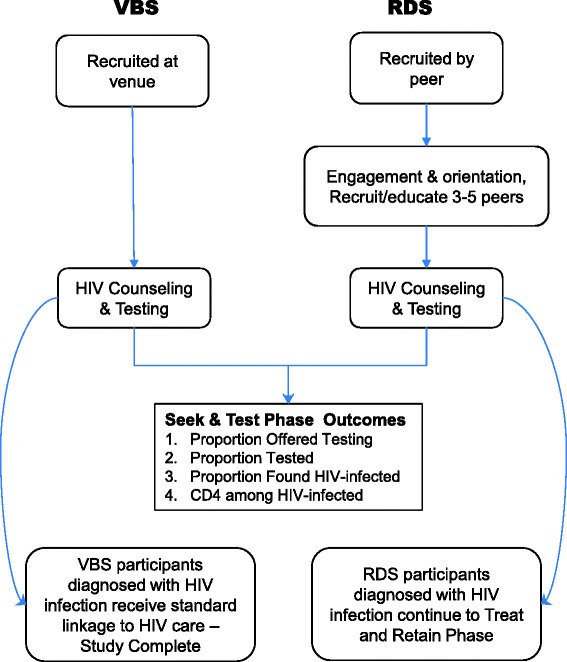
Methods/design: The study has two components: one to seek out and test heterosexuals at high risk for HIV infection, and another to link those found infected to HIV care with high retention. We will recruit sexually active African American/Black and Latino adults who have opposite sex partners, negative or unknown HIV status, and reside in locations with high poverty and HIV prevalence. The "Seek and Test" component will compare the efficacy and cost effectiveness of two strategies to uncover undiagnosed HIV infection: venue-based sampling and respondent-driven sampling (RDS). Among those recruited by RDS and found to have HIV infection, a "Treat and Retain" component will assess the efficacy of a peer-driven intervention compared to a control arm with respect to time to an HIV care appointment and health indicators using a cluster randomized controlled trial design to minimize contamination. RDS initial seeds will be randomly assigned to the intervention or control arm at a 1:1 ratio and all recruits will be assigned to the same arm as the recruiter. Participants will be followed for 12 months with outcomes assessed using medical records and biomarkers, such as HIV viral load.
Discussion: Heterosexuals do not test for HIV as frequently as and are diagnosed later than other risk groups. The study has the potential to contribute an efficient, innovative, and sustainable multi-level recruitment approach and intervention to the HIV prevention portfolio. Because the majority of heterosexuals at high risk are African American/Black or Latino, the study has great potential to reduce racial/ethnic disparities in HIV/AIDS.
Trial registration: ClinicalTrials.gov, NCT01607541, Registered May 23, 2012.
Figures
References
-
- Centers for Disease Control and Prevention. HIV Surveillance Report. 2013. http://www.cdc.gov/hiv/pdf/g-l/hiv_surveillance_report_vol_25.pdf. Accessed March 2, 2015.
-
- Phillips AN, Cambiano V, Nakagawa F, Brown AE, Lampe F, Rodger A, et al. Increased HIV incidence in men who have sex with men despite high levels of ART-induced viral suppression: analysis of an extensively documented epidemic. PLoS One. 2013;8(2) doi: 10.1371/journal.pone.0055312. - DOI - PMC - PubMed
Publication types
MeSH terms
Associated data
Grants and funding
LinkOut - more resources
Full Text Sources
Other Literature Sources
Medical
