


Prolonged continuous intravenous infusion of the dipeptide L-alanine- L-glutamine significantly increases plasma glutamine and alanine without elevating brain glutamate in patients with severe traumatic brain injury
- PMID: 24992948
- PMCID: PMC4227121
- DOI: 10.1186/cc13962
Prolonged continuous intravenous infusion of the dipeptide L-alanine- L-glutamine significantly increases plasma glutamine and alanine without elevating brain glutamate in patients with severe traumatic brain injury
Abstract
Introduction: Low plasma glutamine levels are associated with worse clinical outcome. Intravenous glutamine infusion dose- dependently increases plasma glutamine levels, thereby correcting hypoglutaminemia. Glutamine may be transformed to glutamate which might limit its application at a higher dose in patients with severe traumatic brain injury (TBI). To date, the optimal glutamine dose required to normalize plasma glutamine levels without increasing plasma and cerebral glutamate has not yet been defined.
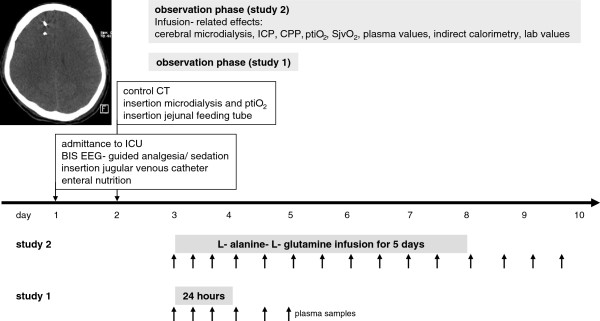
Methods: Changes in plasma and cerebral glutamine, alanine, and glutamate as well as indirect signs of metabolic impairment reflected by increased intracranial pressure (ICP), lactate, lactate-to-pyruvate ratio, electroencephalogram (EEG) activity were determined before, during, and after continuous intravenous infusion of 0.75 g L-alanine-L-glutamine which was given either for 24 hours (group 1, n = 6) or 5 days (group 2, n = 6) in addition to regular enteral nutrition. Lab values including nitrogen balance, urea and ammonia were determined daily.
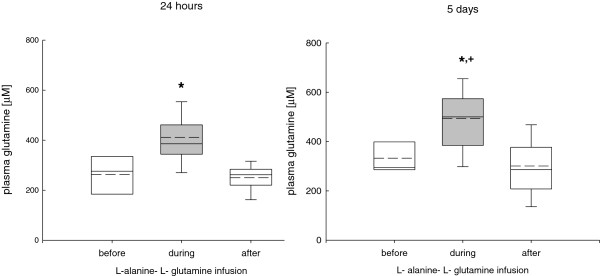
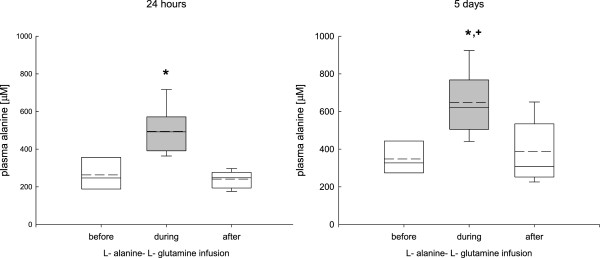
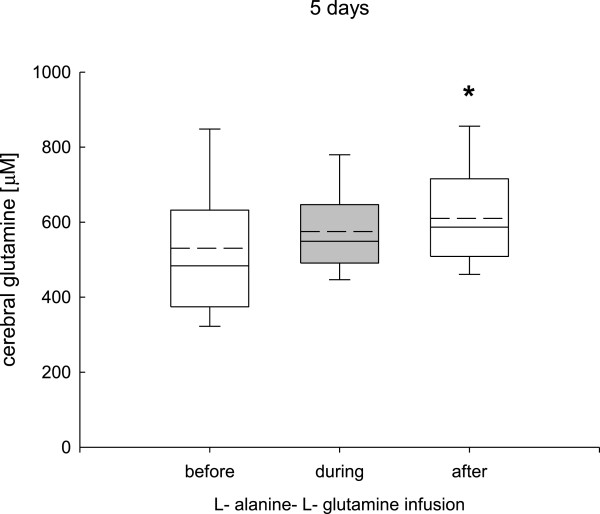
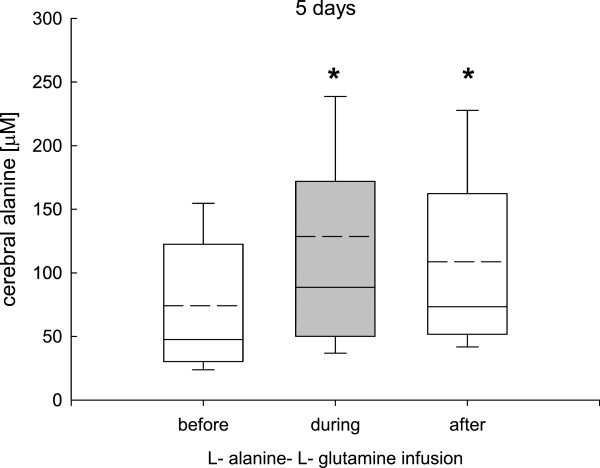
Results: Continuous L-alanine-L-glutamine infusion significantly increased plasma and cerebral glutamine as well as alanine levels, being mostly sustained during the 5 day infusion phase (plasma glutamine: from 295 ± 62 to 500 ± 145 μmol/ l; brain glutamine: from 183 ± 188 to 549 ± 120 μmol/ l; plasma alanine: from 327 ± 91 to 622 ± 182 μmol/ l; brain alanine: from 48 ± 55 to 89 ± 129 μmol/ l; p < 0.05, ANOVA, post hoc Dunn's test).
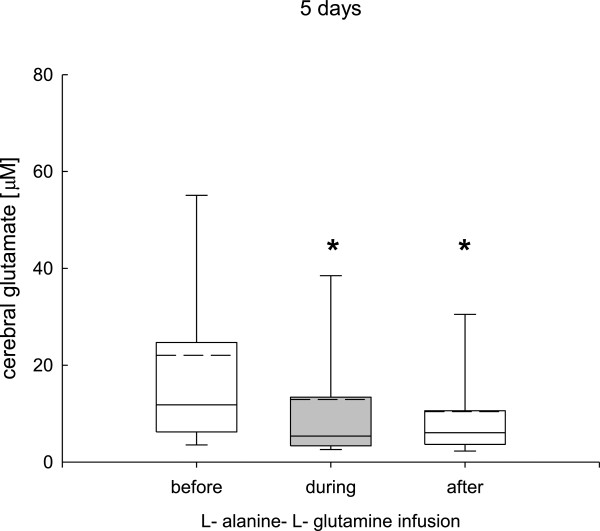
Conclusions: High dose L-alanine-L-glutamine infusion (0.75 g/ kg/ d up to 5 days) increased plasma and brain glutamine and alanine levels. This was not associated with elevated glutamate or signs of potential glutamate-mediated cerebral injury. The increased nitrogen load should be considered in patients with renal and hepatic dysfunction.
Trial registration: Clinicaltrials.gov NCT02130674. Registered 5 April 2014.
Figures
References
-
- Kreymann KG, Berger MM, Deutz NE, Hiesmayr M, Jolliet P, Kazandjiev G, Nitenberg G, van den Berghe G, Wernerman J, Ebner C, Hartl W, Heymann C, Spies C. DGEM (German Society for Nutritional Medicine) ESPEN (European Society for Parenteral and Enteral Nutrition). ESPEN Guidelines on Enteral Nutrition: Intensive care. Clin Nutr. 2006;25:210–223. - PubMed
-
- Vanek VW, Matarese LE, Robinson M, Sacks GS, Young LS, Kochevar M. Novel Nutrient Task Force, Parenteral Glutamine Workgroup, American Society for Parenteral and Enteral Nutrition (A.S.P.E.N.) Board of Directors. A.S.P.E.N. position paper: parenteral nutrition glutamine supplementation. Nutr Clin Pract. 2011;26:479–494. Epub 2011 Jun 22. PubMed PMID: 21697551. - PubMed
-
- Curi R, Newsholme P, Procopio J, Lagranha C, Gorjão R, Pithon-Curi TC. Glutamine, gene expression, and cell function. Front Biosci. 2007;12:344–357. - PubMed
-
- Déchelotte P, Hasselmann M, Cynober L, Allaouchiche B, Coëffier M, Hecketsweiler B, Merle V, Mazerolles M, Samba D, Guillou YM, Petit J, Mansoor O, Colas G, Cohendy R, Barnoud D, Czernichow P, Bleichner G. L-alanyl-L-glutamine dipeptide-supplemented total parenteral nutrition reduces infectious complications and glucose intolerance in critically ill patients: the French controlled, randomized, double-blind, multicenter study. Crit Care Med. 2006;34:598–604. - PubMed
Publication types
MeSH terms
Substances
Associated data
LinkOut - more resources
Full Text Sources
Other Literature Sources
Medical
Miscellaneous
