


An Open-Label, Single-Arm, Two-Stage, Multicenter, Phase II Study to Evaluate the Efficacy of TLC388 and Genomic Analysis for Poorly Differentiated Neuroendocrine Carcinomas
- PMID: 31852810
- PMCID: PMC7216444
- DOI: 10.1634/theoncologist.2019-0490
An Open-Label, Single-Arm, Two-Stage, Multicenter, Phase II Study to Evaluate the Efficacy of TLC388 and Genomic Analysis for Poorly Differentiated Neuroendocrine Carcinomas
Abstract
Background: The discovery of effective therapeutic options for treating metastatic poorly differentiated neuroendocrine carcinoma (NEC) after prior platinum-based chemotherapy remains elusive. This study analyzed the efficacy of TLC388 (Lipotecan) Hydrochloride, a novel camptothecin analog, for pretreated patients with metastatic NEC.
Methods: This single-arm, two-stage, phase II clinical trial was conducted at four community and academic centers in Taiwan. Patients aged 20 years or older with confirmed metastatic NEC and who had received prior systemic therapy with etoposide plus cisplatin were enrolled between July 2015 and May 2018. Patients received 40 mg/m2 of TLC388 intravenously on days 1, 8, and 15 of a 28-day cycle until disease progression or unacceptable toxic effects. Gene mutations were analyzed by next-generation sequencing.
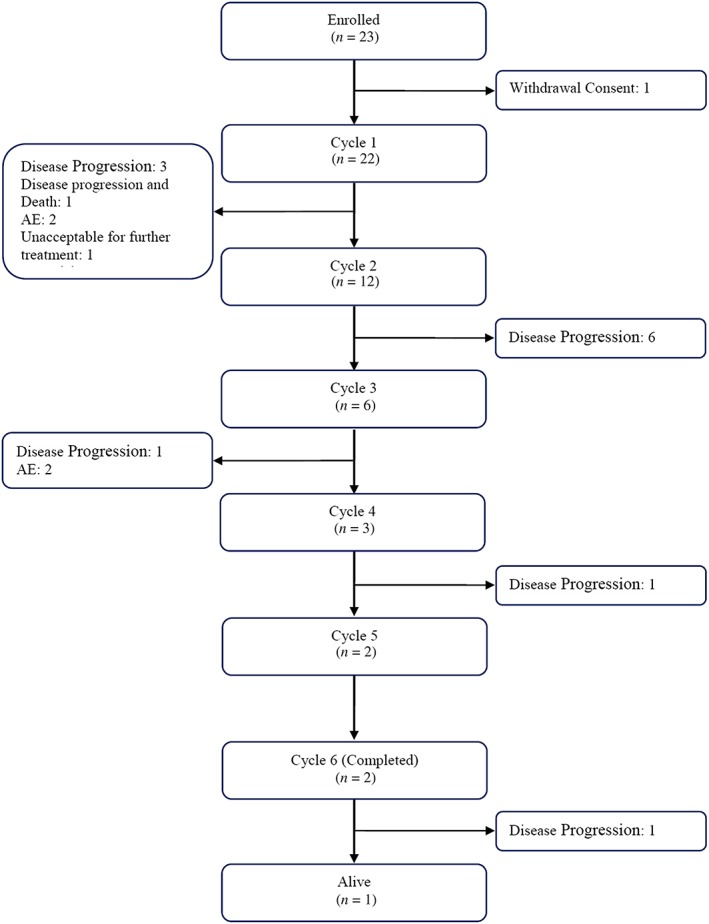
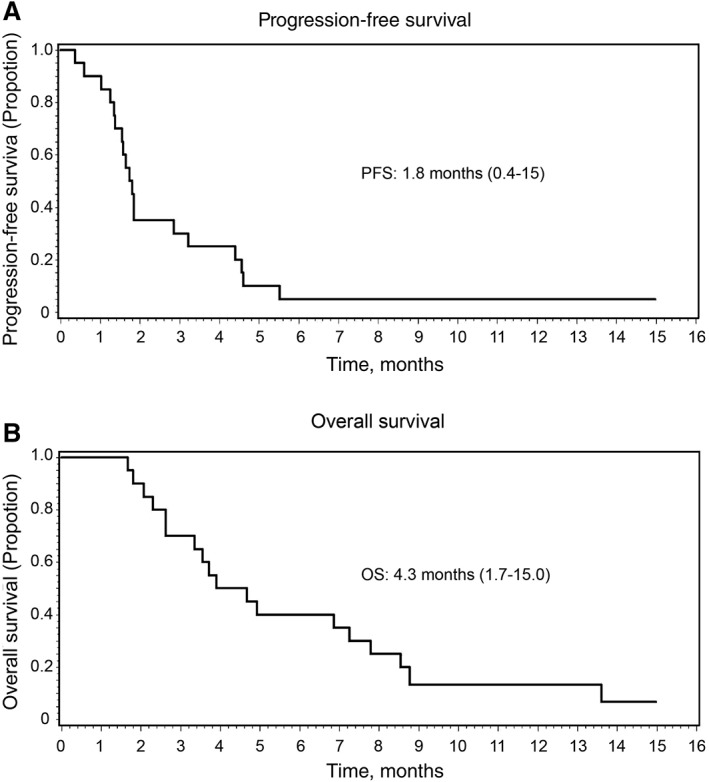
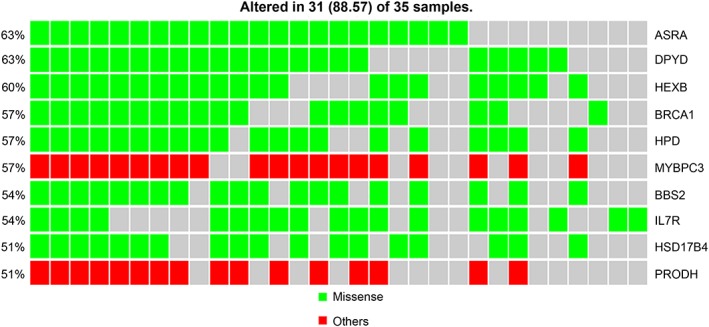
Results: Twenty-three patients with a median age of 61 (range, 44-73) years, 18 of whom were men (78%), were enrolled. Patients received a median of 2 (range, 0-6) treatment cycles. Among 20 evaluable patients, 3 patients exhibited stable disease and no patient experienced a complete or partial remission, resulting in a disease control rate of 15%. Median progression-free survival was 1.8 (95% confidence interval [CI], 0.4-15) months, and the median overall survival was 4.3 (95% CI, 1.7-15) months. The most common treatment-related hematologic adverse events at grade 3 or higher were leukopenia (22.7%), anemia (31.8%), and thrombocytopenia (18.2%). The most frequent mutated genes in 35 patients with NEC were ARSA, DPYD, HEXB, BRCA1, HPD, MYBPC3, BBS2, IL7R, HSD17B4, and PRODH.
Conclusion: TLC388 demonstrates limited antitumor activity in metastatic NEC. ClinicalTrials.gov identifier: NCT02457273.
Implications for practice: Poorly differentiated neuroendocrine carcinomas (NECs) are rare and aggressive. Currently, effective therapeutic options for treating metastatic poorly differentiated NECs beyond platinum-based chemotherapy remain elusive. In this single-arm, multicenter, phase II study, 23 patients with NEC were enrolled and received TLC388 (Lipotecan) Hydrochloride, which is a novel camptothecin analog. The results demonstrated the disease control rate of 15%, the median progression-free survival of 1.8 (95% confidence interval [CI], 0.4-15) months, and the median overall survival of 4.3 (95% CI, 1.7-15) months. Most importantly, several novel genetic mutations and pathways were identified. These results offer the opportunity to develop future treatment strategies in this rare cancer.
Keywords: Genetic profiles; Neuroendocrine carcinoma; TLC-388; Topotecan.
© AlphaMed Press 2019.
Conflict of interest statement
Figures
References
-
- Ahlman H, Nilsson O, McNicol AM et al. Poorly‐differentiated endocrine carcinomas of midgut and hindgut origin. Neuroendocrinology 2008;87:40–46. - PubMed
-
- Nilsson O, Van Cutsem E, Delle Fave G et al. Poorly differentiated carcinomas of the foregut (gastric, duodenal and pancreatic). Neuroendocrinology 2006;84:212–215. - PubMed
-
- Majhail NS, Elson P, Bukowski RM. Therapy and outcome of small cell carcinoma of the kidney: Report of two cases and a systematic review of the literature. Cancer 2003;97:1436‐1441. - PubMed
-
- Mills SE, Cooper PH, Garland TA et al. Small cell undifferentiated carcinoma of the larynx. Report of two patients and review of 13 additional cases. Cancer 1983;51:116–120. - PubMed
Publication types
MeSH terms
Substances
Associated data
LinkOut - more resources
Full Text Sources
Medical
Miscellaneous
